Why Women’s Shirt Buttons Are on the Left, While Men’s Are on the Right — The Real Reason Behind This Everyday Mystery
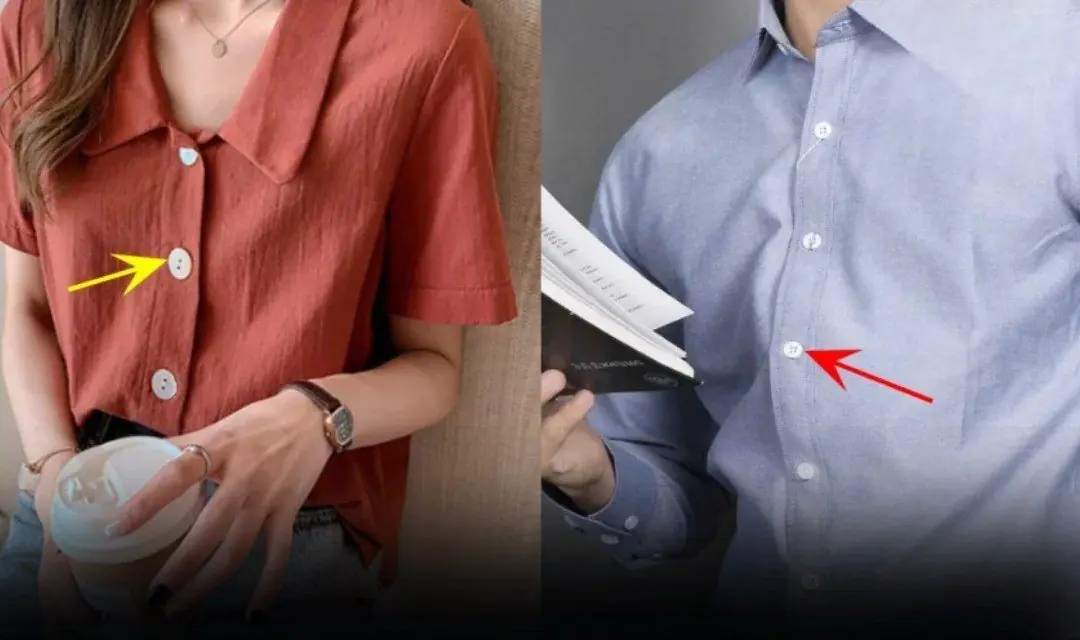
Most people wear shirts almost every day, yet few ever stop to notice — or question — why men’s and women’s shirts button on opposite sides. It’s one of those design details that feels random, but in reality, it’s rooted in history, social class, tradition, and practicality, not fashion coincidence.
Here’s the full explanation behind this long-standing clothing rule that has survived for centuries.
The Simple Observation
-
Men’s shirts: buttons on the right side
-
Women’s shirts: buttons on the left side
This rule applies to:
-
Shirts
-
Blouses
-
Coats
-
Jackets
And it has existed since at least the 13th–17th centuries.
The Original Reason Starts With Social Class
When buttons were first invented, they were luxury items. Ordinary people didn’t wear buttoned clothing — the wealthy did.
Women in Upper Classes
Historically, wealthy women:
-
Wore elaborate, layered clothing
-
Were often dressed by maids or servants
-
Rarely dressed themselves
Because most servants were right-handed, it was easier for them to button clothing from the wearer’s left side.
So designers placed women’s buttons on the left to make dressing faster and easier for assistants.
This convention became the standard — and it stuck.
Why Men’s Buttons Are on the Right
Men’s clothing evolved for self-dressing and practicality.
Historically, men:
-
Dressed themselves
-
Needed functional clothing for work, riding, and combat
-
Were often right-hand dominant
Placing buttons on the right side made it easier for a right-handed man to:
-
Button his shirt quickly
-
Draw a sword or weapon without fabric interference
-
Move freely without awkward overlaps
In fact, some historians believe button placement also helped prevent fabric from catching on weapons.
Military Influence Played a Role
Men’s fashion was heavily influenced by military uniforms, where:
-
Uniformity mattered
-
Efficiency mattered
-
Practical movement mattered
Right-side buttons became a standard for men’s garments and later transitioned into civilian clothing.
Women’s fashion, on the other hand, evolved separately — remaining decorative and socially symbolic rather than functional.
Why Didn’t This Change Over Time?
You might think modern clothing would abandon this difference — but tradition is powerful.
Once clothing manufacturers:
-
Standardized patterns
-
Built factories around these designs
-
Marketed gender-specific clothing
The button rule became a design norm, passed down generation after generation.
Even today, it helps retailers and tailors quickly distinguish between men’s and women’s garments.
Does It Still Matter Today?
Functionally? No.
Culturally? Yes.
Today:
-
Many women dress themselves
-
Gender roles have evolved
-
Unisex fashion is becoming more common
Yet the button rule persists because:
-
It signals traditional garment identity
-
It reflects centuries of fashion history
-
It’s deeply embedded in clothing design systems
Some modern brands now:
-
Ignore the rule entirely
-
Use unisex button placement
-
Design based on comfort rather than tradition
But classic tailoring still follows the old standard.
A Small Detail With a Big Story
What seems like a minor design choice actually reflects:
-
Gender roles from centuries ago
-
Class differences
-
Servant culture
-
Military influence
-
Industrial standardization
Every time you button a shirt, you’re interacting with a piece of social history — whether you realize it or not.
Final Thoughts
Women’s buttons are on the left.
Men’s buttons are on the right.
Not because of biology.
Not because of fashion logic.
But because history decided it that way — and we never bothered to change it.
