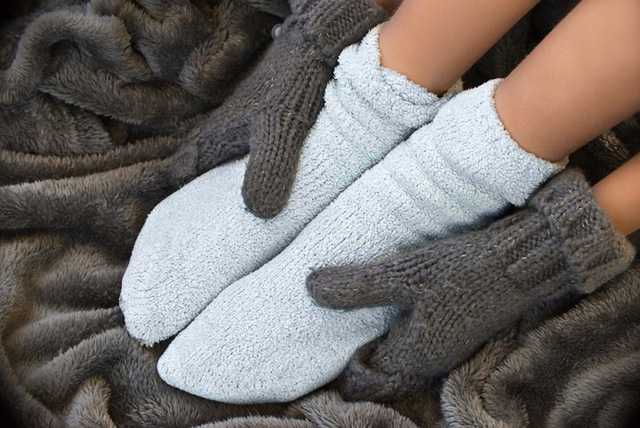
Why Many Japanese People Wear Socks to Sleep — Even in Summer
To many people, sleeping with socks on sounds uncomfortable, especially during hot summer nights. Yet in Japan, wearing socks to bed is a common and culturally accepted habit, practiced year-round by people of all ages. This choice is not about fashion or cold weather alone — it is deeply connected to health beliefs, sleep quality, and traditional body care.
Here’s why this habit exists and why many Japanese people continue to follow it.
1. The Core Belief: “Cold Feet Disrupt the Body”
In Japanese health culture, cold is viewed as something that silently harms circulation and internal balance. Even in warm weather, air conditioning, night breezes, or cool floors can cause the feet to become cold.
According to this belief:
-
Cold feet = poor blood circulation
-
Poor circulation = fatigue, poor sleep, and weakened immunity
Keeping the feet warm is seen as a way to protect the whole body, not just the extremities.
2. Better Blood Circulation Promotes Deeper Sleep
Modern science actually supports part of this tradition.
Warming the feet causes blood vessels to dilate, which:
-
Improves circulation
-
Helps the body release heat more efficiently
-
Signals the brain that it’s time to sleep
Studies have shown that people who wear socks to bed often:
-
Fall asleep faster
-
Wake up less during the night
-
Experience deeper sleep cycles
In Japan, where sleep quality is highly valued due to long work hours, anything that improves rest is taken seriously.
3. Protection From Air Conditioning (Even in Summer)
Japanese homes, offices, and trains rely heavily on air conditioning during summer. While the air temperature may be comfortable, direct cold airflow often hits the feet first.
Sleeping with socks:
-
Prevents excessive cooling from AC
-
Reduces nighttime chills
-
Helps maintain stable body temperature
This is especially common among people who sleep on futons, where the body is closer to the floor — the coolest part of the room.
4. Traditional Health Philosophy (Eastern Medicine Influence)
Japanese health habits are influenced by traditional Eastern medicine, which emphasizes balance (yin–yang) and energy flow.
In this philosophy:
-
Feet are connected to vital organs through energy pathways
-
Cold entering through the feet can disturb organ function
-
Keeping feet warm helps maintain internal harmony
This is why socks are often worn by:
-
Elderly individuals
-
Women
-
People with low blood pressure or poor circulation
It’s seen as preventive care, not treatment.
5. Hygiene and Cleanliness Culture
Japan places extreme importance on cleanliness, especially in sleeping spaces.
Wearing socks to bed can:
-
Prevent direct contact between feet and bedding
-
Reduce sweat transfer
-
Keep futons cleaner for longer
Many people use dedicated “sleep socks” that are clean, breathable, and worn only in bed.
6. Com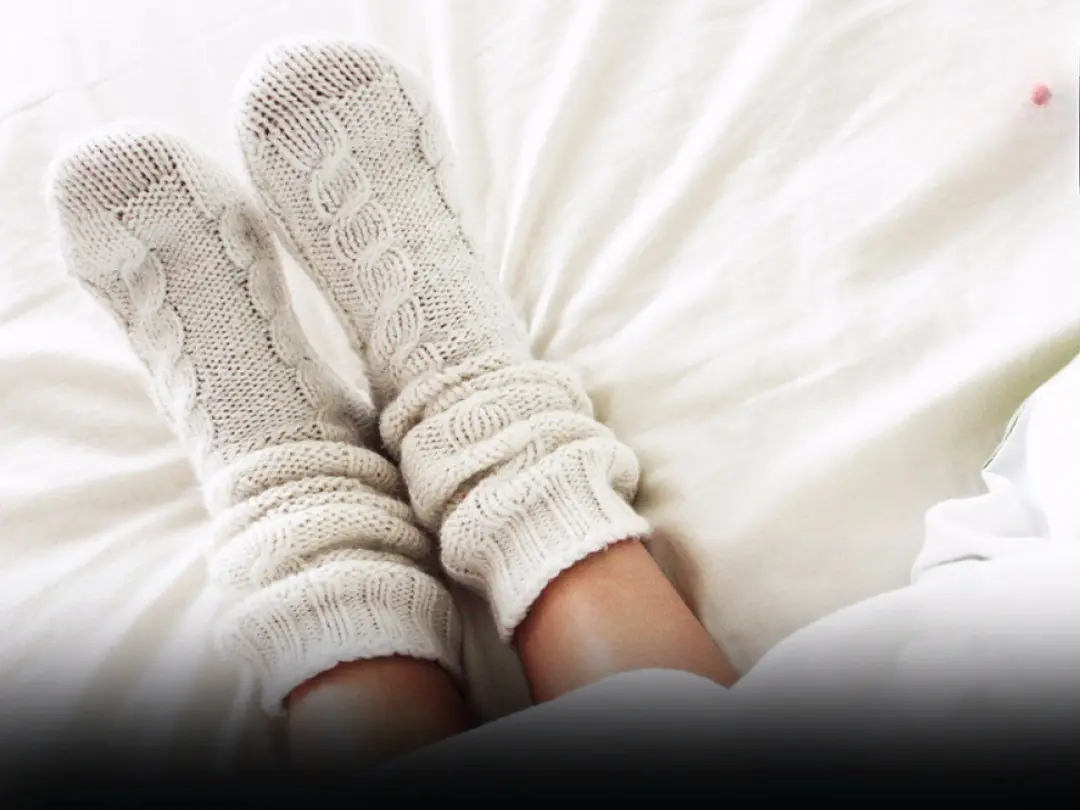 fort, Not Tightness
Japanese sleep socks are usually:
-
Loose-fitting
-
Made from cotton or breathable materials
-
Not compressive
The goal is gentle warmth, not restriction. Tight socks are avoided, as they can reduce circulation and disturb sleep.