When it comes to breast cancer, early detection and intervention can save your life. Yet many women still miss the early warning signs; they assume everything is fine until nothing is fine.
The truth is, breast cancer doesn’t always begin with a lump, as you have been told or read about. In fact, the earliest signs can be easy to overlook or mistaken for normal health coincidences. That’s why it is important to know what to look out for in your breasts.
In this guide, we’ll walk you through 10 early signs of breast cancer every woman should know. Don’t wait for a routine check-up to start paying attention, your body is always talking, try to understand what it is saying and take necessary action. But this won’t be possible if you don’t know what to look out for.
10 Signs of Breast Cancer Women Shouldn’t Ignore
1. Unusual Lumps or Thickening in the Breast
This is the most commonly talked about symptom, and for good reason. A lump in the breast (or underarm) is often the first sign of trouble. Most women who have suffered this condition often record that it started with a lump in the breast. However, not all lumps are cancerous, and not all cancer starts with a lump; that’s the tricky part. So, what do you look out for exactly?
- A hard knot or mass that feels different from the rest of your breast tissue.
- A lump that is not movable and has grown over time.
- Any thickening or fullness in a specific part of the breast.
If you notice anything new or odd, don’t wait. Schedule a visit with your doctor or the best breast cancer specialist in Delhi for proper evaluation.
2. Changes in Breast Shape or Size
One of the more subtle early signs of breast cancer is a shift in your breast’s natural shape or size. This could mean one breast becomes noticeably larger, looks swollen, or has a new asymmetry. Here are things to keep an eye on in the size of your breasts:
- Sudden enlargement of one breast.
- Shrinking or sagging that only affects one side.
- A change in contour or outline that wasn’t there before.
While changes in breast shape or size aren’t always caused by cancer, it is worth checking, even small differences matter. If your bras or clothes suddenly don’t fit the same way, pay attention.
3. Skin Changes: Redness, Dimpling, or Peeling
Sometimes the skin changes are the first signal that something is wrong. Early signs of breast cancer can include skin irritation or changes in texture. Dimpling (which can look like the skin of an orange), redness, or peeling can be mistaken for a rash or skin condition. Here are the common signs you should pay attention to when your skin begins to change:
- Scaly patches, especially around the nipple.
- Redness that doesn’t go away.
- Dimpling that looks like cellulite but isn’t.
These symptoms might suggest inflammatory breast cancer, a rare but aggressive form. Don’t ignore them. Visit your health provider as soon as you notice them.
4. Nipple Discharge (Especially If Bloody)
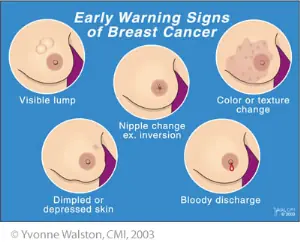
If fluid is coming from your nipple when you’re not breastfeeding or pregnant, it could be a red flag. Most discharge isn’t cancer-related, but certain types demand attention. You should be more concern if you notice any of this type of nipple discharge:
- Bloody or clear discharge from one breast.
- Discharge that happens without squeezing.
- Sticky, green, or foul-smelling fluid.
If this happens, reach out to your health provider. Your doctor may order tests to rule out breast cancer and pinpoint the cause.
5. Nipple Retraction or Inversion
Has your nipple suddenly turned inward or changed position? This is one of those early signs of breast cancer treatment in Delhi that often gets dismissed, especially if it’s painless. These are the things you must take note of:
- One nipple pulls inward or seems flattened.
- The nipple feels stiff or won’t return to its normal position.
- There is puckering around the areola.
This change might suggest a tumor pulling on tissues beneath the surface. Don’t live based on assumptions; get it tested. The earlier cancer is detected, the better the chances of defeating it.
6. Persistent Breast Pain
Breast cancer is not usually associated with pain in the early stages, but there are exceptions. Some women experience discomfort or aching that doesn’t go away. You should be concerned if you are experiencing any of the following breast pain:
- Pain in one area that lasts more than a couple of weeks.
- A burning or stabbing feeling deep in the breast.
- Tenderness that worsens over time.
Most times, women associate breast pain with menstrual symptoms and hormonal changes. If you’ve ruled out your menstrual cycle, hormones, or injury, bring it up with your doctor, as this could be an early sign of breast cancer.
7. Swelling in the Armpit or Collarbone

Breast tissue extends beyond what you see in the mirror. Cancer can spread to nearby lymph nodes, causing swelling in places you wouldn’t expect, like the underarm or just above the collarbone. Here are things you should look out for:
- A tender or firm lump in your armpit.
- Swelling in your neck or shoulder area.
- A feeling of fullness under the arm.
Swelling in the armpit could be an indication that the cancer has moved beyond the breast itself. Seek professional help immediately, your doctor can confirm what exactly is wrong with the right diagnosis.
8. Itching or Burning Sensation
Most women wouldn’t associate itchiness with cancer, but it can be a surprising early indicator, especially with inflammatory breast cancer. If your breast constantly itches, burns, or feels irritated, don’t just write it off. These are the warning signs you must not ignore:
- Persistent itching not relieved by lotion or medication.
- Burning or tingling sensations.
- Rash-like symptoms that don’t fade.
Don’t assume it’s just dry skin, especially if it isn’t going away after a few days; it’s worth getting checked out.
9. A Feeling of Heaviness or Fullness
That strange sensation of fullness in your breast, even when it doesn’t look larger, can be one of the early signs of breast cancer. Many women describe it as a heavy or dense feeling they hadn’t noticed before. Pay attention to the following and raise an alert if your breast fullness or heaviness takes on any of the following symptoms:
- One breast starts to feel heavier than the other.
- You feel an inner pressure or tightness.
- The sensation is consistent over time.
It’s subtle, but that shift could be your body’s way of telling you something is wrong. Go check it out before it’s too late.
10. Fatigue, Weight Loss, or General Malaise
Though not specific to breast cancer alone, feeling run-down for no obvious reason can sometimes accompany the early signs of breast cancer. Cancer cells can affect your immune system and drain your energy even before a diagnosis. You may experience any of the following:
- Unexplained weight loss.
- Ongoing fatigue, even after resting.
- General feeling of being unwell.
If this is paired with any of the symptoms above, don’t delay seeking help. The earlier you seek professional help, the better your chances of recovering from cancer.
What to Do If You Notice a Sign?
The first thing you must do is control your mind to shun fear. Many breast changes are benign, which means they are non-cancerous, but only a medical professional can tell for sure. If you notice one or more of these early signs of breast cancer, make an appointment as soon as possible. Your doctor may recommend:
- A mammogram or ultrasound.
- A breast biopsy.
- A referral to the best breast cancer specialist for further testing.
Being proactive can make all the difference. Don’t wait it out, act now and fast.
Final Thoughts
Breast cancer is treatable when caught early. That’s why staying in tune with your body and knowing the warning signs is key. These 10 early signs of breast cancer aren’t meant to scare you; they’re meant to empower you. Listen to your body, trust your instincts, and don’t hesitate to seek help if something feels off. Early awareness isn’t just important. It’s life-saving.