Flip the Bottle: The Simple Trick to Tell Real Honey From Fake—Experts Warn Shoppers to Stop Buying Blindly
Honey is one of the most commonly counterfeited foods in the world. Although many people assume they can judge honey by its color or taste, food safety experts say counterfeit honey has become increasingly sophisticated—making it harder for consumers to detect.
A simple test, however, is currently going viral: flip the honey bottle upside down. According to experts, this method can quickly reveal whether the honey is pure or heavily adulterated with sugar syrup.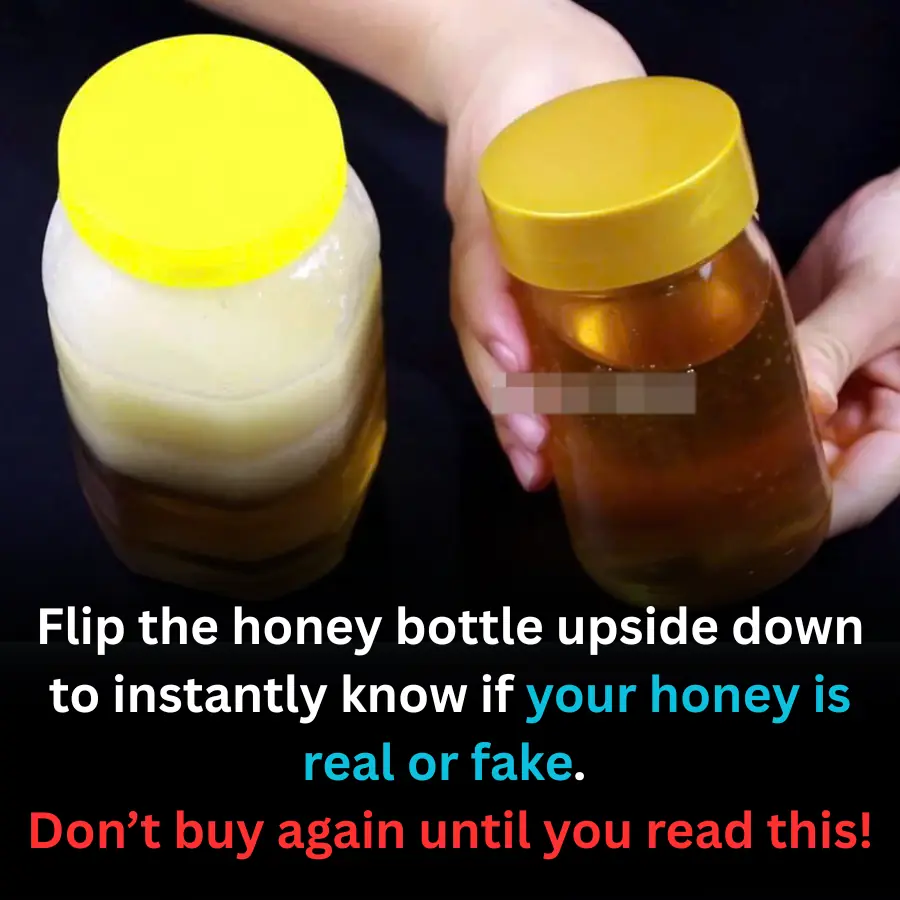
Why Fake Honey Is Everywhere
Honey prices have risen significantly in recent years due to declining bee populations and lower global production. As a result, many low-quality products on the market are diluted with:
-
Corn syrup
-
Rice syrup
-
Refined sugar
-
Artificial thickening agents
-
Coloring and flavor enhancers
These mixtures look almost identical to pure honey, tricking consumers and potentially causing health problems if consumed long-term.
The “Flip Test”: How It Works
Food specialists explain that real honey is naturally thick and viscous, while fake or diluted honey flows much faster.
How to Perform the Flip Test
-
Turn the honey bottle upside down.
-
Observe how long it takes for the air bubble to move to the top.
How to Read the Results
-
Real honey:
The air bubble rises slowly, sometimes taking several seconds. Pure honey has natural enzymes and a dense, stable structure. -
Fake or diluted honey:
The bubble moves quickly, almost instantly. This indicates the product has been thinned with syrup or water.
While this test is not 100% foolproof, experts say it is one of the most effective quick checks for consumers.
Additional Signs of Pure Honey
To avoid being cheated, food scientists recommend checking for these characteristics:
1. Aroma
Real honey has a mild, natural floral aroma. Fake honey often smells overly sweet or artificial.
2. Texture
Pure honey crystallizes over time. If a jar stays perfectly smooth for many months, it may be overly processed or mixed with syrup.
3. Label Transparency
Quality honey brands provide:
-
Origin of the honey
-
Type of flowers
-
Production method
-
Certification from food safety authorities
Vague or overly general labels are a red flag.
4. Price
If the price is “too good to be true,” it often is. Pure honey requires months of work from bees and cannot be extremely cheap.
Health Risks of Fake Honey
Regular consumption of adulterated honey may lead to:
-
High blood sugar
-
Fatty liver
-
Weight gain
-
Increased triglycerides
-
Poor absorption of nutrients
Experts warn that fake honey provides no real health benefits and may instead increase chronic disease risks.
Conclusion
Before buying honey—especially from street stalls or non-certified sellers—use the flip test and check all quality indicators. As food fraud becomes more sophisticated, consumers must stay vigilant.
By understanding how to distinguish real honey from fake, families can avoid wasting money and protect their health in the long term.