Experts Warn: 4 Fruits Most Commonly Sprayed With Pesticides — Shoppers Should Avoid Buying Them Hastily
Food safety specialists are issuing a strong warning: several popular fruits on the market are among the most heavily sprayed with pesticides, and consuming them without proper cleaning—or buying from unreliable sources—can pose serious health risks.
Despite their appealing appearance and low prices, these fruits often carry high pesticide residues that may harm the liver, kidneys, digestive system, and even increase long-term cancer risk.
Below are the 4 fruits experts say require special caution when purchasing.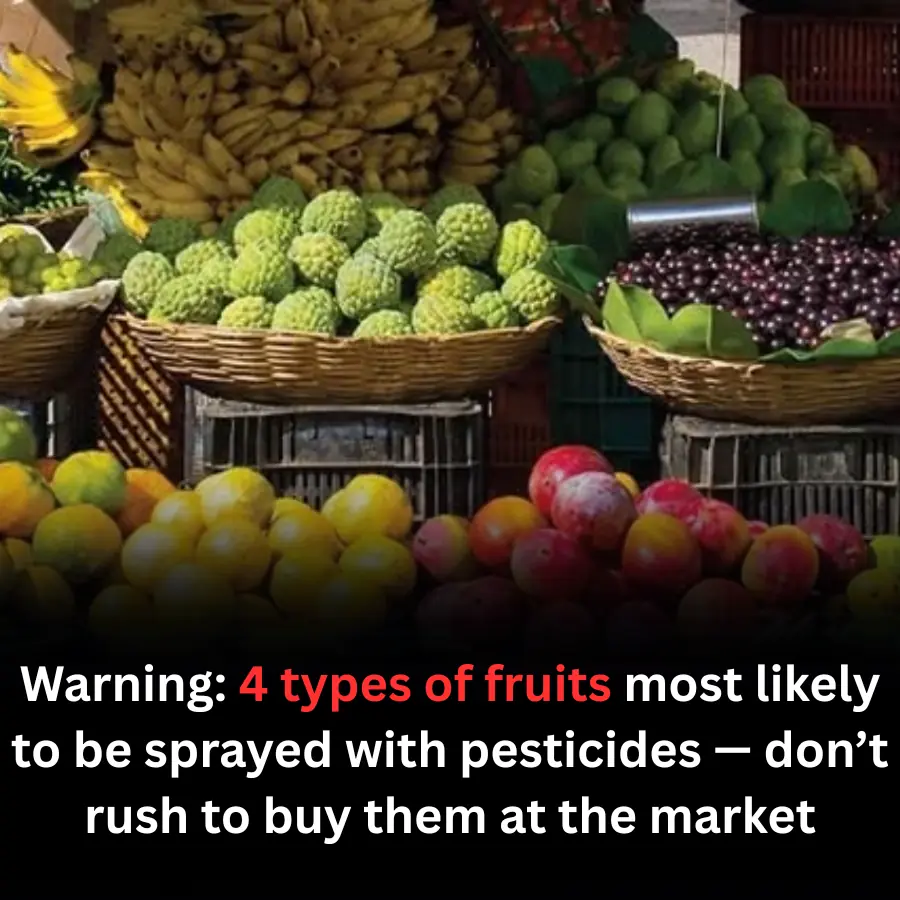
1. Grapes – Thin Skin, Easy to Absorb Chemicals
Grapes top the list because their thin skin and cluster structure make them highly susceptible to pests and mold. To maintain fresh appearance and prevent spoilage during transport, some growers overuse:
-
Fungicides
-
Growth regulators
-
Insecticides
These chemicals can penetrate the grape skin and are difficult to wash off completely.
How to choose safely:
Buy grapes with a natural bloom (white powdery coating), avoid bunches that look unnaturally glossy or have a chemical smell.
2. Strawberries – Soft, Juicy, Highly Contaminated
Strawberries are widely known as one of the fruits with the highest pesticide residues due to their delicate surface and susceptibility to insects. Because strawberries grow close to the ground, they are frequently sprayed to prevent fungal diseases.
Risk:
Pesticides linger on the surface and can seep into the flesh.
How to choose safely:
Avoid strawberries that look overly bright red or perfectly identical—these may have been treated with artificial coloring or preservatives.
3. Apples – Beautiful Shine Can Be Misleading
Apples often appear flawless thanks to:
-
Wax coatings
-
Anti-fungal sprays
-
Pesticide treatments before harvest
While many waxes are considered food-safe, the problem arises when apples are coated with industrial wax or when pesticide residues remain trapped under the wax layer.
How to choose safely:
Look for apples with a natural, slightly rough texture. Soak in warm water and baking soda before eating.
4. Peaches – Fuzzy Skin That Traps Pesticides
The soft, fuzzy surface of peaches easily traps pesticides and dust. Many growers rely heavily on chemical treatments to prevent worms and browning during transport.
How to choose safely:
Select peaches with natural fragrance and avoid those that feel too soft or emit a chemical scent when pressed.
Why Excess Pesticide Exposure Is Dangerous
Long-term consumption of pesticide-contaminated fruit may lead to:
-
Hormonal disruption
-
Reduced fertility
-
Liver and kidney toxicity
-
Digestive problems
-
Increased risk of certain cancers
Children, pregnant women, and the elderly are especially vulnerable.
How to Protect Yourself When Buying Fruit
1. Choose reputable sellers
Buy from trusted stores, farmers’ markets, or organic suppliers.
2. Wash properly
Use warm water, baking soda, or salt water. Soak for 10–15 minutes, then rinse thoroughly.
3. Favor seasonal fruits
Off-season fruits usually require heavier pesticide use.
4. Don’t be fooled by perfect appearance
Natural fruit often has imperfections—too shiny or flawless may indicate chemical treatment.
Conclusion
While fruits are essential for nutrition, not all fruits in the market are safe. Choosing carefully and cleaning properly can prevent harmful pesticide exposure and protect long-term health.
Experts emphasize: When in doubt, don’t buy. Food safety starts with smart choices.