Pork Cracklings: Often Misunderstood, but Can Fit into a Balanced Diet When Consumed in Moderation
Pork cracklings (fried pork fat) have long been considered unhealthy due to their high fat content. However, recent discussions in nutrition suggest that when consumed in moderation and prepared properly, they may not be as harmful as commonly believed — and can even have a place in a balanced diet.
What’s in Pork Cracklings?

Pork fat contains a mix of:
- Saturated fats
- Monounsaturated fats (similar to those found in olive oil)
While saturated fat has traditionally been linked to heart disease, more recent research indicates that the relationship is more complex and depends on overall diet and lifestyle rather than a single food.
Can Pork Fat Be “Heart-Friendly”?
Pork fat (lard) contains a notable amount of monounsaturated fat, which is associated with supporting heart health when it replaces more harmful fats (like trans fats).
However, it’s important to be clear:
- Pork cracklings are not a heart-protective food
- They are high in calories and saturated fat
- Overconsumption may still increase cardiovascular risk
👉 In other words, they can be included occasionally, but should not be relied on as a health food.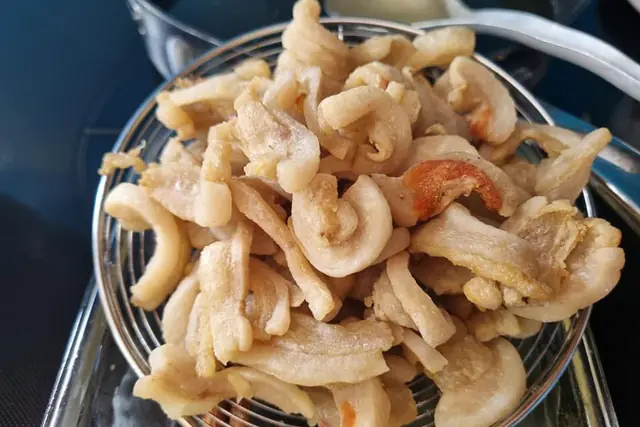
The Key Is Moderation and Preparation
If you choose to eat pork cracklings, consider:
- Eating small portions rather than frequent servings
- Avoiding excessive salt during preparation
- Pairing them with fiber-rich foods (vegetables, whole grains)
A balanced diet overall matters far more than any single ingredient.
What Nutrition Experts Recommend
Health organizations such as the American Heart Association recommend limiting saturated fat intake and focusing on:
- Fruits and vegetables
- Whole grains
- Lean proteins
- Healthy fats (e.g., from nuts, fish, and plant oils)

Conclusion
Pork cracklings may have been overly demonized in the past, but they are not a health food. When eaten occasionally and in moderation, they can fit into a balanced diet — but excessive consumption may still pose risks to heart health.