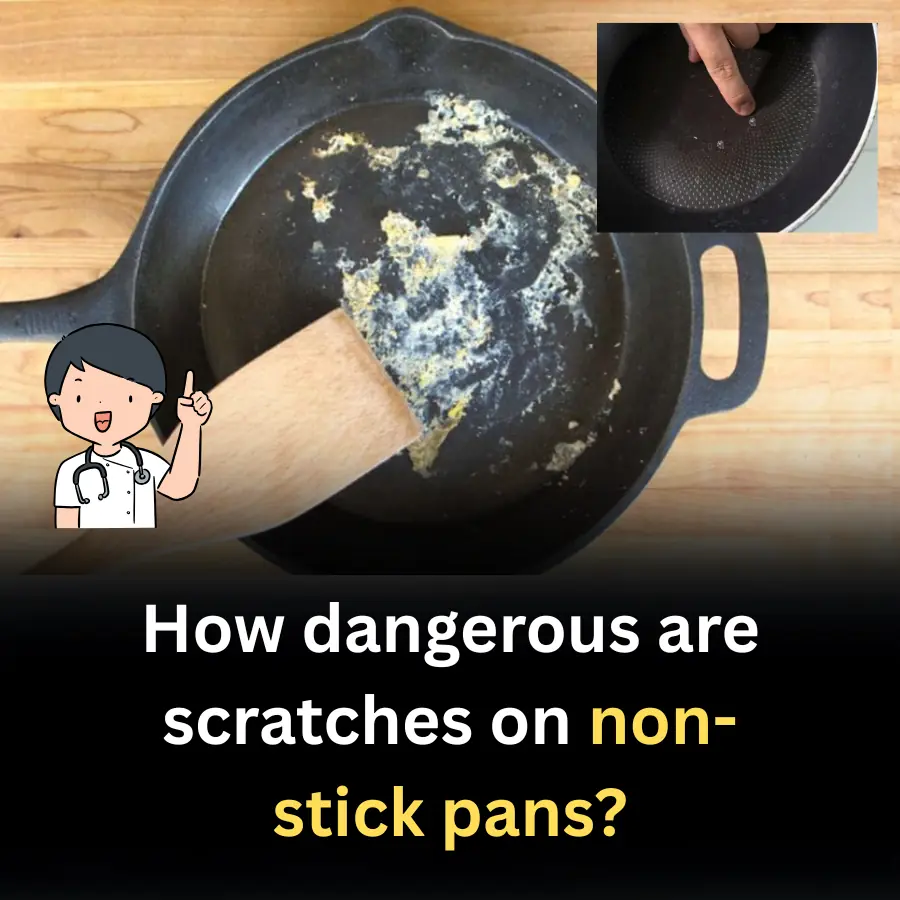
Non-stick cookware is popular in kitchens because food doesn’t stick to the surface, making cooking and cleaning easier. However, improper use can pose health risks.
The first non-stick pan was created in 1954 and remains widely used today. But using a non-stick pan incorrectly can lead to health hazards.
The interior surface of non-stick pans is coated with a high-molecular compound called polytetrafluoroethylene (PTFE).
A 2022 report by the nonprofit Ecology Center found that 79% of non-stick cooking pans and 20% of non-stick baking pans are coated with PTFE.
Recent research shows that even a small scratch on a non-stick pan can release approximately 9,100 plastic particles during cooking. If the non-stick coating is damaged, around 2,300,000 micro- and nano-plastic particles may be released, potentially contaminating food and harming health.
Cheng Fang, a researcher at Newcastle University, notes that PTFE belongs to a group of chemicals called per- and polyfluorinated substances (PFAS), which are non-degradable in the environment, pollute soil and water, and accumulate in living organisms.
Once millions of PFAS particles are released, they circulate in the ecosystem for a long time, which is why they are often called “forever chemicals.”
PFAS exposure has been linked to various health effects, including metabolic changes, increased risk of overweight or obesity, and reduced infection resistance.
To avoid contaminating food with plastic particles from non-stick cookware, chefs recommend using soft, non-sharp utensils to prevent scratching the non-stick surface.
Avoid metal spoons, steel scrubbers, or harsh cleaning tools. Replace any non-stick pan immediately if scratches appear. Experts also advise using non-stick pans for a maximum of two years, as the coating may no longer be effective beyond that time.