Most adults settle into bed without giving a second thought to how they’re sleeping. It is such a routine habit that many do not consider the health effects of their preferred sleeping position. Yet, sleep researchers and doctors say that our sleeping position matters.
In this guide, you’ll learn the trade‑offs of side, back, and stomach sleeping, how position influences snoring, sleep apnea, reflux/GERD, and back/neck pain, practical techniques to train a new position, and when it’s worth seeing a sleep specialist.
What’s the best sleeping position?
Back sleeping may worsen snoring or sleep apnea for some people, while stomach sleeping can strain the neck and lower back. Choose the position that eases your symptoms and supports comfortable alignment.

Check out this chart to see the most common sleep positions. Source: Nature & Science of Sleep.
Table of Contents
Best Overall: Why Side Sleeping Works
Left vs. Right Side
Body Pillows & Wedge Pillows
Side vs. Back vs. Stomach: Pros & Cons
Airway & Snoring
Spine & Shoulder Alignment
Reflux/GERD Considerations
Choose the Best Position for Your Situation
Sleep Apnea or Loud Snoring
Acid Reflux/Heartburn
Back or Neck Pain
Pregnancy
How to Train a New Sleeping Position
Pillow Positioning
Tennis-Ball/Backpack Trick
Mattress Fit & Firmness
When to See a Sleep Specialist
FAQs
Best Overall: Why Side Sleeping Works
Side sleeping is the most popular sleep position among adults. Side (lateral) sleeping often keeps the tongue and soft tissues from narrowing the airway, which can reduce snoring and positional obstructive sleep apnea.
It also tends to lower nighttime reflux by making backflow less likely. In addition to these advantages, side sleeping offers health benefits such as a reduced risk of certain conditions, including sleep apnea and gastroesophageal reflux disease (GERD).
With the proper pillow–mattress combination, side sleeping supports a neutral spine and can ease pressure on the lower back and hips. For many people, side sleeping can also improve overall sleep quality.
Left vs. Right Side
On the left side, gravity and anatomy position the stomach below the esophagus, which often helps reflux. It is commonly recommended during pregnancy because sleeping on the left side can improve blood flow to the fetus. Left-side sleeping can also benefit internal organs by reducing pressure and supporting digestive health.
The right side can feel better for some shoulders or hips; if heartburn worsens on the right, switch sides or elevate the upper body to test what feels best for you.
Body Pillows & Wedge Pillows
Supportive props can make side sleeping easier. Using a supportive pillow helps maintain proper neck alignment and reduces neck pain by providing the necessary cervical support. A full‑length body pillow between the knees keeps the hips aligned and discourages rolling onto the back. A small knee pillow or folded blanket can reduce lumbar strain. If reflux or snoring is a concern, a wedge pillow that gently elevates the torso can add meaningful relief.
Side vs. Back vs. Stomach: Pros & Cons
Airway & Snoring
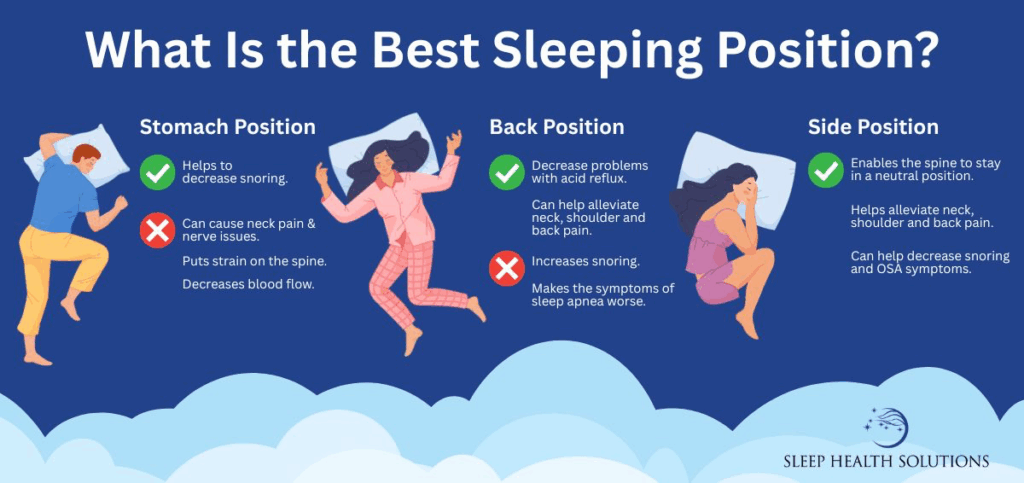
Side sleeping is usually the most forgiving for snoring and positional Obstructive Sleep Apnea (OSA) because gravity is less likely to collapse the airway. Position-dependent snoring is common, with certain positions worsening or improving snoring.
Snoring and sleep apnea are often influenced by sleep position. Back sleeping can worsen snoring or apnea for many people as the tongue and palate fall backward.
Some people do fine on their backs, especially when using CPAP or an oral appliance, but side sleeping remains a reliable default. Managing disordered breathing may require adjusting sleep position.
Spine & Shoulder Alignment
For side sleepers, a mid‑height pillow that fills the space from ear to shoulder helps keep the neck neutral, while a supportive mattress prevents the waist from sagging. Maintaining even alignment of the spine and shoulders is crucial for comfort.
Back sleepers typically need a lower‑profile pillow and may benefit from a small pillow beneath the knees to reduce lumbar extension. A properly chosen pillow and mattress help keep the spine aligned and support the body’s natural curve.
Stomach sleeping often forces neck rotation and increases lower‑back sway.
Reflux/GERD Considerations
Left‑side sleeping generally reduces nocturnal reflux by taking advantage of GI anatomy. Sleeping on your left side helps prevent stomach acid from rising into the esophagus, which can reduce symptoms of GERD. If you prefer sleeping on your back, raise the head of the bed four to six inches or use a wedge to keep acid from washing upward. Stomach sleeping can increase abdominal pressure and may aggravate symptoms for some people.
Choose the Best Position for Your Situation
Sleep Apnea or Loud Snoring
Start with side sleeping and use a body pillow to stay in position. Sleep disordered breathing, which includes conditions like snoring and obstructive sleep apnea, can often be improved by adjusting your sleep position. If you’ve been diagnosed with obstructive sleep apnea, ask your clinician about positional therapy alongside CPAP or an oral appliance to see what combination fits your case. For an overview, see our guide to obstructive sleep apnea.
Acid Reflux/Heartburn
Favor the left side and consider a wedge that elevates the upper body. Avoid heavy meals and alcohol close to bedtime. Sleeping position helps, but triggers still matter. If reflux remains frequent despite these changes, talk with your clinician.
Back or Neck Pain
Match your pillow height to your position: higher loft for side sleeping, lower for back sleeping. Improper pillow height can contribute to neck and back pain by disrupting spinal alignment.
Use a knee pillow (side) or an under‑knee pillow (back) to stabilize alignment. For back sleepers, placing a pillow under the knees can help reduce knee pain by relieving pressure on the joints.
Persistent pain warrants a conversation with your clinician about targeted exercises or a referral to physical therapy.
Pregnancy
The left lateral position is often recommended in the third trimester because it supports circulation. Placing a pillow under the lower belly can help relieve pressure and provide comfort. Left-side sleeping can also reduce pressure on internal organs and improve circulation during pregnancy. Many pregnant sleepers find that a C‑shaped or U‑shaped body pillow relieves pressure by supporting the belly, lower back, and knees, so changing sides through the night is comfortable.
How to Train a New Sleeping Position
Pillow Positioning
Choose height by position: side sleepers usually need more loft to fill the neck gap; back sleepers need less to avoid chin‑to‑chest or overextension; stomach sleepers should use very low loft and, ideally, transition away from the prone position. Use a knee pillow (side) or a small pillow under the knees (back) to keep the spine neutral.
Tennis-Ball/Backpack Trick
Place a tennis ball in a small pocket on the back of a snug T‑shirt, or wear a minimalist sleep backpack so back sleeping becomes uncomfortable. Over a week or two, your body learns to favor the side without constant effort.
Mattress Fit & Firmness
Side sleepers often prefer medium to medium‑soft surfaces that let the shoulder and hip sink slightly while keeping the waist supported. Back sleepers tend to like medium to medium‑firm for even support. If the shoulder aches on your side, consider a zoned mattress or an added topper to relieve pressure.
When to See a Sleep Specialist
If you are feeling the effects of sleep deprivation or worry that you may have a sleep disorder, request a referral from your physician. Sleep Health Solutions can get you set up for sleep testing in-home or at our specialized overnight clinic. Our professional team can provide the information that your doctor needs to form a diagnosis and develop a treatment plan.
Call our sleep clinic today at (330) 923-0228 to schedule a consultation. If you have questions about testing or treatment options, contact our team to discuss whether a home sleep test or in-clinic study is a good fit for you.