In Japan, where living spaces are compact and weather conditions can shift quickly, household routines are designed to be as efficient as possible. One of the most impressive examples of this everyday ingenuity is the traditional Japanese method for drying clothes—especially heavy items like blankets, coats, denim, and thick towels. Despite limited yard space and frequent humidity, Japanese households have developed reliable ways to get laundry dry fast, clean, and mold-free.
This expanded guide dives into the drying techniques used across Japanese homes, the science behind why they work, and practical tips you can start using today to transform the way you handle thick laundry.
Why Fast Drying Is So Important
Drying clothes is more than simply waiting for moisture to disappear. It’s a critical part of fabric care and overall hygiene:
• Slow drying traps moisture, which encourages mold, mildew, and bacterial growth.
• Damp fabrics smell musty and can irritate sensitive skin.
• Thick materials - blankets, hoodies, bath sheets - hold moisture deep inside the fibers, making them especially prone to odors and uneven drying.
• Humidity, especially during Japan’s rainy tsuyu season, makes clothes take much longer to dry unless specific techniques are used.
Because of these challenges, Japanese households have created a system that maximizes airflow, sunlight, and movement—even in tight spaces.
The Japanese Drying Secret: The “Hang and Sway” Technique
This centuries-old method is simple but surprisingly effective. It focuses on improving evaporation by optimizing airflow and loosening fabric fibers.
Step 1: Hang Clothes Correctly for Maximum Airflow
Where and how you hang clothing matters.
• Avoid cramped corners or rooms with stale air.
• Use a balcony, near a large window, or an outdoor line whenever possible.
• For thick fabrics, spread them out fully instead of folding them over the line. A folded towel or blanket dries twice as slowly.
• Hang items with space between them so air can circulate freely.
Japanese families often arrange laundry in a “U-shape” pattern on the line to allow wind to flow through the center.
Step 2: Use the “Sway” Motion to Loosen the Fibers
Once the clothes are hung:
• Gently sway or shake the garment to open its fibers.
• This movement helps release trapped moisture from deep inside the fabric.
• It mimics natural wind flow, allowing air to penetrate layers that would otherwise stay wet.
For heavy blankets or quilts, lifting and gently snapping them before hanging also speeds up drying time by redistributing internal moisture.
Step 3: Harness Sunlight Wisely
Sunlight is a powerful ally when drying laundry:
• UV rays kill bacteria and eliminate odors.
• Sun heat boosts evaporation.
• Fresh outdoor air prevents mustiness.
But Japanese households are also careful:
• Direct sunlight can fade dark or brightly colored fabrics.
• Thick clothing is often placed outside during the milder hours of the day - late morning or early afternoon - to maximize warmth without damaging the fabric.
The goal is to let sunlight speed up drying while maintaining fabric quality.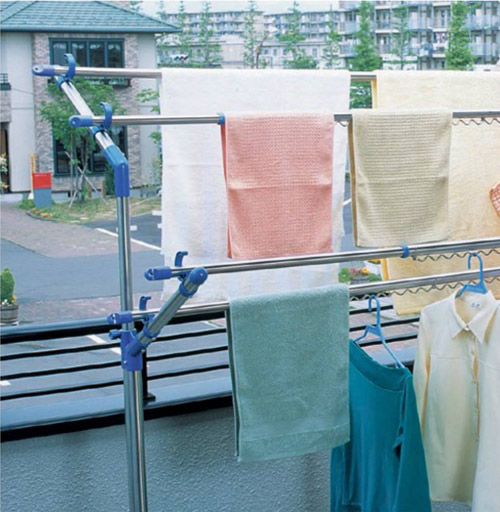
Additional Japanese Techniques for Faster Drying
1. Use a Fan to Improve Airflow Indoors
When weather is humid or rainy:
• Place a fan directly toward the hanging laundry.
• Set the fan to oscillate so air reaches all sides.
• Pairing a fan with a dehumidifier creates the perfect indoor drying environment.
This method is so effective that Japan sells purpose-built laundry-drying fans.
2. Make Use of Multi-Tier Drying Racks
Indoor drying racks are staples in Japanese households, especially in apartments.
• Racks can be positioned near windows or warm, airy spaces.
• Multi-tier racks maximize vertical space and allow multiple garments to dry efficiently.
• Some racks even fold away neatly when not in use—ideal for small living spaces.
Spacing is critical: garments should never touch each other.
3. Avoid Overloading the Washing Machine
One of the biggest reasons clothes dry slowly is improper washing.
• Overloaded machines don’t rinse or spin effectively.
• Clothes come out overly wet and heavy.
Japanese households wash more frequent, smaller loads to ensure a thorough spin cycle, which removes excess water and drastically shortens drying time.
4. Choose Detergents Designed for Faster Drying
Japan produces specialized detergents that:
• Reduce water retention within fabrics
• Minimize odors caused by humidity
• Keep clothes smelling fresh indoors
Some detergents include deodorizing or antibacterial ingredients specifically made for rainy seasons.
The Science Behind These Methods
Everything comes down to evaporation and airflow:
• Moisture must escape from fabric into the surrounding air.
• More airflow = faster evaporation.
• More heat = faster moisture movement.
• More exposed surface area = shorter drying time.
The “hang and sway” method increases airflow penetration and surface exposure, accelerating the transition from liquid water to vapor. Fans, heat, and sunlight all amplify this natural process.
Extra Tips Inspired by Japanese Laundry Culture
• Open windows on opposite sides of the room to create cross-ventilation.
• Shake garments before AND after hanging to improve airflow.
• Hang heavy fabrics on thick, sturdy hangers so they don’t fold or sag.
• Use clothespins strategically to prevent bunching.
• Rotate thick items halfway through drying to expose the damp side.
Small habits make a big difference.
Conclusion
Japan’s “hang and sway” technique isn’t just a cultural tradition - it’s a smart, science-backed system for drying clothes quickly and effectively, even in limited spaces and humid conditions. By combining thoughtful hanging methods, airflow management, sunlight, and the right washing habits, anyone can reduce drying time and prevent musty odors.
Next time you’re dealing with thick towels, bulky jackets, or heavy bedding, try these Japanese techniques. You’ll notice fresher, faster results—and laundry day will feel easier, cleaner, and more efficient.