Many households panic when they see the non-stick coating on their pan starting to peel.
The usual reaction is to throw it away immediately and buy a new one.
However, kitchenware experts say that you don’t always need to discard it — certain pans can actually be restored to a non-stick condition safely and effectively.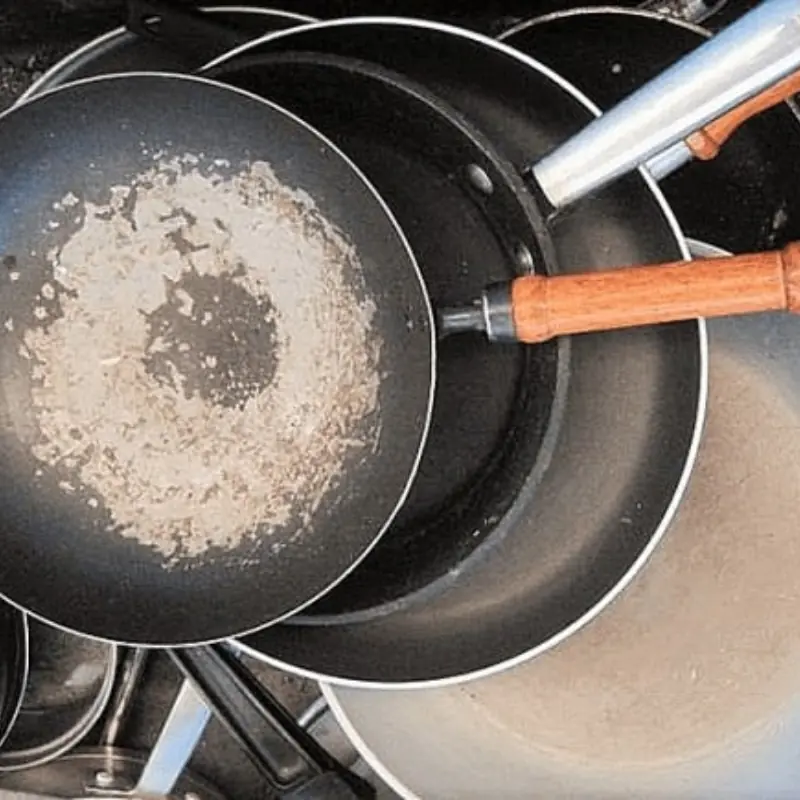
Here’s how to rescue a pan that seems ready for the trash.
1. When Can a Peeling Non-Stick Pan Still Be Restored?
If the non-stick layer:
-
Peels in small patches
-
Has surface scratches from scrubbing
-
Loses slipperiness but doesn’t expose the aluminum or steel base
Then the pan can still be treated to regain its non-stick performance.
If the metal core is exposed, the pan is warped, or the coating is severely damaged, replacement is recommended.
2. The “Seasoning Method” — Creating a Natural Non-Stick Layer
Similar to seasoning cast-iron pans, you can recreate a new non-stick layer using oil.
How to do it:
-
Wash and dry the pan completely.
-
Apply a thin layer of cooking oil over the entire interior surface.
-
Heat the pan on low for 5–10 minutes to let the oil polymerize into a protective film.
-
Let it cool, then wipe off any excess oil.
This oil layer bonds to the surface and helps the pan become smooth and non-stick again.
3. Use Oils With a High Smoke Point for Better Durability
Oils such as:
-
soybean oil
-
sunflower oil
-
canola oil
create a stronger, longer-lasting non-stick film.
4. Avoid Using Steel Wool or Abrasive Scrubbers
These tools only worsen the peeling and shorten the pan’s lifespan.
For cleaning, use:
-
a soft sponge
-
warm water
-
baking soda for stubborn stains
5. How to Maintain the Restored Non-Stick Surface
-
Avoid heating the pan empty
-
Do not use metal utensils
-
Prevent thermal shock (no rushing cold water onto a hot pan)
-
Cook over medium or low heat to preserve the coating
With proper care, the restored non-stick surface can last several months to even a year.
Conclusion
A peeling non-stick pan isn’t always destined for the trash.
In many cases, with the right method, you can restore its surface and keep using it safely, saving money while maintaining cooking performance.