
Plantar Warts on Your Feet: Why They’re Often Mistaken for Calluses
Many people notice rough, thickened skin on the soles of their feet and assume it’s just a harmless callus. However, in some cases, what looks like a callus may actually be a plantar wart—a condition that requires different care and attention.
Understanding the difference is essential to avoid improper treatment and unnecessary discomfort.
What Are Plantar Warts?
Plantar warts are small growths that develop on the bottom of the feet. They are caused by the human papillomavirus (HPV), which enters the skin through tiny cuts or weak spots.
These warts often appear on pressure points such as the heels or the balls of the feet and may grow inward due to constant pressure.
Why They’re Easily Confused with Calluses
At first glance, plantar warts and calluses can look very similar.
Calluses are thickened layers of skin that form due to repeated friction or pressure, acting as a natural protection for the skin.
Because plantar warts also develop in high-pressure areas and can be covered by hardened skin, many people mistake one for the other.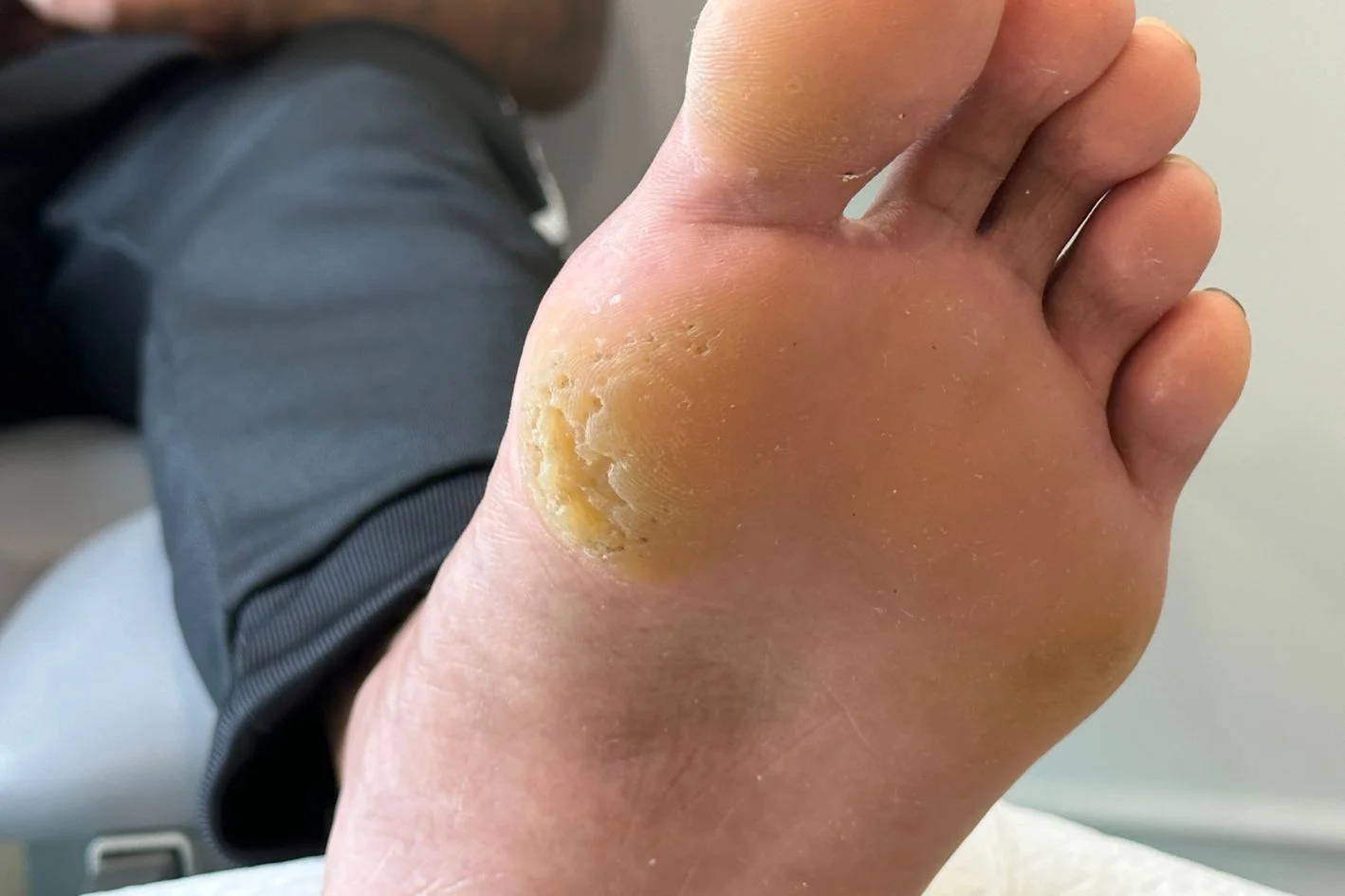
Key Differences You Should Know
1. Cause
- Plantar warts: Caused by a viral infection (HPV)
- Calluses: Caused by friction or pressure
2. Appearance
Plantar warts often:
- Have small black dots (tiny blood vessels)
- Interrupt normal skin lines
Calluses:
- Appear as thick, rough, yellowish skin
- Usually maintain normal skin patterns
3. Pain Pattern
Plantar warts tend to hurt when pressure is applied from the sides, while calluses are more painful under direct pressure.
4. Contagious vs Non-Contagious
Unlike calluses, plantar warts are contagious because they are caused by a virus.
Why You Shouldn’t Ignore Plantar Warts
Although plantar warts are usually not dangerous, they can:
- Become painful when walking
- Spread to other areas of the foot
- Multiply if left untreated
In some cases, they may persist for months or even years./assets/images/provider/photos/2652490.jpg)
When to Seek Medical Attention
You should consider seeing a healthcare professional if:
- The growth becomes painful
- It changes in size or appearance
- It doesn’t go away over time
Proper diagnosis is important to ensure the right treatment.
Conclusion
Not every thick patch of skin on your foot is just a callus.
What seems harmless could actually be a plantar wart that requires proper care. Paying attention to the signs—and knowing the difference—can help you avoid discomfort and protect your overall foot health.