The Mysterious Island with Stunning Beauty but Few Dare to Visit: The Terrifying Truth Behind It
This island carries a haunting past.
Just a short boat ride off the coast of Ross-shire, in the Inner Hebrides of western Scotland, lies Gruinard Island, stretching about 2 kilometers in length. Despite its picturesque appearance, with rocky shores and lush natural vegetation, this island has remained uninhabited for over 50 years, with very few people daring to set foot on it.
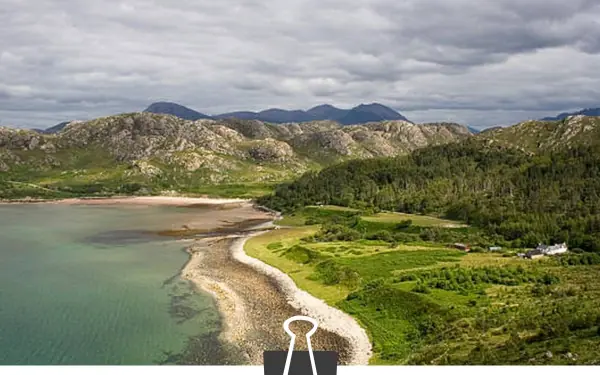
The Frightening History of Gruinard Island
The reason behind Gruinard’s eerie isolation lies in its terrifying past. This island became the site of the United Kingdom’s first outdoor biological weapons experiments.
During World War II, the British feared that Nazi Germany might use chemical weapons. Germany had pioneered the use of mustard gas in World War I, and its chemical industry had grown into the world’s largest. Scientists at Porton Down, a top-secret British military laboratory, were tasked with researching chemical and biological weapons to counter this potential threat.
Their primary focus was anthrax, a deadly infectious disease caused by Bacillus anthracis. While anthrax typically affects livestock and wild animals, it can also infect humans. When inhaled, ingested, or contacted through the skin, anthrax spores cause severe symptoms such as high fever, chills, coughing, shortness of breath, nausea, vomiting, excessive sweating, and extreme fatigue. If left untreated, the disease can quickly become fatal.
By 1942, after extensive laboratory testing, the British government decided to conduct real-world experiments. Gruinard Island, located in one of the most remote parts of the UK, was deemed the perfect site.
In the first experiment, scientists tied around 80 sheep at various distances from an anthrax bomb, which was then detonated. The sheep quickly became infected and died. In subsequent tests, bombers flew over the island, releasing anthrax-filled bombs that killed even more animals. Scientists in hazmat suits later returned to dissect the infected sheep and analyze the impact of anthrax.
The British government officially stated that the experiments were purely defensive, aimed at preparing for possible biological warfare. However, secret plans were also drawn up to use anthrax as a weapon against enemy forces. Fortunately, anthrax bombs were never deployed during the war.
A Toxic Legacy: The Island Becomes Uninhabitable
Despite the war ending, anthrax bacteria remained in the island’s soil, making Gruinard one of the most dangerous places on Earth.
After the war, attempts were made to decontaminate the island, but they failed. Gruinard was deemed too hazardous for human habitation, and access to the island was strictly prohibited—except for occasional scientific studies to monitor contamination levels.
Some even referred to Gruinard as "a poisoned monster." By the 1980s, recognizing that the problem wouldn’t resolve itself, the British government launched a massive decontamination effort. Scientists, vaccinated against anthrax and clad in protective suits, returned to the island to disinfect it. They sprayed seawater mixed with 280 tons of formaldehyde onto the topsoil, applying 50 liters of the solution per square meter.
In the summer of 1987, a flock of sheep was placed on Gruinard Island, and none showed signs of illness. In 1990, the UK Ministry of Defence officially declared the island "safe." It was then sold back to the heirs of its original owners for £500. However, no one has chosen to live there since.
A Place of Fear and Mystery
In 2022, a massive fire engulfed Gruinard Island. Witnesses described the scene as an "apocalyptic blaze."
The island sparked curiosity again in 2023 when YouTuber Dara Tah decided to spend a night there and collect soil samples to test for anthrax.
Although authorities had deemed the island decontaminated, Tah and his companion still wore protective suits as a precaution while filming their adventure.
Fortunately, the samples they collected tested negative for anthrax, confirming that the island is now safe to visit. However, despite this reassurance, many locals remain hesitant to step foot on Gruinard Island.