Smartphones have become an essential part of everyday life. From communication and work to entertainment and navigation, people rely heavily on their devices throughout the day. Because of this constant usage, keeping a phone battery healthy and long-lasting has become increasingly important. Many people believe that charging a phone battery to 100% is the best way to ensure it lasts longer during the day. However, modern battery science suggests that frequently charging your phone to full capacity may actually reduce its long-term lifespan.
Understanding how smartphone batteries work can help users make better charging decisions and extend the life of their devices. Most smartphones today use lithium-ion batteries, which behave differently from the older battery technologies used years ago.
Understanding Lithium-Ion Batteries
Lithium-ion batteries are designed to store energy efficiently while remaining lightweight and compact. These batteries power almost every modern smartphone, laptop, and tablet. Unlike older nickel-based batteries, lithium-ion batteries do not suffer from the “memory effect,” meaning they do not need to be fully discharged before charging again.
However, lithium-ion batteries are sensitive to stress caused by extreme voltage levels. When a battery reaches 100% charge, the voltage inside the battery cells becomes higher. Maintaining this high voltage for long periods can slowly degrade the battery’s internal chemistry.
Over time, this degradation reduces the battery’s capacity, meaning it will hold less energy and need to be charged more frequently.
Battery Stress at Full Charge
Charging a battery to 100% places it under greater electrical stress compared to charging it to slightly lower levels such as 80% or 90%. At full capacity, lithium-ion batteries operate at their maximum voltage level. This condition can accelerate chemical aging inside the battery.
The longer a battery remains at full charge, the more strain it experiences. This is especially common when people leave their phones plugged in overnight. While modern smartphones have safety systems that stop charging when the battery is full, the device may still maintain a high voltage state for several hours.
Repeated exposure to this high-voltage state can gradually reduce battery health over time.
The Ideal Charging Range
Many battery experts suggest keeping a smartphone battery between 20% and 80% for optimal longevity. This range helps reduce stress on the battery and slows down chemical wear inside the cells.
Charging within this range also helps maintain a stable voltage level, which allows the battery to function more efficiently over a longer period of time. Some smartphone manufacturers even include built-in features that limit charging to around 80% in order to protect battery health.
For example, certain devices offer “optimized charging” settings that pause charging at about 80% and only complete the charge shortly before the user typically wakes up or begins using the device.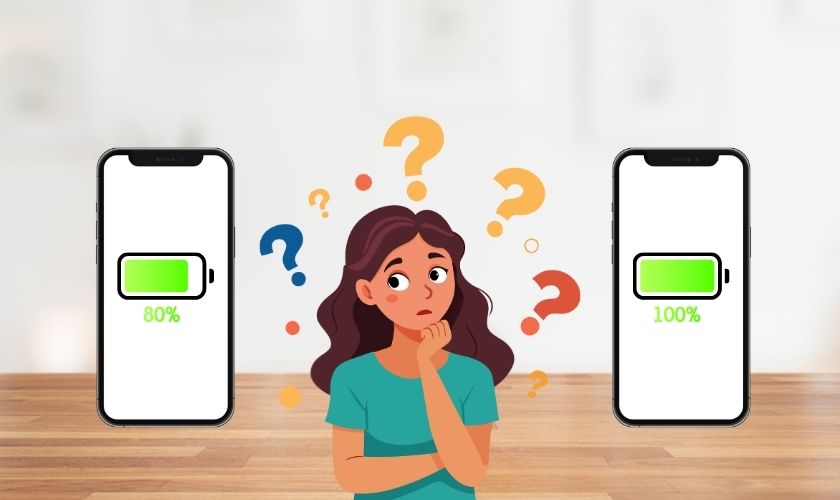
Heat: Another Major Factor
Heat is another factor that significantly affects battery health. Lithium-ion batteries are sensitive to high temperatures, and heat can accelerate battery degradation.
Charging a phone to 100% while it is also generating heat—such as during gaming, video streaming, or using heavy applications—can increase the stress on the battery even more. In addition, keeping a phone plugged in under a pillow or blanket while charging can trap heat and worsen the problem.
To reduce battery wear, it is best to charge the phone in a cool, well-ventilated place and avoid heavy usage while it is charging.
Why Overnight Charging Isn’t Always Ideal
Many people have the habit of plugging in their phones before going to bed and leaving them charging overnight. While smartphones today include protective charging circuits that prevent overcharging, the battery still spends several hours at or near 100% charge.
This prolonged high-voltage state contributes to long-term battery wear. Over months or years, this can lead to noticeable battery degradation, causing the phone to lose capacity faster than expected.
Using smart charging features or unplugging the phone once it reaches around 80–90% can help minimize this effect.
Battery Lifespan and Charge Cycles
Battery lifespan is often measured in charge cycles. A charge cycle represents the total usage of 100% battery capacity, though it does not need to occur in a single charge. For example, using 50% of the battery one day and another 50% the next day equals one full cycle.
Most lithium-ion batteries are designed to maintain good performance for around 300 to 500 charge cycles, after which their capacity gradually declines.
Frequent charging to 100% can increase stress during each cycle, potentially accelerating the rate at which battery health declines.
Small Charging Habits That Make a Difference
Changing a few simple habits can significantly extend battery lifespan. Instead of always charging the phone to full capacity, consider unplugging the device once it reaches around 80–90%.
Using partial charges throughout the day is actually healthier for lithium-ion batteries than waiting until the battery is nearly empty and then charging to full capacity.
Another helpful practice is avoiding extreme battery levels whenever possible. Both very low battery levels and constantly keeping the battery at 100% can increase wear over time.
Modern Technology Helps Protect Batteries
Many modern smartphones include software features designed to protect battery health. These features learn charging patterns and adjust the charging speed to reduce the time the battery spends at full capacity.
For example, some devices delay the final portion of charging until just before the phone is expected to be unplugged. This helps reduce the amount of time the battery remains at maximum voltage.
Although these technologies help reduce damage, adopting good charging habits can further improve battery longevity.
Conclusion
Charging a smartphone battery to 100% may seem like the best way to maximize daily battery life, but doing so regularly can place additional stress on lithium-ion batteries. Maintaining a slightly lower charge level, such as between 20% and 80%, can help reduce chemical wear and extend the overall lifespan of the battery.
By understanding how lithium-ion batteries work and adopting healthier charging habits—such as avoiding overnight charging, limiting exposure to heat, and using partial charges—users can keep their smartphone batteries performing well for a longer time.
Small adjustments in daily charging routines may not seem significant at first, but over months and years, these habits can make a meaningful difference in maintaining battery health and device performance.