If you've ever watched flight attendants closely during takeoff or landing, you may have noticed something unusual. Just before the aircraft begins accelerating down the runway or moments before touchdown - the cabin crew often sit in their jump seats with their backs straight, feet firmly planted on the floor, and in some airlines, their hands tucked under their thighs.
To many passengers, this posture looks strange or even uncomfortable. Some have even wondered whether it is a secret signal or a way to stay warm. In reality, this position has nothing to do with comfort. It is part of a carefully practiced safety procedure taught during cabin crew training.
While not every airline uses exactly the same hand position, many carriers require a version of what is known as the brace position during the most critical phases of flight.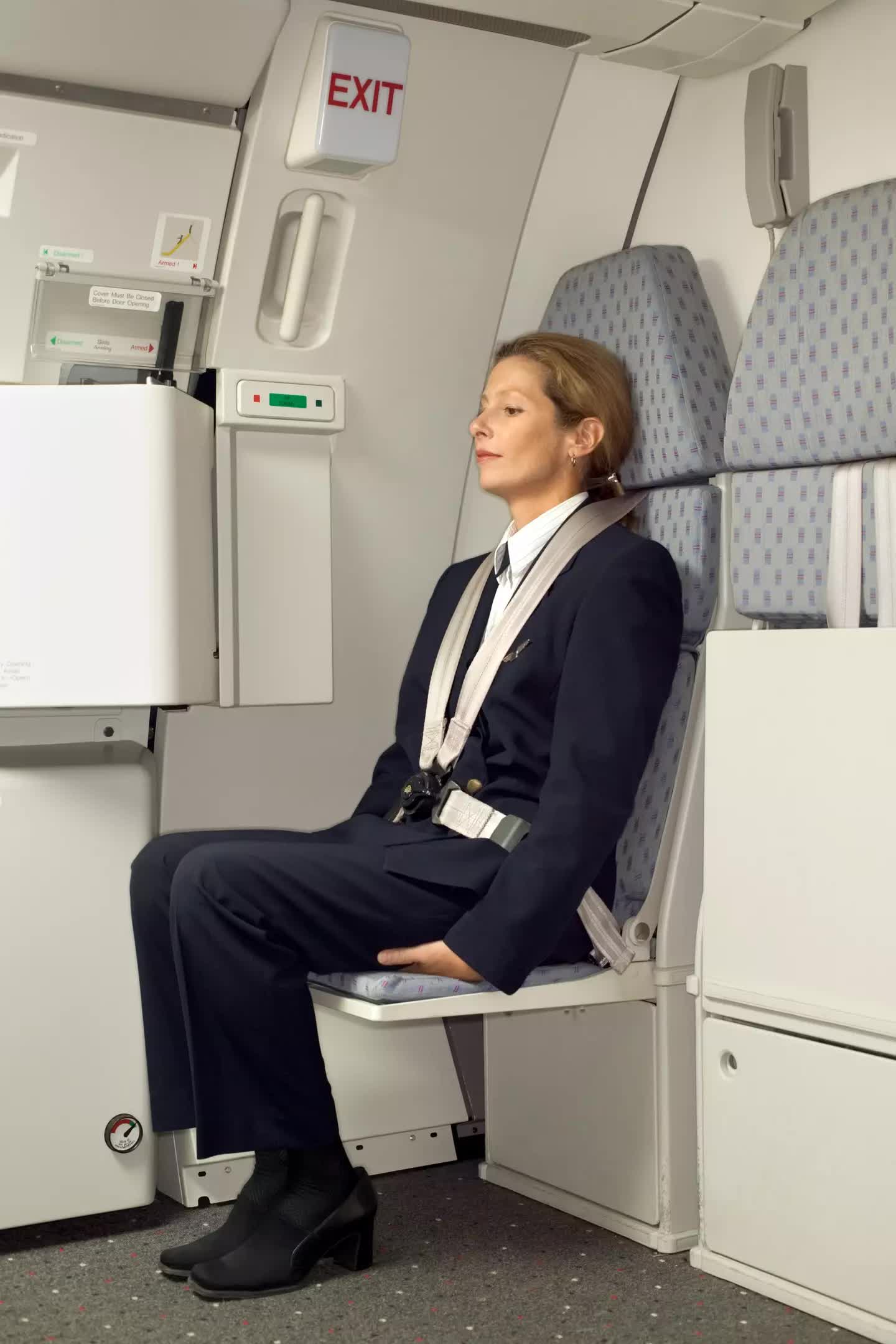
Why Takeoff and Landing Matter Most
Although flying is one of the safest forms of transportation, aviation experts recognize that the majority of aircraft accidents and serious incidents occur during:
-
Takeoff
-
Initial climb
-
Final approach
-
Landing
For this reason, flight attendants become especially focused during these moments.
Unlike passengers, cabin crew are responsible for responding immediately if an emergency occurs.
Their seating position helps prepare them for exactly that.
What Is the Brace Position?
The brace position is a safety posture designed to reduce unnecessary body movement during sudden impacts or severe turbulence.
Depending on the airline, cabin crew may be instructed to:
-
Sit upright.
-
Keep their back firmly against the seat.
-
Place both feet flat on the floor.
-
Secure their shoulder harness tightly.
-
Keep their head facing forward.
-
Rest their hands on their thighs or tuck them underneath their thighs.
Each airline develops procedures based on its aircraft, seat design, and safety training.
Why Place the Hands Under the Thighs?
For airlines that use this technique, placing the hands under the thighs serves several practical purposes.
1. It Helps Prevent Uncontrolled Arm Movement
During a sudden impact or heavy turbulence, the body naturally moves because of inertia.
Loose arms may:
-
Swing forward
-
Strike nearby equipment
-
Cause injuries
-
Delay evacuation readiness
Keeping the hands secured beneath the thighs helps minimize unnecessary arm movement.
2. It Encourages Correct Body Position
The position reminds crew members to maintain proper posture throughout takeoff and landing.
This includes:
-
Sitting upright
-
Keeping the spine aligned
-
Maintaining stable foot placement
A stable posture may help reduce injury during sudden aircraft movement.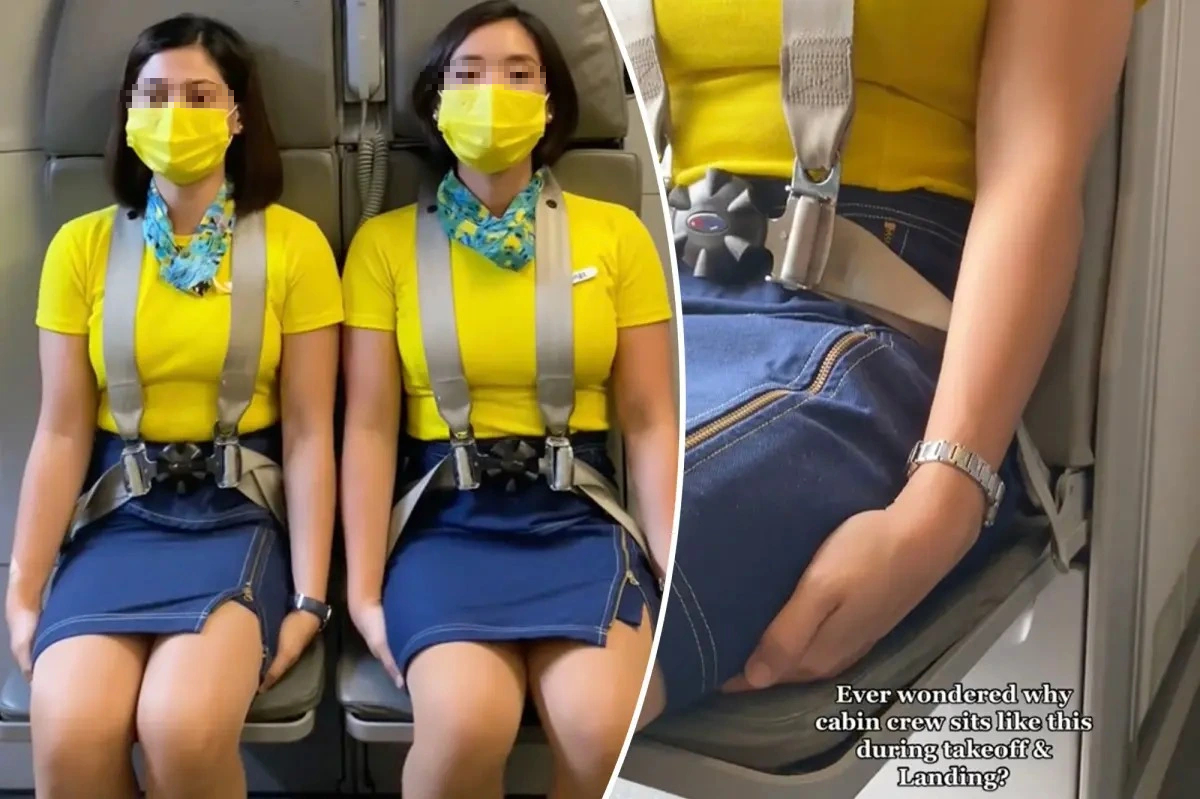
3. It Keeps the Hands Ready After an Impact
Cabin crew must often respond within seconds following an emergency landing.
Their responsibilities may include:
-
Opening emergency exits
-
Assessing outside conditions
-
Directing passenger evacuation
-
Assisting injured passengers
-
Communicating with the flight deck
Keeping the arms close to the body reduces the chance of hand or arm injuries that might interfere with these critical duties.
The Silent Review
Another important part of cabin crew procedures is something passengers usually never notice.
During takeoff and landing, many flight attendants perform a silent review.
This is a mental rehearsal of emergency procedures.
They silently review questions such as:
-
What type of aircraft am I on?
-
Which exit am I responsible for?
-
How do I open this exit?
-
What commands will I shout?
-
What hazards should I look for outside?
-
Where is emergency equipment located?
This constant mental preparation helps improve reaction speed if an emergency occurs.
Why Cabin Crew Don't Read or Use Their Phones
Passengers may wonder why flight attendants seem unusually serious during takeoff and landing.
The answer is simple.
These are working moments—not rest periods.
Cabin crew remain fully alert to monitor:
-
Passenger behavior
-
Cabin conditions
-
Unusual sounds
-
Smoke
-
Fire
-
Loose baggage
-
Safety equipment
Their full attention is focused on passenger safety.
Not Every Airline Uses the Same Position
One common misconception is that every airline trains crew identically.
In reality, procedures vary.
Some airlines instruct flight attendants to:
-
Place hands on their thighs.
-
Fold hands together.
-
Rest hands on armrests.
-
Tuck hands beneath the thighs.
All of these positions serve the same general purpose:
To maintain stability and prepare for a rapid response if necessary.
What Passengers Should Do During Takeoff and Landing
Passengers also have an important role in maintaining safety.
Before takeoff and landing:
-
Fasten your seat belt securely.
-
Return your seat to the upright position.
-
Store tray tables.
-
Keep carry-on bags properly stowed.
-
Remove headphones if instructed.
-
Follow crew instructions.
-
Keep electronic devices in the required mode according to airline policy.
These actions help reduce injury and make evacuation easier if needed.
Why Cabin Crew Face the Cabin
Unlike passengers, flight attendants usually sit facing the cabin rather than facing forward.
This allows them to:
-
Observe passengers.
-
Identify problems immediately.
-
Begin giving instructions without delay.
-
Monitor emergency exits.
Their jump seats are specifically designed for rapid emergency response.
Common Myths
Myth 1: They Sit on Their Hands to Stay Warm
False.
The hand position is part of safety procedures, not temperature control.
Myth 2: Every Airline Uses Exactly the Same Technique
False.
Safety procedures vary among airlines, aircraft types, and aviation authorities.
Myth 3: Flight Attendants Relax During Takeoff
Quite the opposite.
Takeoff and landing are among the busiest and most safety-critical parts of every flight for cabin crew.
The Extensive Training Behind the Job
Many people think flight attendants simply serve food and drinks.
In reality, they receive extensive training in:
-
Aircraft evacuation
-
Firefighting
-
First aid
-
CPR
-
Emergency communication
-
Water survival
-
Security procedures
-
Passenger management
Their primary responsibility is always passenger safety.
Final Thoughts
The next time you board a flight, take a moment to observe the cabin crew during takeoff or landing. If you notice a flight attendant sitting with their hands tucked under their thighs—or using another specific hand position - you'll know that it isn't simply a habit. It's part of a carefully practiced safety procedure designed to help them remain stable, reduce unnecessary movement, and prepare to respond immediately if an emergency occurs.
Although individual airlines may teach slightly different brace positions, the purpose is always the same: to maximize safety during the two phases of flight when quick thinking and rapid action matter most. Behind every calm smile and routine announcement is a highly trained professional whose first responsibility is protecting the passengers on board.
Understanding these small details offers a greater appreciation for the extensive preparation and professionalism that help make modern air travel one of the safest ways to travel.