Your Body May Show These Warning Signs Before a Stroke Happens ⚠️
A stroke often seems sudden, but in some cases, the body may begin showing warning signs days, weeks, or even a month beforehand. These early symptoms are sometimes linked to reduced blood flow to the brain or temporary blockages known as transient ischemic attacks (TIAs), often called “mini-strokes.”
Recognizing these warning signs early and seeking medical attention quickly may help reduce the risk of a major stroke and improve outcomes.
Here are 10 possible warning signs that should never be ignored.
1. Sudden Weakness or Numbness
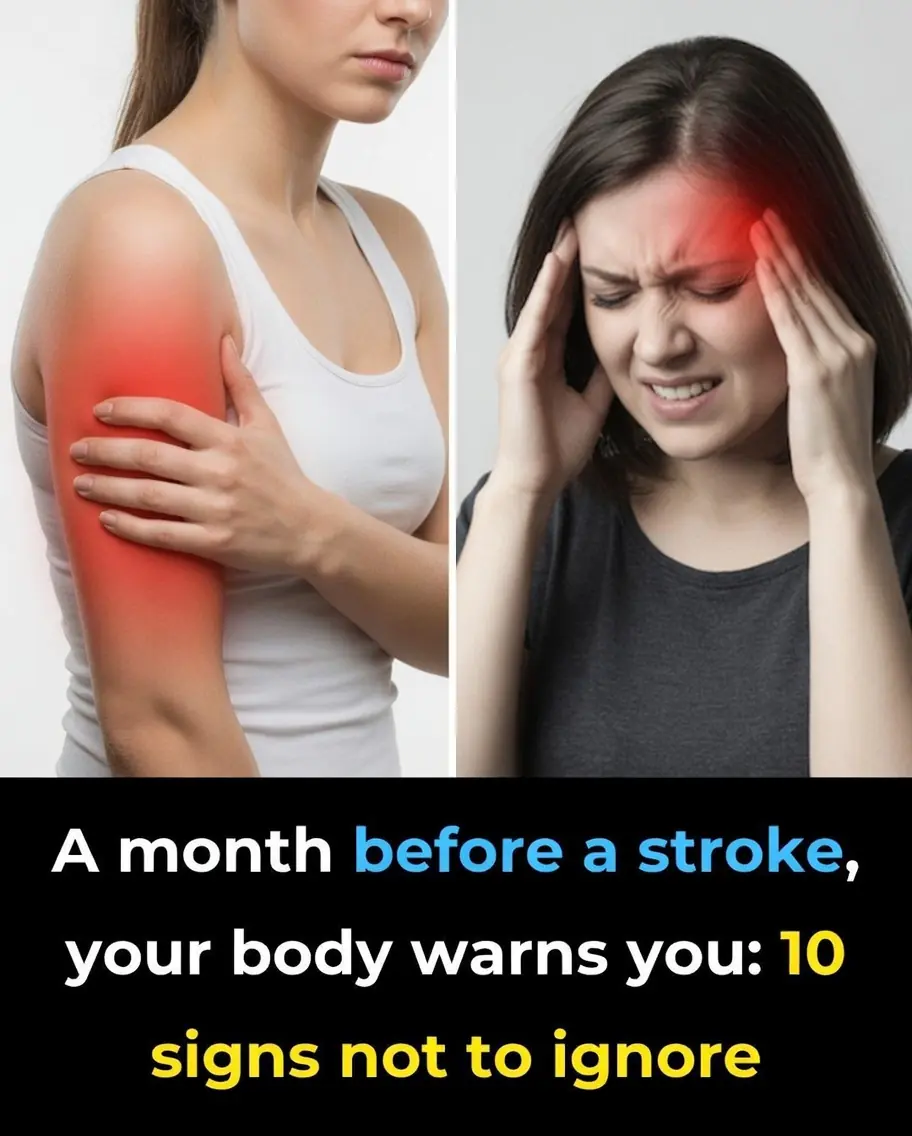
One of the most common warning signs of stroke is sudden weakness or numbness, especially on one side of the body.
This may affect:
- The face
- An arm
- A leg
Some people notice difficulty lifting one arm or a drooping sensation on one side of the face.
2. Trouble Speaking or Understanding Speech
Stroke-related changes in the brain may affect communication.
Possible symptoms include:
- Slurred speech
- Difficulty finding words
- Confusion during conversations
- Trouble understanding simple sentences
Even temporary speech problems should be taken seriously.
3. Sudden Severe Headaches
A sudden, intense headache without a known cause may sometimes be linked to stroke or bleeding in the brain.
Warning signs may include:
- A headache that feels different from usual
- Severe pain appearing suddenly
- Headache combined with dizziness or vision problems
Persistent or unusual headaches deserve medical attention.
4. Dizziness or Loss of Balance
Some people experience:
- Sudden dizziness
- Difficulty walking
- Loss of coordination
- Feeling unsteady
These symptoms may occur when blood flow to parts of the brain becomes impaired.
5. Vision Problems
Stroke warning signs can affect the eyes and visual processing areas of the brain.
Possible symptoms include:
- Blurred vision
- Double vision
- Sudden vision loss in one or both eyes
- Difficulty focusing
Vision changes that appear suddenly should never be ignored.
6. Sudden Confusion
Some individuals experience mental changes before a stroke, such as:
- Difficulty concentrating
- Confusion
- Memory problems
- Trouble understanding surroundings
These symptoms may come and go, making them easy to dismiss.
7. Facial Drooping
A noticeable droop on one side of the face is a classic stroke warning sign.
You may notice:
- Uneven smiling
- Drooping eyelid
- Difficulty moving part of the face
Family members are often the first to recognize this symptom.
8. Unusual Fatigue

Extreme fatigue can sometimes occur before a stroke, especially in women.
People may feel:
- Sudden exhaustion
- Weakness without explanation
- Unusual lack of energy
Although fatigue has many possible causes, sudden or severe fatigue should not be ignored when combined with other symptoms.
9. Nausea or Hiccups
In some cases, strokes affecting certain parts of the brain may cause:
- Nausea
- Vomiting
- Persistent hiccups
These symptoms are less common but may occur alongside dizziness or weakness.
10. Temporary “Mini-Stroke” Symptoms
A transient ischemic attack (TIA) causes temporary stroke-like symptoms that often disappear within minutes or hours.
Symptoms may include:
- Temporary numbness
- Brief speech difficulty
- Sudden confusion
- Temporary vision loss
Many people ignore TIAs because symptoms go away quickly, but experts warn that a TIA can be a major warning sign of a future stroke.
Who Is at Higher Risk?
Several factors may increase stroke risk, including:
- High blood pressure
- Smoking
- Diabetes
- High cholesterol
- Obesity
- Heart disease
- Lack of physical activity
Age also increases stroke risk, though strokes can happen at any age.
When Should You Seek Emergency Help?
Experts recommend seeking immediate medical care if stroke symptoms appear suddenly.
Remember the acronym FAST:
- Face drooping
- Arm weakness
- Speech difficulty
- Time to call emergency services
Quick treatment can significantly reduce brain damage and improve recovery.
Final Thoughts
A stroke may not always happen without warning. In many cases, the body sends signals beforehand — but those symptoms are often overlooked or mistaken for stress, fatigue, or aging.
Paying attention to sudden changes involving speech, movement, vision, balance, or confusion can make a critical difference. While these symptoms do not always mean a stroke is coming, they should never be ignored.
Sometimes the body whispers before a medical emergency happens.