Eggs are a staple food in many households, but not everyone knows how to store them properly. Certain habits that appear harmless—such as keeping eggs in the refrigerator door or transferring them to a separate egg tray—can affect their freshness and safety.
Storing Eggs in the Refrigerator Door
Many people keep eggs in the tray on the refrigerator door because it is convenient and easy to access. However, this is actually the part of the refrigerator where the temperature fluctuates the most.
Every time the door is opened, warm air from outside enters the refrigerator, causing this area to warm up more quickly than the interior compartments. Constant temperature changes can reduce the freshness of eggs over time.
In addition, frequently opening and closing the door increases the likelihood of eggs being bumped, which can cause tiny cracks that are difficult to detect with the naked eye.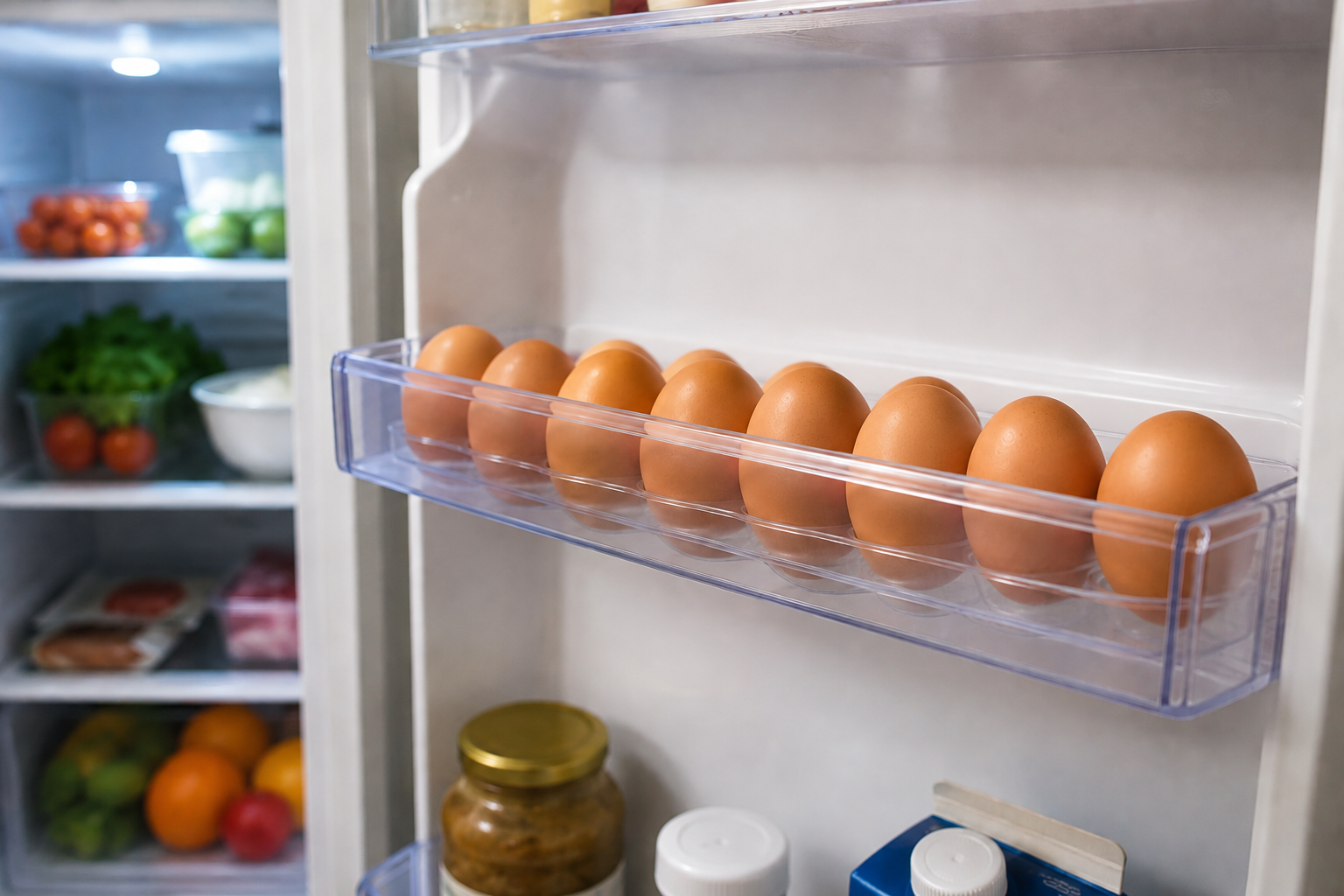
Storing Eggs with the Larger End Facing Down
Many people place eggs in the refrigerator with the larger end facing down and the smaller end facing up. However, this practice may affect the quality of eggs during long-term storage.
When eggs are fresh, the egg white is thick enough to keep the yolk centered. Over time, the structure of the egg white becomes thinner, allowing the yolk to move more easily.
If the larger end is placed downward, the yolk may gradually drift toward the smaller end and come into closer contact with the shell. In contrast, storing eggs with the larger end facing upward allows the air cell at the wider end of the egg to help prevent this, contributing to better egg quality.
Additionally, storing eggs horizontally for extended periods is not recommended, as it may cause the yolk to shift out of position. When boiled or cooked, the yolk may no longer remain centered as it does in properly stored eggs.
Washing Eggs Before Refrigerating Them
Many people believe that washing eggs before storing them makes them cleaner and safer.
However, washing eggs can damage the natural protective coating on the shell. Once this protective layer is weakened, moisture and bacteria from the environment can penetrate more easily through the tiny pores in the eggshell.
If the shells are only dusty or slightly dirty, it is better to wipe them gently with a dry paper towel rather than washing them with water.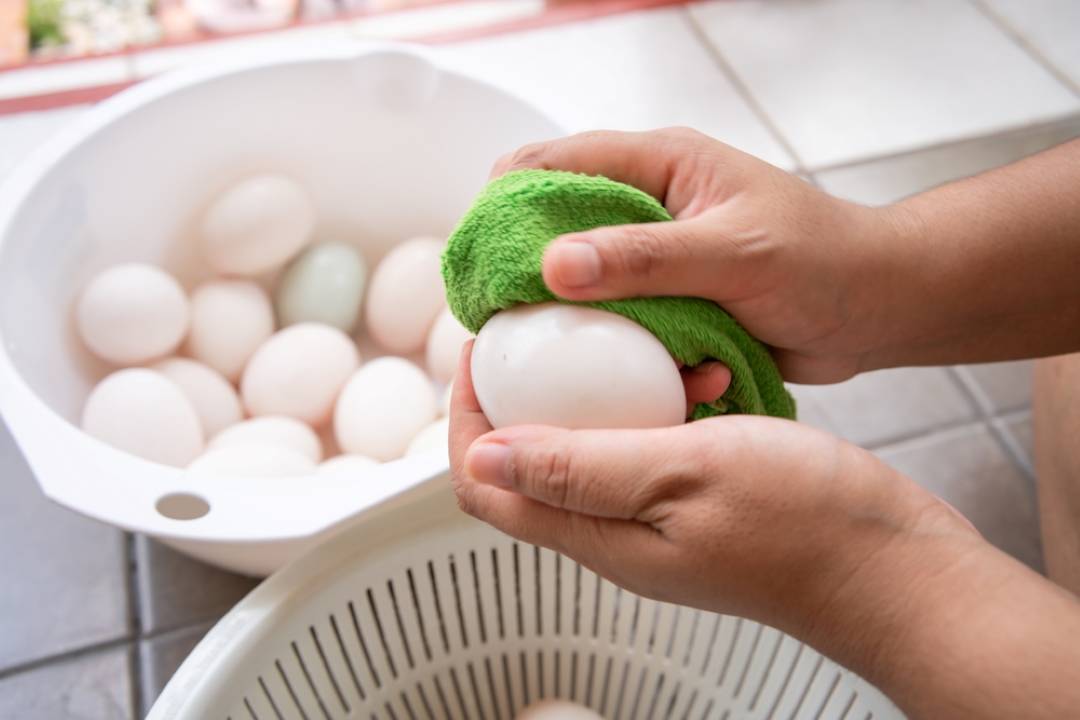
Not Checking the Refrigerator's Temperature
Many people only care whether the refrigerator still feels cold and pay little attention to its actual internal temperature.
According to recommendations from the U.S. Food and Drug Administration (FDA), eggs should be stored at approximately 4°C (40°F) or lower. If the refrigerator compartment is warmer than this, bacteria can multiply more rapidly and shorten the storage life of eggs.
Signs such as food spoiling faster than usual, an overcrowded refrigerator, or frequently leaving the door open for long periods can all affect the refrigerator's cooling efficiency.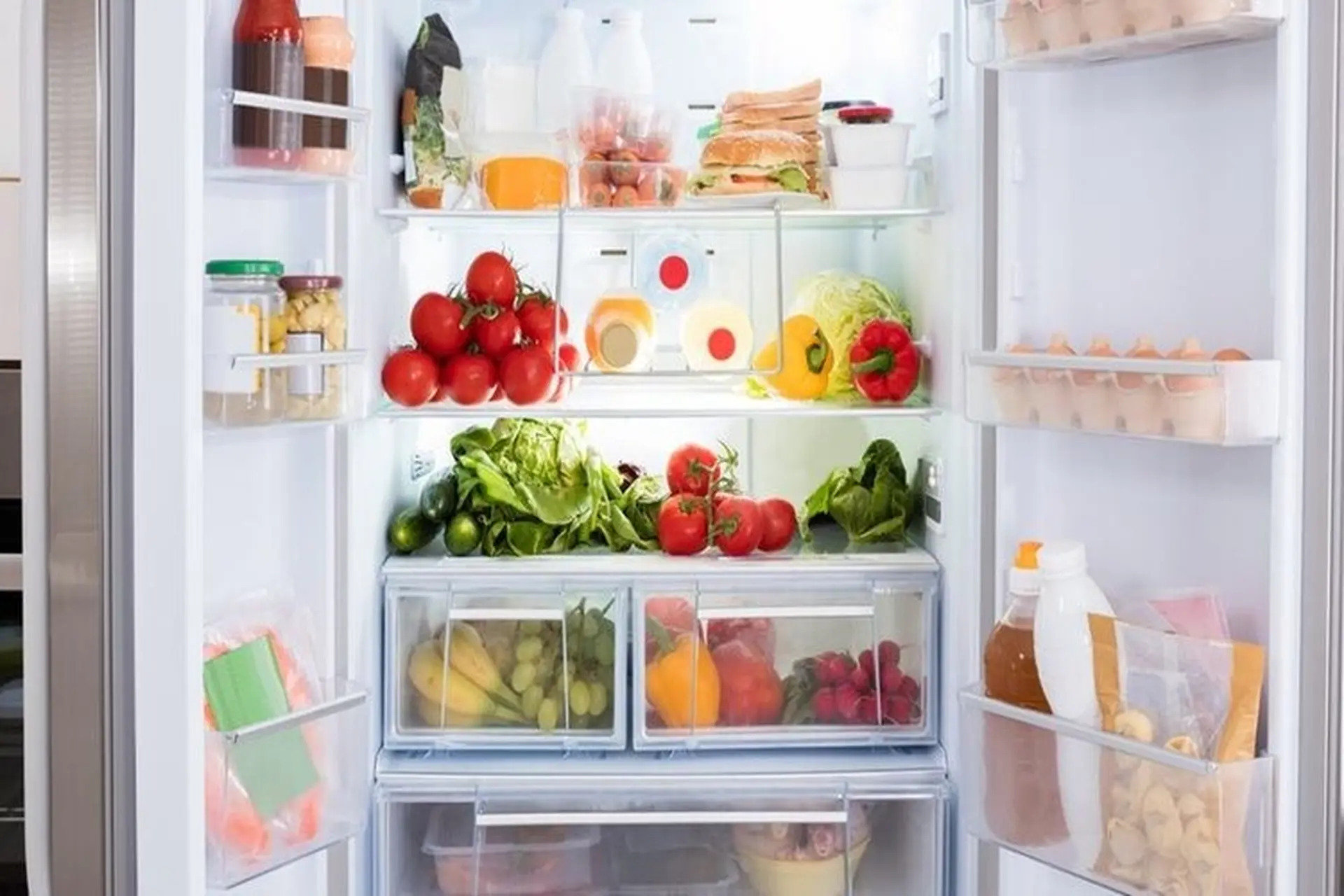
Storing Eggs Next to Strong-Smelling Foods
Eggshells are porous and contain many tiny pores, making them susceptible to absorbing odors from their surroundings.
When stored next to onions, garlic, fish, fish sauce, or other strongly scented foods, eggs may absorb these odors and develop altered flavors over time.
To minimize this problem, eggs should be kept in their own container or stored separately from strong-smelling foods.
How to Store Eggs Properly
To keep eggs fresh for longer, store them on a middle shelf or toward the back of the refrigerator, where the temperature is most stable. It is also best to keep eggs in their original carton or in a covered container to reduce odor absorption and prevent breakage.
Additionally, if you want to check whether eggs are still fresh, you can place them in a bowl of water. Fresh eggs typically sink to the bottom and lie flat. If an egg floats to the surface, it should be discarded to ensure safe consumption.