When Bitten by a Snake, You Should Do These Things First — Fast Action Can Save a Life
A snake bite is one of the most frightening emergencies a person can face. Whether the snake is venomous or non-venomous, the moments immediately after the bite are critical. What you do — and what you avoid — can significantly affect the outcome.
Many people panic or rely on myths that can actually make the situation worse. Knowing the correct first steps can reduce complications, slow venom spread, and protect your life while medical help is on the way.
First: Stay Calm and Limit Movement
The most important thing to do after a snake bite is stay as calm as possible. Panic increases heart rate, which can cause venom to spread faster through the bloodstream if the snake is venomous.
Keep the bitten person still and avoid unnecessary movement. If the bite is on an arm or leg, try to keep that limb immobilized and at heart level or slightly lower.
Second: Move Away From the Snake
Do not attempt to catch, kill, or chase the snake. This increases the risk of additional bites. Simply move to a safe distance.
If possible, take note of the snake’s appearance—its color, size, and head shape—but only if it can be done safely. This information may help medical professionals later.
Third: Remove Tight Items Immediately
Swelling often begins quickly after a snake bite. Remove rings, bracelets, watches, or tight clothing near the bite area as soon as possible.
Once swelling starts, these items can restrict blood flow and cause serious complications.
Fourth: Clean the Wound Gently
If you have access to clean water, gently rinse the bite area to remove dirt or surface venom. Do not scrub aggressively, cut the wound, or apply chemicals.
Cover the bite loosely with a clean, dry cloth or bandage. The goal is cleanliness, not pressure.
Fifth: Seek Medical Help Immediately
Regardless of whether you believe the snake is venomous or not, get medical attention as soon as possible. Many venomous bites initially look mild but worsen over time.
Call emergency services or go to the nearest hospital immediately. Antivenom is the only proven treatment for venomous snake bites, and it works best when given early.
What You Should NOT Do
There are many dangerous myths about snake bites. Avoid these actions at all costs: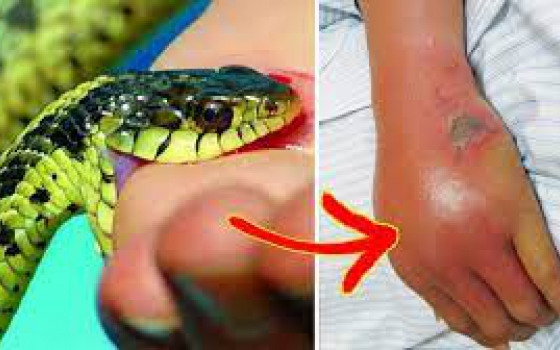
-
Do not suck out the venom
-
Do not cut the wound
-
Do not apply ice or electric shocks
-
Do not use tourniquets
-
Do not drink alcohol or caffeine
These methods do not remove venom and can cause more harm, including tissue damage and infection.
Venomous vs. Non-Venomous Bites
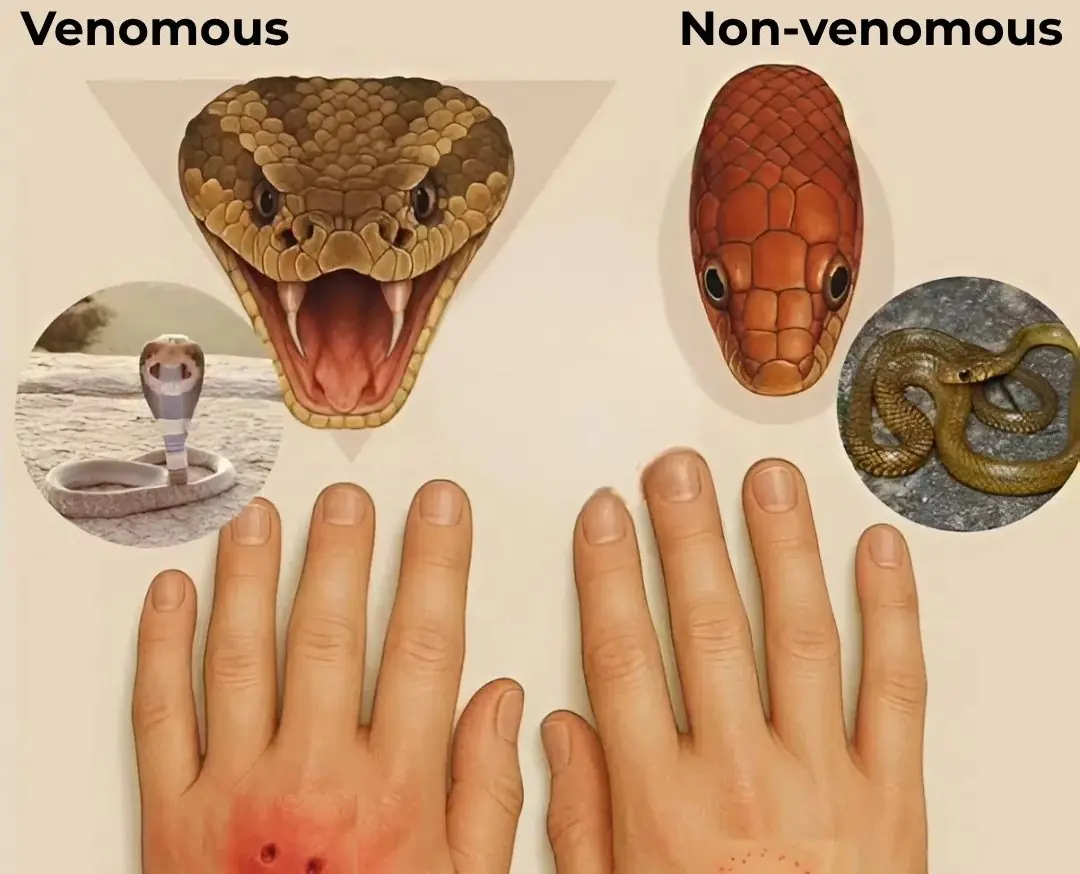
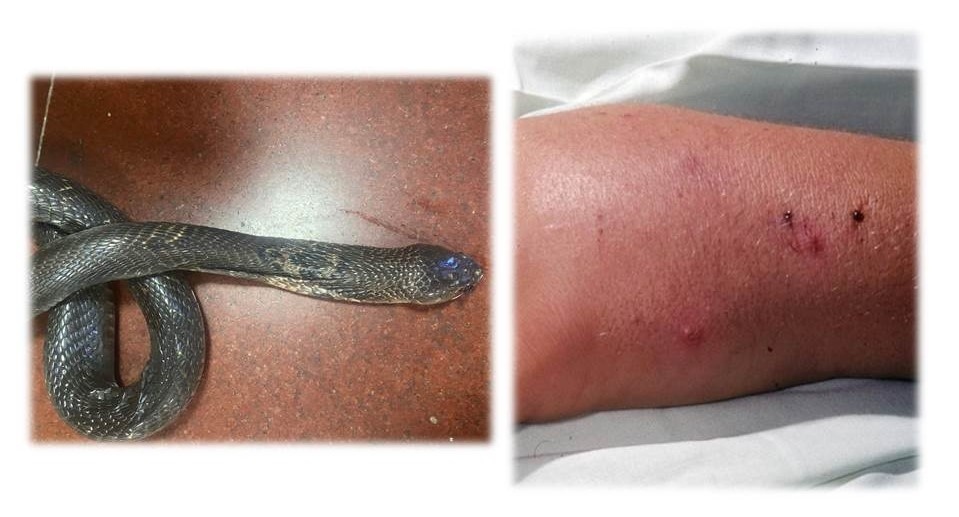
Venomous snake bites often leave two distinct puncture marks, while non-venomous bites may leave multiple small teeth marks. However, appearance alone is not reliable.
Symptoms of a venomous bite may include:
-
Increasing pain and swelling
-
Nausea or vomiting
-
Dizziness or weakness
-
Difficulty breathing
-
Blurred vision or confusion
Never assume a bite is harmless based on how it looks.
While Waiting for Help
If medical help is delayed:
-
Keep the person lying down and still
-
Monitor breathing and consciousness
-
Note the time of the bite and symptom progression
-
Keep the bitten area immobilized
Do not give food or drinks unless instructed by medical professionals.
Final Thought
A snake bite is a medical emergency, but quick, calm, and correct action can make a life-saving difference. The most important steps are simple: stay calm, limit movement, avoid harmful myths, and get professional medical care immediately.
Preparedness saves lives. Knowing what to do before an emergency happens can protect you, your family, and those around you when it matters most.