The Silent Mystery of Seat 11A: From the Most Hated Spot to a “Lucky Charm” That Saved the Only Survivors of Two Air Disasters
After two tragic air crashes, seat 11A has unexpectedly become one of the most sought-after seats for many passengers.
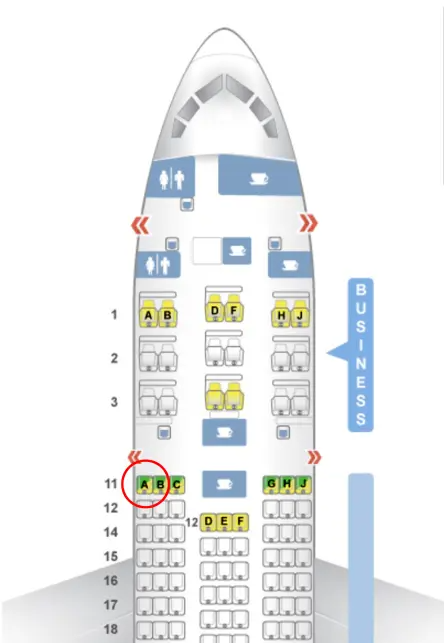
Seat 11A—once considered one of the most disliked spots on an aircraft—suddenly became a symbol of luck following the catastrophic crash involving India’s Air India. The passenger in this seat, 40-year-old British national Vishwas Kumar Ramesh, miraculously survived and became the sole survivor of a disaster that claimed nearly 300 lives. His story not only shocked the public but also changed perceptions about aircraft seating overnight.
According to Ramesh, the accident happened just about 30 seconds after takeoff. A loud explosion was heard before the Boeing 787 lost control and slammed into the ground. In that life-or-death moment, he managed to jump out of the aircraft. When he regained consciousness, he found himself surrounded by bodies and charred debris. In panic, he was taken by ambulance to a hospital. Ramesh had traveled to India to visit relatives and was returning to the UK with his brother. They were seated in different rows, and after the crash, he was unable to locate his brother.
Remarkably, this was not the first time seat 11A was associated with a miraculous survival story. According to Daily Mail, Thai singer Ruangsak Loychusak also escaped death while sitting in seat 11A during the 1998 crash of Thai Airways flight TG 261. The aircraft plunged into a swampy area in Surat Thani province while preparing to land. At the time, the flight was en route from Bangkok to southern Thailand when it lost control, killing 101 of 132 passengers and all 14 crew members, and injuring 45 others. Loychusak, seated in 11A, survived. After reading about the Air India crash, he said he felt “chilled to the bone” by the eerie coincidence.
Previously, seat 11A on many aircraft models—typically located in the mid-section of the plane—was avoided by passengers because it was slow to deplane, had poor visibility, or lacked a window due to air-conditioning system placement. But after the extraordinary survival stories of Ramesh and Loychusak, seat 11A is now being hailed as the “lucky seat” and has become a social-media sensation.
The story has also sparked a new seating trend, referred to by experts as the “Vishwas Effect.” In many Indian cities, the number of passengers requesting seats near emergency exits—especially seat 11A—has surged. Some travelers are even willing to pay extra for what they believe to be a seat offering higher survival odds, despite aviation experts confirming that all seats meet the same safety standards.
From a psychological perspective, experts say that although the belief in luck has no scientific basis, it offers passengers a sense of reassurance. For that reason, seat 11A—once one of the most disliked seats on an airplane—has unexpectedly become one of the most popular choices among travelers.