Quick Test to Predict Lung Cancer? What This Finger Gap Really Means
Images like this are spreading fast online, claiming that a simple finger test can help “predict lung cancer.” The method looks easy: you place the tips of your index fingers together and check for a small diamond-shaped gap. If the gap is missing, the image suggests there may be a serious problem with your lungs.
It sounds alarming—and convincing. But what is the truth behind this test? Doctors say the reality is more complex, and misunderstanding it can cause unnecessary fear.

What Is the Finger Test Shown in the Image?
The test shown is commonly known as the Schamroth window test. When you place the tips of your index fingers together, most healthy people can see a small diamond-shaped space between the nails.
If that space is absent, it may indicate a condition called finger clubbing. Finger clubbing causes the fingertips to enlarge and the nails to curve downward.
This physical sign has been recognized in medicine for over a century—but it is often misunderstood online.
What Finger Clubbing Really Indicates
Finger clubbing is not a disease itself. It is a physical sign that can be associated with several underlying conditions. One of the most well-known is lung disease, including lung cancer, but it is far from the only cause.
Clubbing may also be linked to:
-
Chronic lung infections
-
Congenital heart disease
-
Liver disease
-
Inflammatory bowel disease
-
Long-term low oxygen levels
This means that a missing gap does not equal lung cancer.
Why Lung Cancer Is Often Mentioned
Lung cancer is frequently highlighted because finger clubbing appears in a significant number of people with advanced lung tumors. The condition develops due to long-term changes in blood flow and oxygen delivery, which can affect nail and bone tissue.
However, many people with lung cancer never develop finger clubbing, and many people with finger clubbing do not have cancer.
Doctors stress that this sign is non-specific. It can raise suspicion, but it cannot confirm or predict lung cancer on its own.
Why This Test Is Misleading Online
Social media posts often present this test as a “quick diagnosis” or “early warning.” That is misleading and potentially harmful.
Finger clubbing usually develops slowly over time, often when a disease has already progressed. It is not an early detection tool and cannot replace medical screening methods such as imaging or laboratory tests.
Relying on this test alone may either:
-
Cause unnecessary panic, or
-
Create false reassurance that delays real medical care
Both outcomes are dangerous.
Real Warning Signs of Lung Cancer
Doctors emphasize that symptoms matter far more than finger shape. Warning signs that should never be ignored include:
-
Persistent cough lasting weeks
-
Coughing up blood
-
Shortness of breath
-
Chest pain
-
Unexplained weight loss
-
Constant fatigue
If these symptoms appear—especially in smokers or people exposed to pollution or chemicals—medical evaluation is essential.
How Lung Cancer Is Actually Detected
There is no simple home test for lung cancer. Proper diagnosis requires medical tools such as:
-
Chest X-rays or CT scans
-
Blood tests
-
Bronchoscopy
-
Biopsy
Early detection programs focus on low-dose CT scans, particularly for high-risk individuals. These methods save lives—not finger tests.
What You Should Do If You Notice Changes in Your Fingers
If you notice your fingertips becoming rounder, nails curving more, or the gap disappearing, do not panic. But do not ignore it either.
The right step is to:
-
See a healthcare professional
-
Discuss your medical history
-
Get proper testing if needed
Doctors look at the whole picture, not a single sign.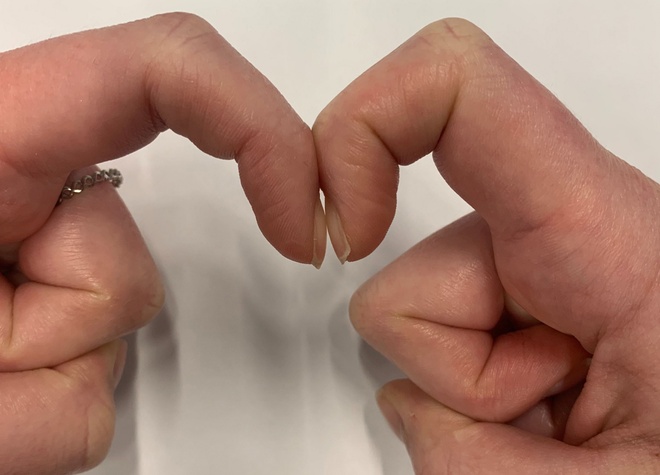
The Bottom Line
The finger gap test shown in the image is not a lung cancer predictor. It is a rough screening sign for finger clubbing, which can be linked to many conditions—some serious, some not.
Lung cancer cannot be detected by touching your fingers together. Trusting viral shortcuts can delay real diagnosis and treatment.
When it comes to serious diseases, medical evaluation—not social media tests—is the only reliable path.