Two-way mirrors are often associated with controlled environments such as police interrogation rooms, research laboratories, or security monitoring areas. Because of this, most people assume they are rare, regulated, and used only for legitimate purposes. Unfortunately, this assumption can lead to a false sense of security.
In reality, the misuse of two-way mirrors poses a serious and often overlooked threat to personal privacy, particularly in places where people reasonably expect to be alone or unobserved. As awareness grows, more individuals are beginning to question how much privacy they truly have in public and semi-private spaces.
How Two-Way Mirrors Actually Work
A two-way mirror is not truly “one-way.” It is made of glass coated with a thin, semi-reflective layer. The effect relies entirely on lighting:
-
The brighter side appears reflective, like a normal mirror
-
The darker side becomes transparent, allowing observation
This means that if a mirror is installed between a brightly lit room and a dark space, someone on the dark side can see through it clearly while remaining hidden.
This optical trick is simple, effective, and dangerous when used without consent.
Why Two-Way Mirrors Are Especially Concerning
1. They Blend Into Everyday Life
Mirrors are among the most trusted objects in our daily environment. We use them without hesitation or suspicion. This familiarity makes two-way mirrors particularly invasive, as people rarely question their presence.
Unlike cameras or recording devices, mirrors do not trigger alarm bells in the mind.
2. Detection Is Not Obvious
Two-way mirrors do not emit light, make noise, or require visible wiring. A person could be observed for extended periods without ever realizing it. This silent nature makes violations difficult to detect and even harder to prove.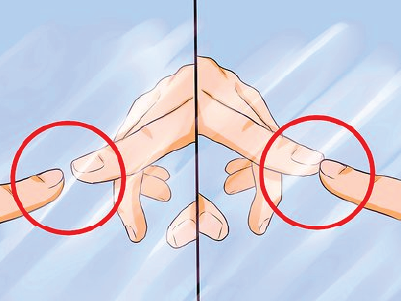
3. The Psychological Impact Can Be Severe
Discovering—or even suspecting—that one may have been watched in a private moment can lead to:
-
Long-term anxiety
-
Feelings of vulnerability and loss of control
-
Distrust of public spaces
-
Emotional distress or trauma
Privacy violations affect not only physical safety but mental well-being.
Places Where Extra Caution Is Warranted
While most mirrors are harmless, certain environments deserve heightened awareness:
-
Public restrooms
-
Changing rooms
-
Hotel rooms and rental accommodations
-
Fitting rooms in stores
-
Public showers or locker rooms
Mirrors in these locations should have a clear, logical purpose. Anything unusual—especially mirrors facing sensitive areas—should not be ignored.
Practical Ways to Identify a Suspicious Mirror
Although no method is foolproof, the following checks can help raise awareness:
The Fingertip Test
Touch the mirror with your fingertip:
-
A visible gap between finger and reflection usually indicates a standard mirror
-
No gap may suggest a two-way mirror
This is not definitive but useful as an initial check.
The Light Test
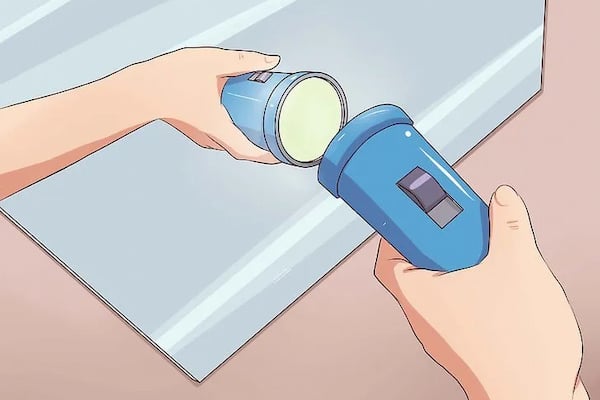
Turn off the room lights and shine your phone’s flashlight directly at the mirror:
-
If you see depth, outlines, or objects behind the glass, the mirror may be transparent
The Sound Test
Tap the surface gently:
-
A solid mirror tends to produce a flat, dull sound
-
A two-way mirror may sound hollow
Trust Context and Instinct
Ask simple questions:
-
Why is there a mirror here?
-
Is it positioned oddly?
-
Does it face an area meant for privacy?
Discomfort is often the first warning sign.
Legal Reality: Misuse Is Often a Crime
In many countries, installing a two-way mirror in private or semi-private spaces without informed consent is illegal. Such actions may fall under:
-
Invasion of privacy
-
Illegal surveillance
-
Voyeurism
If you suspect a two-way mirror:
-
Leave the area immediately
-
Avoid confrontation
-
Report the concern to authorities or management
Your safety and well-being should always come first.
Why Awareness Matters More Than Fear
The goal is not to create paranoia, but to encourage informed awareness. Most mirrors are harmless, and most facilities operate ethically. However, understanding potential risks empowers people to protect themselves and demand accountability.
Privacy should never depend on blind trust—it should be supported by transparency, ethics, and informed consent.
Final Thoughts
Two-way mirrors are tools. Like any tool, their impact depends on how they are used. In controlled, disclosed settings, they serve legitimate purposes. In hidden or deceptive contexts, they become instruments of violation.
Knowing how two-way mirrors work, where they belong, and when to question them allows you to move through the world more confidently—not fearfully.
In an age where surveillance is becoming increasingly subtle, awareness is not suspicion—it is self-respect.