At first glance, placing a pair of scissors into a container or bucket of rice may seem like an odd household habit. Many people assume it serves no real purpose and dismiss it as just another internet trick. However, this simple practice has been used in some households for years, and it is based on a surprisingly practical idea.
Rice is known for its ability to absorb moisture from the surrounding environment. Because excess moisture is one of the main causes of rust and corrosion on metal tools, some people use rice as a simple way to help protect items such as scissors, knives, sewing needles, and other metal objects.
While rice is not a miracle solution, it can offer several benefits when used properly. Let's explore why this unusual household trick continues to attract attention.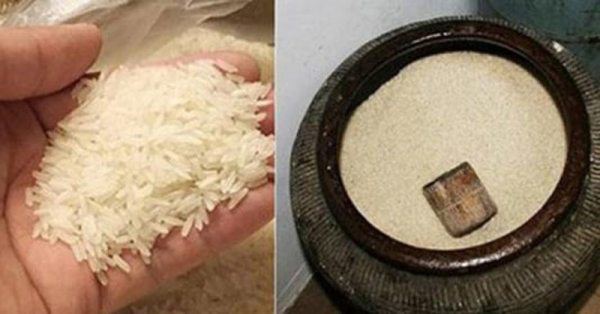
The Hidden Problem: Moisture and Metal Tools
Most people use scissors almost every day without giving much thought to their condition.
However, metal tools face several common threats:
-
Humidity
-
Condensation
-
Water exposure
-
Improper storage
-
Dust accumulation
Over time, these factors may contribute to:
-
Rust
-
Corrosion
-
Dull blades
-
Stiff movement
Even high-quality scissors can deteriorate if stored in damp environments.
Why Rice Is Often Used
Rice naturally absorbs a certain amount of moisture from the air.
This characteristic has led people to use rice for various household purposes, including temporary moisture control.
How Rice Works
Rice grains contain starches and porous structures that can absorb small amounts of humidity.
When scissors are stored in dry rice, the rice may help reduce moisture around the metal surface.
This can create a drier storage environment than leaving the scissors exposed in a humid room.
Benefit #1: May Help Reduce Rust Formation
One of the main reasons people place scissors in rice is to help reduce the risk of rust.
Why Rust Develops
Rust forms when iron-containing metals react with:
-
Oxygen
-
Water
The process accelerates in humid environments.
How Rice May Help
By absorbing some surrounding moisture, rice may help keep the immediate storage area drier.
This may reduce conditions that encourage rust formation.
Important Note
Rice cannot remove existing rust and should not be considered a replacement for proper maintenance.
Benefit #2: Convenient Storage
Many households store rice in large containers or buckets.
Placing scissors inside the rice container offers a practical storage location.
Advantages
-
Easy to find
-
Less clutter in drawers
-
Convenient when preparing food
-
Reduces the chance of misplacing scissors
In many kitchens, scissors are frequently used to open packages, making this storage method particularly convenient.
Benefit #3: Helps Keep Blades Cleaner
Scissors stored loosely in drawers often collect:
-
Dust
-
Lint
-
Food particles
-
Debris
Rice can partially surround the blades, reducing exposure to airborne contaminants.
While not a cleaning method, this storage approach may help keep scissors cleaner between uses.
Benefit #4: Reduces Exposure to Humid Air
In humid climates, moisture can accumulate throughout the home.
Areas such as:
-
Kitchens
-
Laundry rooms
-
Basements
often experience elevated humidity levels.
Rice may help create a small protective environment around metal tools by absorbing some of that excess moisture.
Benefit #5: A Traditional Household Practice
Many household tricks originate from practical experience rather than scientific studies.
For generations, people have used simple methods to preserve tools and household items.
The scissors-in-rice method reflects this tradition of finding inexpensive solutions using readily available materials.
Does Rice Really Absorb Moisture?
The answer is yes—but with limitations.
What Rice Can Do
Rice can absorb a modest amount of moisture under certain conditions.
What Rice Cannot Do
Rice is not as effective as:
-
Commercial desiccants
-
Silica gel packets
-
Dedicated moisture absorbers
Therefore, while rice may help reduce humidity in a small area, it should not be expected to provide industrial-level moisture control.
Common Misconceptions
Myth 1: Rice Sharpens Scissors
Some people believe repeatedly opening and closing scissors through rice sharpens the blades.
There is little evidence supporting this claim.
Proper sharpening requires specialized tools and techniques.
Myth 2: Rice Completely Prevents Rust
Rice may help reduce moisture exposure, but it cannot guarantee rust prevention.
Environmental conditions still play an important role.
Myth 3: Any Rice Works Forever
Rice eventually absorbs moisture and may lose effectiveness.
It should be replaced periodically if used for moisture control.
Additional Ways to Protect Scissors
For better long-term maintenance, experts often recommend combining several practices.
Keep Scissors Dry
Always dry scissors thoroughly after cleaning.
Clean Regularly
Remove sticky residue and dirt from the blades.
Lubricate the Pivot Point
A small drop of oil can help maintain smooth movement.
Store Properly
Choose a dry storage location away from excessive humidity.
Sharpen When Necessary
Sharp blades cut more effectively and safely.
Other Household Items Sometimes Stored in Rice
People sometimes use rice to store:
-
Sewing needles
-
Pins
-
Small metal tools
-
Safety pins
-
Fishing hooks
The goal is generally the same: reducing exposure to moisture.
Is This Trick Worth Trying?
For many households, the answer is yes.
The method is:
-
Simple
-
Inexpensive
-
Easy to implement
-
Low risk
Although the benefits may be modest, some people appreciate the added convenience and moisture protection.
However, it should be viewed as a supplementary storage method rather than a guaranteed preservation solution.
The Science Behind Humidity Control
Humidity affects many household items.
When moisture accumulates, it can contribute to:
-
Rust
-
Mold growth
-
Material deterioration
Reducing humidity is one reason products such as silica gel packets are commonly included in packaging.
Rice operates on a similar principle, although generally with lower moisture-absorbing efficiency.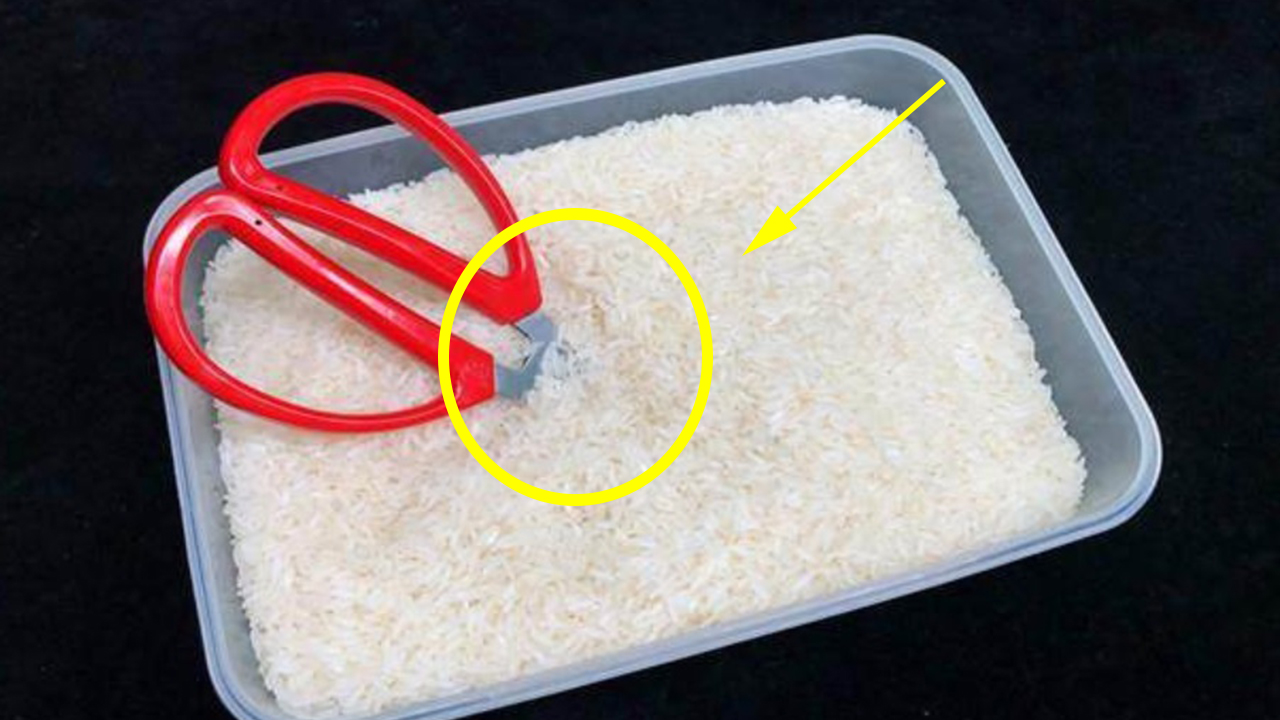
Final Thoughts
The idea of placing scissors in a bucket of rice may sound unusual at first, but it is rooted in a practical concept. Rice can absorb small amounts of moisture, potentially helping to create a drier environment around metal tools. This may reduce rust risk, improve storage convenience, and help keep scissors cleaner.
While rice is not a substitute for proper tool maintenance or professional moisture-control products, it remains an inexpensive household trick that many people find useful. Sometimes the simplest solutions are the ones that survive for generations—not because they are magical, but because they offer small, practical benefits that make everyday life a little easier.
The next time you see a pair of scissors tucked into a container of rice, you'll know there may be more to the story than meets the eye.