Many cat owners are surprised to notice a loose, swinging flap of skin along their pet’s lower belly. Often mistaken for excess fat or a sign of poor health, this feature—commonly referred to as a “primordial pouch”—is actually a normal part of feline anatomy. The image highlighting this area raises a common question: is loose belly skin something to worry about? According to veterinarians, the answer is usually no.
What Is the Primordial Pouch?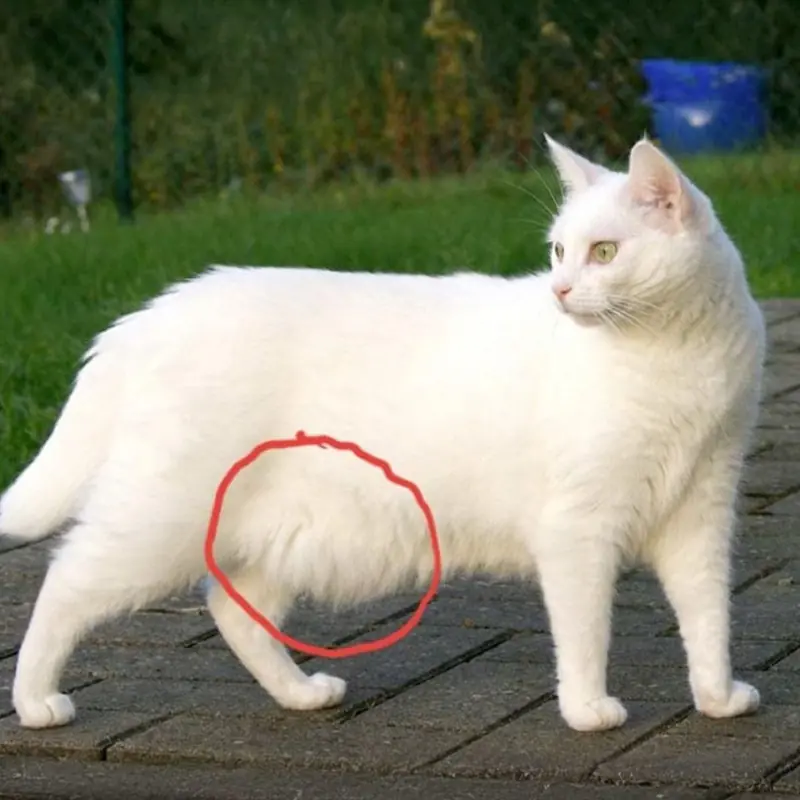
The loose skin located along a cat’s abdomen is known as the primordial pouch. This structure is present in all cats, regardless of breed, age, or size. It typically becomes more noticeable as a cat matures, though it can be seen even in younger animals.
Unlike fat deposits, the primordial pouch is a layer of loose skin, fat, and connective tissue that hangs slightly from the belly. It may sway when a cat walks or runs, which often leads owners to assume their pet is overweight.
Why Do Cats Have It?
Experts believe the primordial pouch serves several important biological purposes:
-
Protection: It acts as a protective layer for vital organs during fights or rough play, shielding the abdomen from injury.
-
Flexibility: The loose skin allows cats to stretch their bodies more effectively, especially when running, jumping, or twisting.
-
Mobility: It enhances a cat’s agility by enabling a longer stride and greater range of motion.
These evolutionary advantages date back to wild ancestors, where survival often depended on speed and flexibility.
Is It a Sign of Obesity?
One of the most common misconceptions is that a hanging belly indicates that a cat is overweight. While obesity in cats is a real concern, the primordial pouch is not a reliable indicator of weight.
Veterinarians recommend assessing a cat’s body condition using other factors, such as:
-
The ability to feel ribs without excess fat covering
-
A visible waistline when viewed from above
-
Overall activity level and behavior
A cat can have a prominent pouch and still be perfectly healthy and fit.
When Should You Be Concerned?
Although the primordial pouch itself is normal, changes in a cat’s body should not be ignored. Pet owners should monitor for signs that may indicate an underlying issue, including:
-
Sudden or rapid weight gain
-
Lethargy or reduced activity
-
Changes in appetite
-
Swelling or firmness in the abdominal area
If the pouch appears unusually enlarged or if there are other concerning symptoms, a veterinary consultation is recommended to rule out health problems such as obesity, fluid retention, or internal conditions.
Differences Among Cats
The size and visibility of the primordial pouch can vary widely among individual cats. Some breeds, such as the Bengal or Egyptian Mau, may have more noticeable pouches due to genetic traits.
Additionally, neutered or spayed cats may develop a slightly more prominent pouch over time, partly due to changes in metabolism and body composition.
Caring for Your Cat’s Health
Maintaining a healthy lifestyle is key to ensuring that your cat’s body—including its primordial pouch—remains in good condition. Veterinarians recommend:
-
Providing a balanced, high-quality diet
-
Encouraging regular physical activity through play
-
Monitoring weight and body condition regularly
-
Scheduling routine veterinary check-ups
These steps help prevent obesity and other health issues that could be mistaken for or confused with normal anatomical features.
Conclusion
The loose skin on a cat’s belly, often highlighted in photos and social media posts, is typically nothing more than a natural and beneficial anatomical feature. Rather than signaling a problem, the primordial pouch reflects a cat’s evolutionary design for protection and agility.
For pet owners, understanding this distinction is important. While it is always wise to stay attentive to changes in a pet’s health, the presence of a loose belly alone is rarely a cause for concern. In most cases, it is simply another fascinating aspect of feline biology—one that underscores just how well-adapted cats are to their environment.