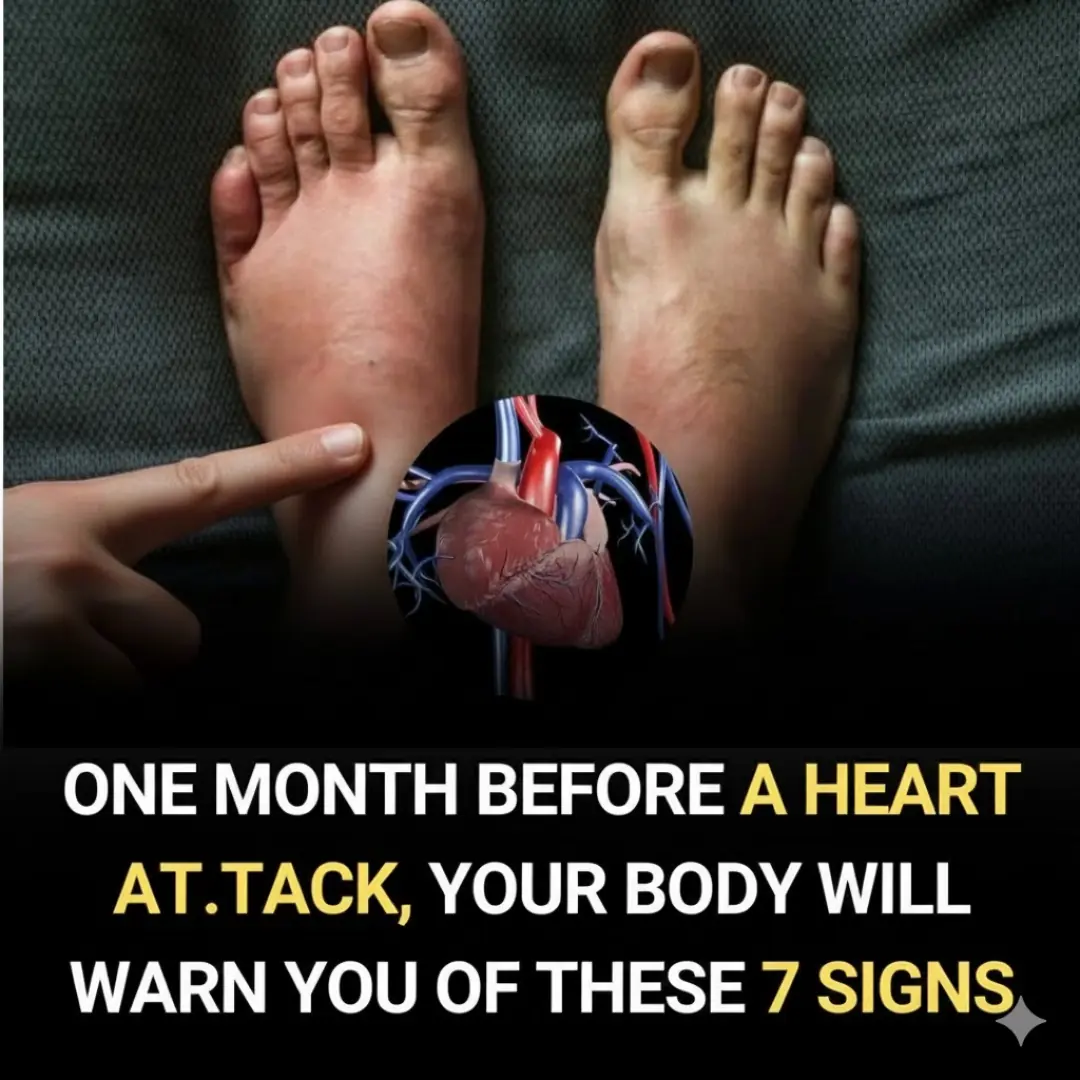
Heart at.tacks rarely happen without warning. While some occur suddenly, many are preceded by subtle but persistent symptoms that
appear days or even weeks beforehand. The problem is that these warning signs are often ignored, misinterpreted, or attributed to stress,
aging, or minor illness.
The statement “one month before a heart attack, your body will warn you” should be understood carefully. Not everyone experiences the
same symptoms, and no single sign can predict a heart attack with certainty. However, medical research and clinical experience show that
many people do experience early warning signals in the weeks leading up to a cardiac event.
Recognizing these signs early can be lifesaving.
Why Early Warning Signs Matter
A heart attack occurs when blood flow to the heart muscle is reduced or blocked, usually due to plaque buildup in the coronary arteries. This
process develops over years, but instability in plaques or reduced oxygen supply can trigger symptoms well before a full heart attack
occurs.
These early symptoms often reflect:
-
Reduced blood flow to the heart
-
Increased strain on the cardiovascular system
-
Inflammation or electrical instability in heart tissue
Ignoring them allows damage to progress silently.
1. Unusual Fatigue That Does Not Improve With Rest
Persistent, unexplained fatigue is one of the most commonly reported early warning signs, especially in women.
What makes it concerning:
-
Fatigue feels overwhelming, not proportional to activity
-
Rest or sleep does not restore energy
-
Daily tasks feel unusually exhausting
This happens because the heart is struggling to pump enough oxygen-rich blood to meet the body’s needs. When the heart works harder
than normal, the entire body feels depleted.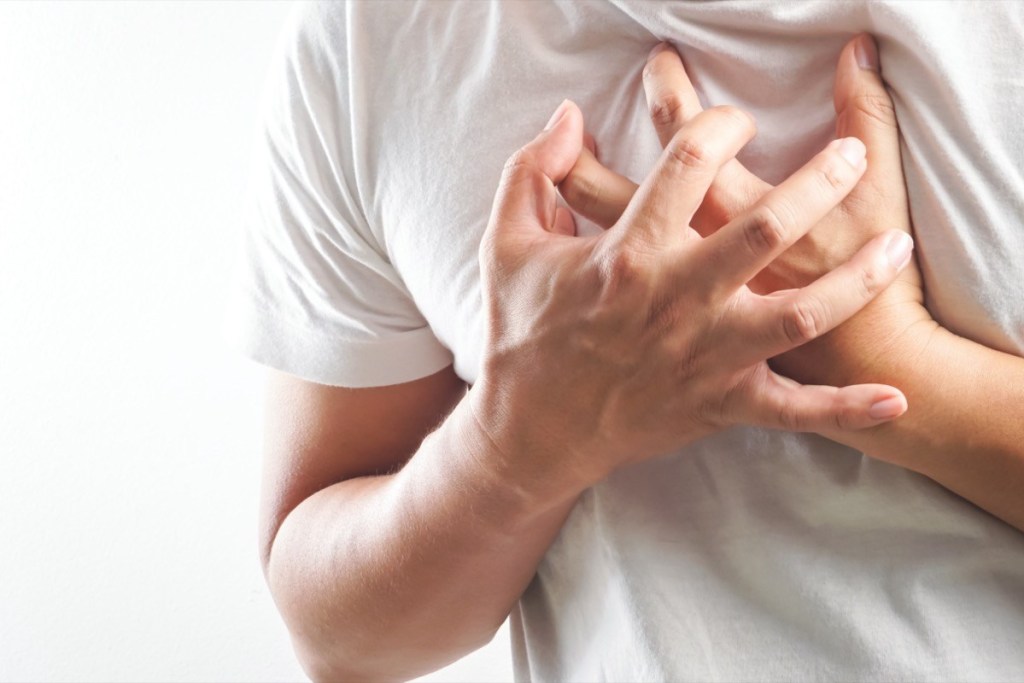
2. Chest Discomfort or Pressure (Not Always Severe Pain)
Chest pain is the most well-known heart attack symptom, but early chest discomfort is often mild and intermittent.
Possible sensations include:
-
Pressure or tightness
-
A heavy or squeezing feeling
-
Burning or fullness in the chest
These sensations may come and go, worsen with exertion, or appear during emotional stress. Because the pain is not sharp or dramatic, many
people dismiss it as indigestion or muscle strain.
3. Shortness of Breath During Normal Activities
Feeling breathless while doing things that were previously easy - such as walking, climbing stairs, or light household work—is a serious red
flag.
Why this happens:
When the heart cannot pump efficiently, oxygen delivery drops, causing the lungs to work harder. This symptom may appear with or without
chest discomfort and often worsens when lying flat.
Shortness of breath can indicate heart strain weeks before a heart attack.
4. Sleep Disturbances and Sudden Anxiety
Changes in sleep patterns are frequently overlooked warning signs.
These may include:
-
Difficulty falling or staying asleep
-
Waking up feeling anxious or restless
-
Nighttime shortness of breath
-
Unexplained feelings of impending doom
Stress hormones often increase as the heart becomes compromised. This can disrupt sleep and trigger anxiety, even in people with no prior
mental health issues.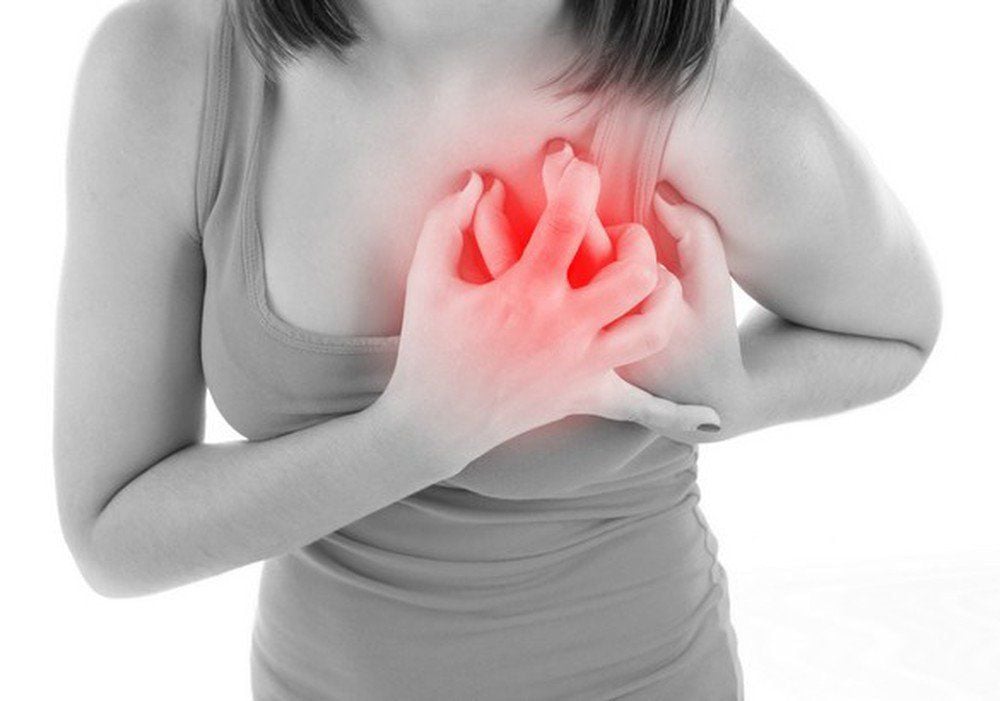
5. Pain Radiating to the Jaw, Neck, Back, or Arms
Heart-related pain does not always stay in the chest. It may radiate to other parts of the upper body.
Common areas include:
-
Left arm or shoulder
-
Neck or throat
-
Jaw or teeth
-
Upper back
This type of pain is often dull, aching, or pressure-like rather than sharp. Because it mimics muscle or dental pain, it is frequently ignored.
6. Digestive Symptoms and Nausea
The heart and digestive system share nerve pathways, which is why cardiac distress can feel like a stomach problem.
Possible symptoms:
-
Nausea or vomiting
-
Indigestion or heartburn
-
Abdominal discomfort
-
Loss of appetite
These symptoms are more common in women and older adults and are often mistaken for food-related issues.
7. Cold Sweats, Dizziness, or Lightheadedness
Sudden sweating unrelated to heat or exercise can be a warning sign of cardiovascular distress.
This may occur alongside:
-
Dizziness
-
Lightheadedness
-
A feeling of weakness or faintness
These symptoms reflect drops in blood pressure or irregular heart rhythms and should never be ignored.
Do These Signs Always Appear One Month Before?
No. The timeline varies widely.
Some people experience symptoms:
-
Weeks before
-
Days before
-
Hours before
Others may experience only one or two subtle signs. The key message is not the exact timing - but pattern recognition. When multiple
unusual symptoms appear together or persist, the risk increases.
Who Is at Higher Risk?
People at increased risk of heart attack include those with:
-
High blood pressure
-
Diabetes
-
High cholesterol
-
Obesity
-
Smoking history
-
Chronic stress
-
Family history of heart disease
In these individuals, early symptoms should be taken especially seriously.
What To Do If These Symptoms Appear
If you or someone else experiences several of these symptoms—especially chest discomfort, shortness of breath, or radiating pain—seek
medical attention immediately.
Early evaluation may include:
-
ECG (electrocardiogram)
-
Blood tests
-
Imaging studies
-
Stress testing
Prompt treatment can prevent permanent heart damage or death.
Final Thoughts
The body often whispers before it screams.
A heart attack is rarely a random event. For many people, the body sends warning signals weeks in advance - but only those who listen in time
get the chance to act.
These symptoms are not meant to cause fear. They are meant to prompt awareness, evaluation, and prevention.
When the body signals distress, ignoring it can be deadly. Listening can be lifesaving.