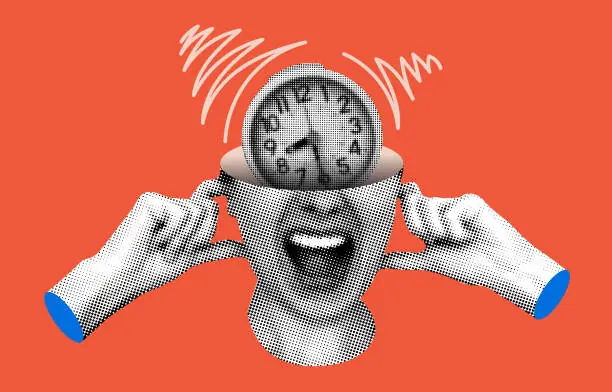
Have you ever wondered why some people feel energized at 6 AM while others only come alive after sunset? This isn’t just about habits or discipline — it’s about your chronotype, your body’s natural preference for sleep and wake timing. And forcing yourself to live outside that rhythm may be quietly affecting your health more than you realize.
Your chronotype is regulated by your circadian rhythm — an internal 24-hour clock that controls hormone release, body temperature, digestion, cognitive alertness, and even mood. While society often rewards early risers, research shows that roughly 30–40% of people are natural evening types. For them, early schedules can create a constant state of “social jet lag.”

Social jet lag happens when your biological clock is misaligned with your social obligations — like waking at 6 AM for work when your body wants to wake at 9 AM. Over time, this mismatch has been linked to:
- Lower cognitive performance in the morning
- Increased stress hormone levels
- Poorer sleep quality
- Higher risk of metabolic issues
- Mood instability and burnout
It’s not laziness — it’s biology.
Hormones play a major role here. Cortisol (your alertness hormone) and melatonin (your sleep hormone) rise and fall based on your chronotype. When you wake too early for your biological rhythm, cortisol may not peak properly, leaving you groggy. At night, melatonin may rise later, making it hard to fall asleep — even when you’re exhausted.
This creates a vicious cycle: sleep deprivation → brain fog → caffeine dependence → poorer sleep.
So what can you do if your schedule doesn’t match your chronotype?

You may not be able to change work hours, but you can reduce circadian strain:
- Use light strategically
Morning sunlight helps shift your clock earlier. Evening dim lighting helps melatonin rise naturally.
- Anchor your wake-up time
Even on weekends, keep wake times within 1–2 hours of your weekday schedule to reduce social jet lag.
- Time caffeine wisely
Avoid caffeine within 8 hours of sleep — evening chronotypes are especially sensitive.
- Align deep work with peak alertness
Do cognitively demanding tasks during your natural focus window — morning for larks, late day for owls.
- Protect wind-down time
Screens, stress, and bright light delay melatonin — especially in night types.
The goal isn’t to force everyone into a 5 AM routine — it’s to respect biological diversity while optimizing within real-life constraints.

When people begin aligning their schedules — even slightly — with their chronotype, they often report:
- Better sleep efficiency
- Improved mood stability
- Higher productivity
- Reduced caffeine dependence
- More consistent energy
Your body clock isn’t a weakness to overcome — it’s a system to understand.
Instead of asking, “How can I wake up earlier?” a better question might be:
“How can I work smarter within my biological rhythm?”
Because sustainable health doesn’t come from fighting your body — it comes from working with it.