A burning ache in the feet. Persistent swelling around the ankles. Skin that feels tight, tender, or oddly heavy.
These symptoms are often blamed on long days, bad shoes, or simple fatigue. But in some cases, doctors warn they can signal something far more serious: advanced fatty liver disease reaching a critical, and potentially irreversible, stage.
This image highlights a connection many people don’t expect—the feet as a warning system for liver failure.
Fatty Liver Disease: Silent for Years, Loud at the End
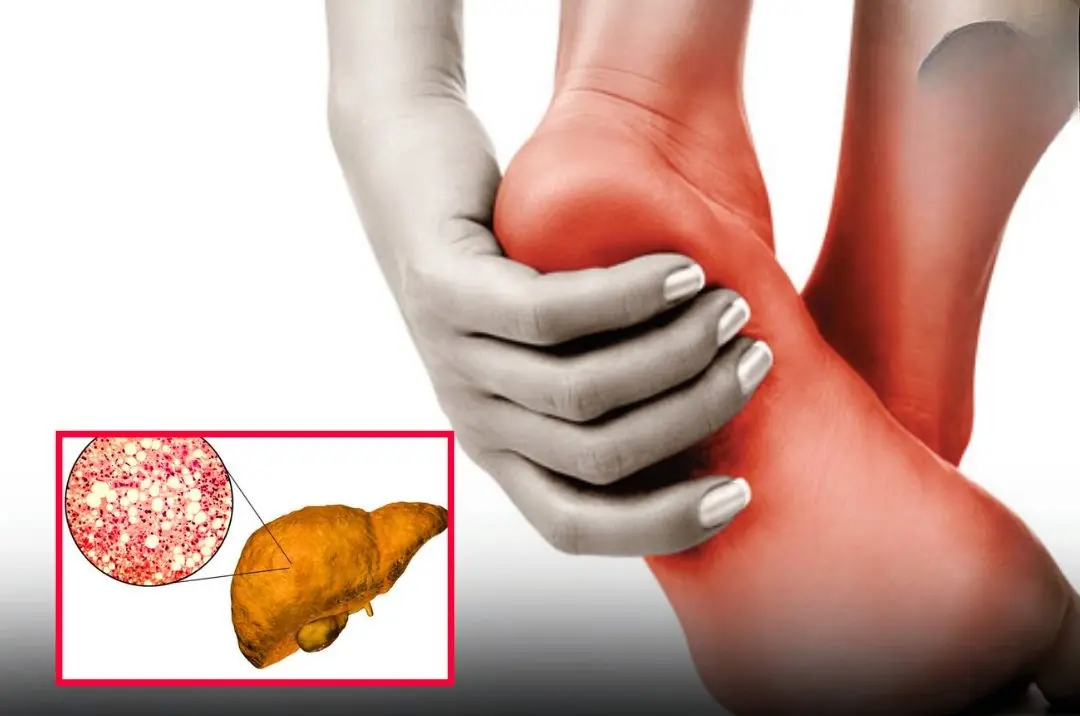
Fatty liver disease develops when excess fat accumulates in liver cells. In its early stages, it often causes no symptoms at all. People can live for years with fatty liver without realizing anything is wrong.
But as damage progresses, the condition can move from simple fat buildup to inflammation, fibrosis, and eventually cirrhosis—a stage where healthy liver tissue is replaced with scar tissue.
Once cirrhosis sets in, damage is often permanent.
And this is where the feet come in.
Why the Feet Reveal Advanced Liver Damage
When the liver is severely damaged, it struggles to perform one of its key roles: regulating fluid balance and blood proteins, especially albumin.
As albumin levels drop and blood flow becomes abnormal:
-
Fluid leaks from blood vessels
-
Gravity pulls that fluid downward
-
The feet and ankles swell first
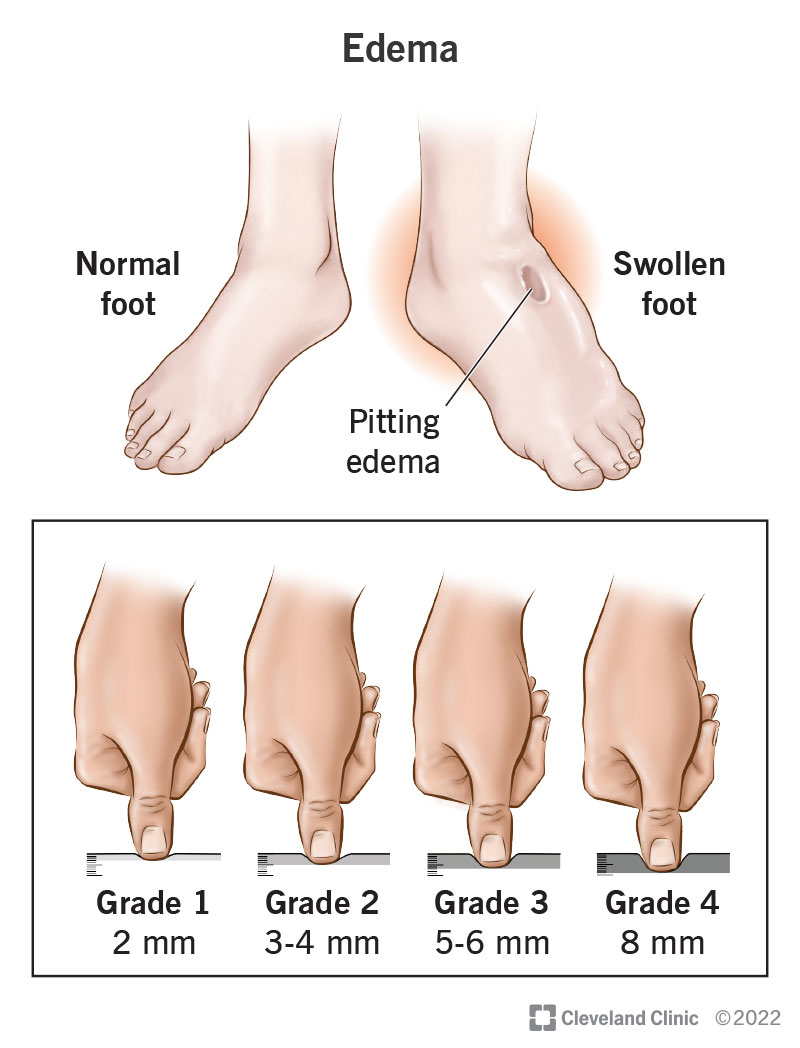
This swelling, known medically as peripheral edema, is not just cosmetic. In advanced fatty liver disease, it can indicate that the liver can no longer compensate.
Doctors consider this a late-stage sign.
The Specific Foot Symptoms That Raise Red Flags
Not all foot discomfort is dangerous. But in advanced liver disease, swelling often has distinctive features:
-
Persistent ankle and foot swelling that does not go down overnight
-
Skin that feels tight, shiny, or stretched
-
Pain or tenderness when pressure is applied
-
Indentations that remain after pressing the skin (called pitting edema)
-
A heavy, aching sensation that worsens throughout the day
When these signs appear alongside fatigue, jaundice, or abdominal swelling, doctors become concerned about irreversible liver damage.
Why This Stage Is Often Called “Irreversible”
In early fatty liver disease, lifestyle changes—weight loss, diet modification, reduced alcohol intake—can often reverse fat accumulation.
However, once cirrhosis develops:
-
Scar tissue cannot return to healthy liver cells
-
Blood flow through the liver becomes permanently disrupted
-
The risk of liver failure, internal bleeding, and infection rises sharply
At this stage, treatment focuses on slowing progression, managing complications, and preserving remaining function rather than reversal.
Foot swelling is one of the visible signs that the liver’s reserve capacity has been overwhelmed.
Why People Miss the Warning
Many people ignore foot swelling because it feels unrelated to internal organs. Common explanations include:
-
Standing too long
-
Aging
-
Weight gain
-
Poor circulation
But liver-related swelling often appears without injury, without overuse, and without improvement, even after rest.
That persistence is the clue.
Other Symptoms That Often Appear at the Same Time
Foot swelling rarely appears alone in advanced fatty liver disease. Doctors frequently see it alongside:
-
Severe fatigue
-
Yellowing of the skin or eyes (jaundice)
-
Abdominal bloating or fluid buildup (ascites)
-
Easy bruising or bleeding
-
Confusion or memory changes
Together, these signs point toward decompensated liver disease, a medical emergency requiring immediate evaluation.
What To Do If You Notice These Changes
Doctors emphasize one key message:
Do not self-diagnose—but do not ignore persistent swelling.
If foot or ankle swelling appears without a clear cause, especially alongside digestive or systemic symptoms, medical evaluation is essential. Blood tests, imaging, and liver function assessments can determine whether the liver is involved—and how advanced the damage may be.
Early detection, even in late stages, can extend life and improve quality of living.
A Visible Signal From a Silent Organ

The liver rarely screams for attention.
It whispers—until it can’t.
When fatty liver disease reaches the point where it announces itself through the feet, the body is sending a message that should never be dismissed.
Not all swelling is harmless.
Not all pain starts where the problem lives.
Sometimes, the feet tell a story the liver has been hiding for years.