Have you ever noticed a tiny mark, hole, or small indentation near the front of someone’s ear? While it may look unusual, this small feature is actually a known anatomical trait called a preauricular pit. Many people discover it by chance, either on themselves or on someone they know.
Although it might appear mysterious at first, this tiny mark is usually harmless and has an interesting explanation rooted in human development and genetics.
What Is a Preauricular Pit?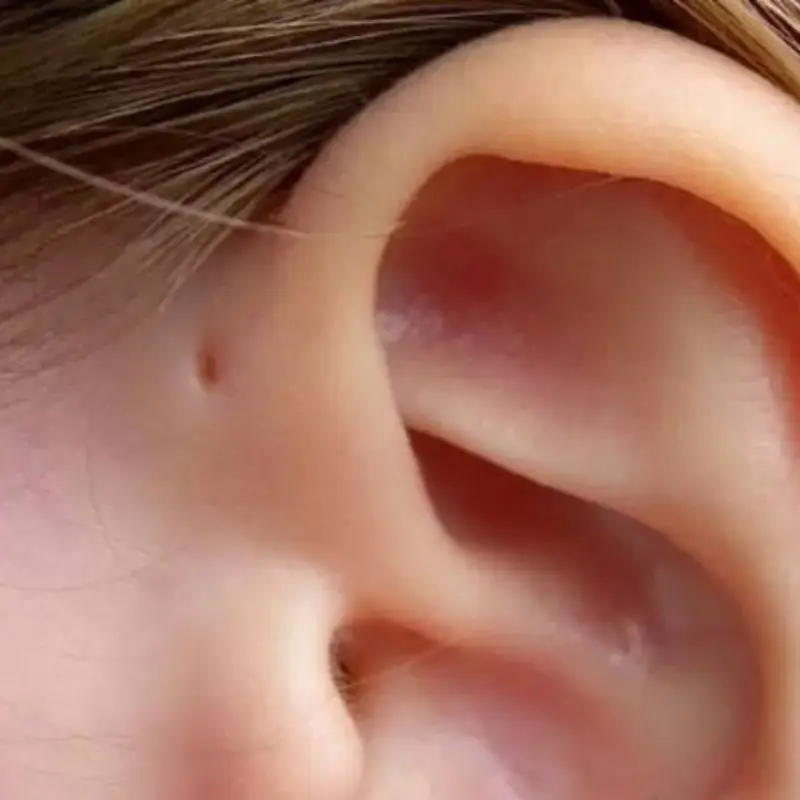
A preauricular pit is a small hole or indentation located near the front of the ear, usually where the ear meets the face. It is present from birth and occurs during the early stages of fetal development.
During pregnancy, the ear forms from several small structures that gradually merge together. If these parts do not fuse completely, a tiny opening or pit can remain near the ear.
In most cases, the pit is very small and may go unnoticed for years.
How Common Is This Trait?
Preauricular pits are relatively uncommon but not rare. Studies suggest that they occur in about 0.1% to 1% of people in many populations, though the frequency may be higher in certain regions or ethnic groups.
Some individuals may have the pit on only one ear, while others may have it on both sides.
Interestingly, the condition can sometimes run in families, suggesting a genetic component.
Does It Cause Health Problems?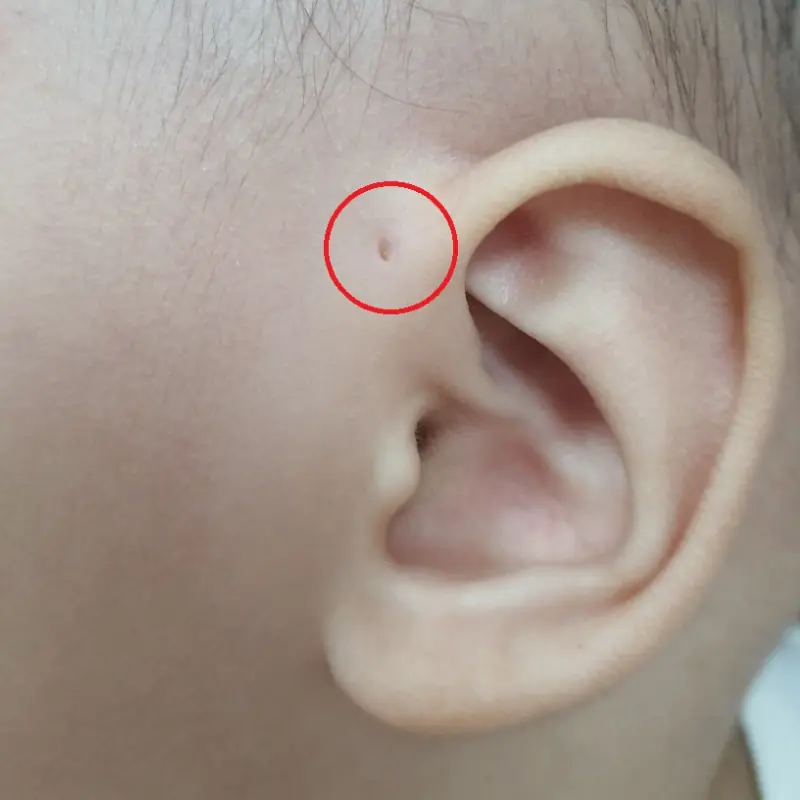
For most people, a preauricular pit causes no problems at all. It is usually just a minor anatomical variation and does not affect hearing or ear function.
However, because the pit is a small opening in the skin, it can occasionally collect dirt or bacteria. In rare cases, this may lead to infection, swelling, or discomfort.
If the area becomes red, painful, or begins to produce fluid, a healthcare professional should evaluate it. Treatment may involve antibiotics or, in some cases, minor surgical removal.
Why Some People Find It Fascinating
Because preauricular pits are relatively uncommon, many people find them intriguing. The tiny mark can easily spark curiosity and questions about why it exists.
Some cultures even associate the feature with folklore or symbolic meaning. In certain traditions, the small mark has been viewed as a sign of uniqueness or special heritage.
While these interpretations are cultural rather than scientific, they show how physical traits can inspire stories and curiosity across different societies.
The Role of Genetics
Researchers believe genetics may play a role in the appearance of preauricular pits. In some families, the trait appears across multiple generations.
However, many people with the feature are the only ones in their family who have it. This suggests that both genetic and developmental factors may influence its occurrence.
Despite this, scientists generally consider it a benign physical variation.
Should You Be Concerned?
In most situations, there is no need to worry about a preauricular pit. Doctors typically view it as a harmless condition that does not require treatment.
The main recommendation is simply to keep the area clean and watch for signs of infection. If problems arise repeatedly, a medical professional may recommend further evaluation.
Otherwise, the small mark is simply a natural variation in human anatomy.
A Small Feature With an Interesting Story
Human bodies contain many small features that often go unnoticed. From birthmarks to dimples, these tiny details can make each person unique.
The small mark near the ear is one of those fascinating traits that highlights how complex and varied human development can be.
While it may seem mysterious at first glance, science offers a simple explanation: it is just a tiny reminder of how the body formed before birth.