When in doubt, eat pistachios. That’s my motto, anyway, and it’s not a bad one to live by.
Because pistachios aren’t just delicious, they’re also incredibly good for you. Packed with protein, fiber and healthy fats, their nutritional lineup puts most snacks to shame. So much so that a recent study examined what happens when you swap out less nutritious snacks for pistachios, and spoiler alert: it makes a big difference. (We’ll get into that below.)
'I Don't Believe Amanda Frances': Bozoma Saint John Calls Out Her 'RHOBH' Castmate 'I Don't Believe Amanda Frances': Bozoma Saint John Calls Out Her 'RHOBH' Castmate Watch MoreYou don’t just have to take my word for it: Researchers, doctors and dietitians have been praising pistachios for years, studying and preaching their impressive impact on heart health, brain function, digestion and more.
If you’re as pistachio-obsessed as I am and eating them daily, you’re in the right place. Here’s what really happens to your body when you make this tree nut your go-to snack, according to a registered dietitian. Let’s go nuts.

What Happens if You Eat Pistachios Every Day, According to a Dietitian
You’ll get tons of nutrients and support whole-body health
Pistachios are kind of the furthest you can get from snacking on “empty calories.“
“Pistachios have a varied nutrient profile, mainly arginine and other amino acids, dietary fiber, essential micronutrients (copper, vitamin B6, manganese, thiamin, phosphorus, magnesium, potassium, iron, zinc), plant sterols (stigmasterol and campesterol), phenolic compounds (resveratrol and catechins) and monounsaturated fatty acids (mainly oleic),” Candace Pumper, MS, RD, CSOWM, LD, staff dietitian at The Ohio State University Wexner Medical Center, tells Parade.
As for why that matters? The aforementioned nutrients are collectively associated with lower risk of heart disease, diabetes, overweight/obesity, gastrointestinal disorders and some types of cancers via several mechanisms, Pumper explains.
You’ll eat more protein—without excess calories

Pistachios are surprisingly high in protein: One ounce (roughly a handful) provides six grams of protein, making them a smart snack swap for more processed or carb-heavy options.
What’s more, despite being 159 calories per ounce, pistachios are lower in calories than walnuts (185 calories per ounce) and macadamia nuts (200+ calories per ounce), making them a lighter but nutrient-dense option.
Related: Want To Lose Belly Fat? Registered Dietitians Say You Should Eat This Nut Every Day
Weight loss and maintenance might feel easier
While pistachios are calorie-dense, research suggests they could support healthy weight management when eaten in moderation.
For example, a 2020 review of 11 studies found that regular pistachio consumption was linked to lower BMI, though it didn’t significantly change body weight or belly fat. Another 2020 study found that participants who ate pistachios had lower blood pressure, consumed fewer sweets and ate more fiber—all of which contribute to gradual, sustainable weight loss. Considering just one ounce of pistachios provides 11% of the recommended daily value of fiber, that’s no surprise.
You could reduce your risk of metabolic syndrome
According to more recent research published in Clinical Nutrition in 2025, swapping high-carb snacks like crackers for tree nuts like pistachios can significantly reduce one’s risk of metabolic syndrome (a cluster of conditions that raises your chances of developing type 2 diabetes, stroke and heart disease)—and do so in just four months.
More specifically, participants showed higher levels of healthy fats like oleic acid after four months of consuming tree nuts, which is known to play a role in improving fat processing and metabolic health. (That’s why it’s such a staple of the Mediterranean diet!)
Your brain and mood might get a boost
Fun fact: Pistachios have the highest vitamin B6 content of any tree nut—and that matters more than you might think.
“Importantly, vitamin B6 has been shown to have antioxidant and anti-inflammatory properties which are of value in immunity, brain function, cognition and mood,” says Pumper. “B6’s influence on these areas of health may be summarized by its role in supporting macronutrient metabolism and making hemoglobin, DNA and neurotransmitters.”
Translation? Vitamin B6 helps your body make the chemicals your brain needs to feel sharp, balanced and focused, meaning your mind and mood will thank you.
You could lower your blood pressure and cholesterol
Pistachios don’t just support your brain and mood—they’re also great for your heart, blood pressure and cholesterol levels.
Research also suggests that pistachios may help improve blood pressure and lower cholesterol levels, especially when used to replace other calories in the diet. In fact, a 2016 review found that in nearly two-thirds of studies, pistachio consumption was linked to lower total and LDL (“bad”) cholesterol and even a bump in HDL (“good”) cholesterol.
Related: ‘I’m a Cardiologist and This Is the Nut I Eat Almost Every Single Day for Heart Health’
You may boost your vascular health
Pistachios can help keep your blood vessels healthy, thanks to nutrients like vitamin B6 and arginine.
“Vitamin B6 (along with arginine) in pistachios also has beneficial effects on vascular health through its influence on homocysteine levels, hemoglobin production, arterial blood flow, vascular inflammation and endothelial function,” says Pumper. “These collectively contribute to reduced risk of atherosclerosis (plaque buildup).”
You may start sleeping better
Surprisingly, pistachios could help improve your beauty sleep due to their high melatonin content.
“Melatonin is a pineal hormone produced in the tryptophan-serotonin pathway, which regulates the body’s circadian rhythm of sleep patterns as well as influences immunity, reproductive health and gut motility,” Pumper explains. “Importantly, vitamin B6 found in pistachios is a co-factor for turning tryptophan into melatonin.”
Your eye health could improve
You’re not just seeing things! Numerous studies have found that pistachios can help boost eye health.
“Vitamin E, lutein and zeaxanthin in pistachios beneficially affect eye health via their antioxidant properties and protective effects against retinal pigment light damage and age-related eye problems (such as macular degeneration and cataracts),” says Pumper.
Pistachios Aren’t for Everyone
While pistachios are generally safe to eat in moderation for most individuals, certain individuals may require avoidance of pistachios or the adoption of precautionary measures in the context of certain risks, says Pumper.
This includes anyone with confirmed or suspected allergies, especially to tree nuts—young children, individuals with dysphagia, individuals with a history of cystine stones and anyone with dental issues. People with IBS (irritable bowel syndrome) may want to avoid them as well: “Pistachios contain fructans, a type of carbohydrate (oligosaccharide), so sensitive individuals with IBS more often report intolerance to these,” Pumper explains.
If you have or think you have any of these conditions, consult your medical provider before trying pistachios.
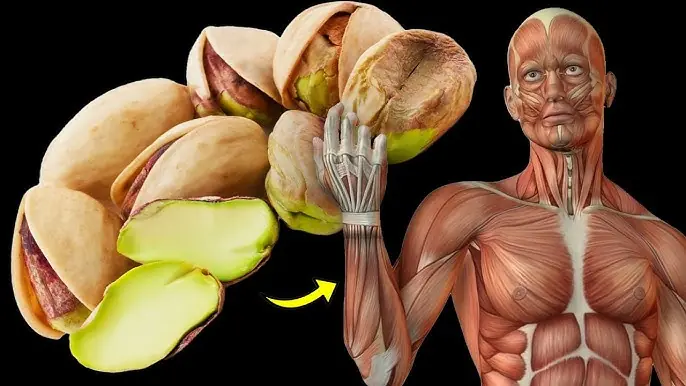
How Many Pistachios Can You Eat Every Day?
According to Pumper, current dietary guidelines recommend adults consume about five ounces of nuts per week or an equivalent of 1 ounce (49 pistachio kernels) daily for a 2,000-calorie per day diet, with amounts modified for lower or higher calorie levels.