I was nine years old when the first letter arrived.
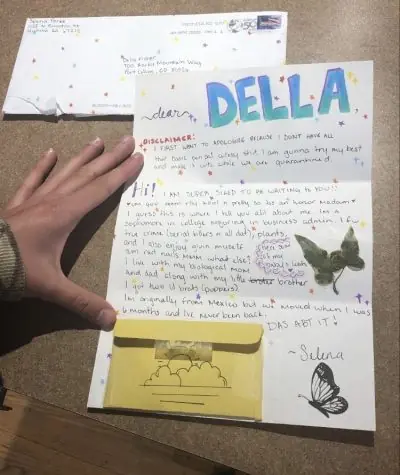
It came in a pale blue envelope with my name written in careful, slightly slanted handwriting:
Miss Eleanor Price
No return address. Just a postmark from three states away.
Inside was a single sheet of lined paper.
Hi Eleanor,
My teacher says we’re supposed to write to someone we don’t know and tell them something true about ourselves. Something small but important.
So here’s mine: I’m afraid of thunderstorms, but I pretend I’m not.
His name, he wrote, was “Thomas.” No last name. Just Thomas.
I don’t remember why my teacher chose his class for a pen pal exchange. I only remember sitting at my tiny desk, swinging my legs, and thinking very seriously about what counted as small but important.
I wrote back:
Dear Thomas,
I sleep with the hallway light on. I tell everyone it’s because I like to read at night. It’s not.
That was how it started.
We wrote about school lunches and scraped knees and how unfair math homework felt. We wrote about siblings (he had a younger sister who tattled; I was an only child who desperately wanted a dog). We described our houses in detail as if mapping them for each other—he had a creaky back stair; I had a bedroom window that faced a maple tree.
There were rules. No last names. No addresses beyond the school program. No photographs.
We were anonymous by design.
By twelve, our letters grew longer.
He told me his father had a temper that filled rooms before he even entered them.
I told him my parents fought in whispers that were worse than shouting.
He wrote once:
Sometimes I think if I disappeared, no one would notice for a while.
I wrote back:
I would.
At fourteen, the program ended.
The school said funding ran out. We could continue writing if we exchanged personal addresses.
We didn’t.
He sent one last letter.
My mom says we’re moving. She says it’s for a fresh start. I don’t know what that means yet.
Thank you for knowing me.
— T.
I wrote back, but the envelope was returned.
No forwarding address.
I kept every letter in a shoebox under my bed.
For a long time, I told myself it was silly to care. We had never met. I didn’t know his last name. I didn’t know what he looked like. For all I knew, “Thomas” wasn’t even real.
But he had known me in a way very few people ever had.
He knew the version of me before I learned to perform adulthood.
—
Life moved the way life does.
College. A job in publishing. A short marriage that ended quietly and without children. Friends who drifted in and out like seasons.
I moved cities twice.
The shoebox came with me each time.
Sometimes, during thunderstorms, I’d think of him.
I’d wonder if he ever stopped being afraid of them.
Forty-six years passed.
I was fifty-five when the knock came.
It was a Sunday afternoon. I was in my kitchen, arguing with a pie crust that refused to behave.
The knock was firm but hesitant, as if whoever stood there wasn’t sure they should.
I wiped my hands and opened the door.
A man stood on my porch.
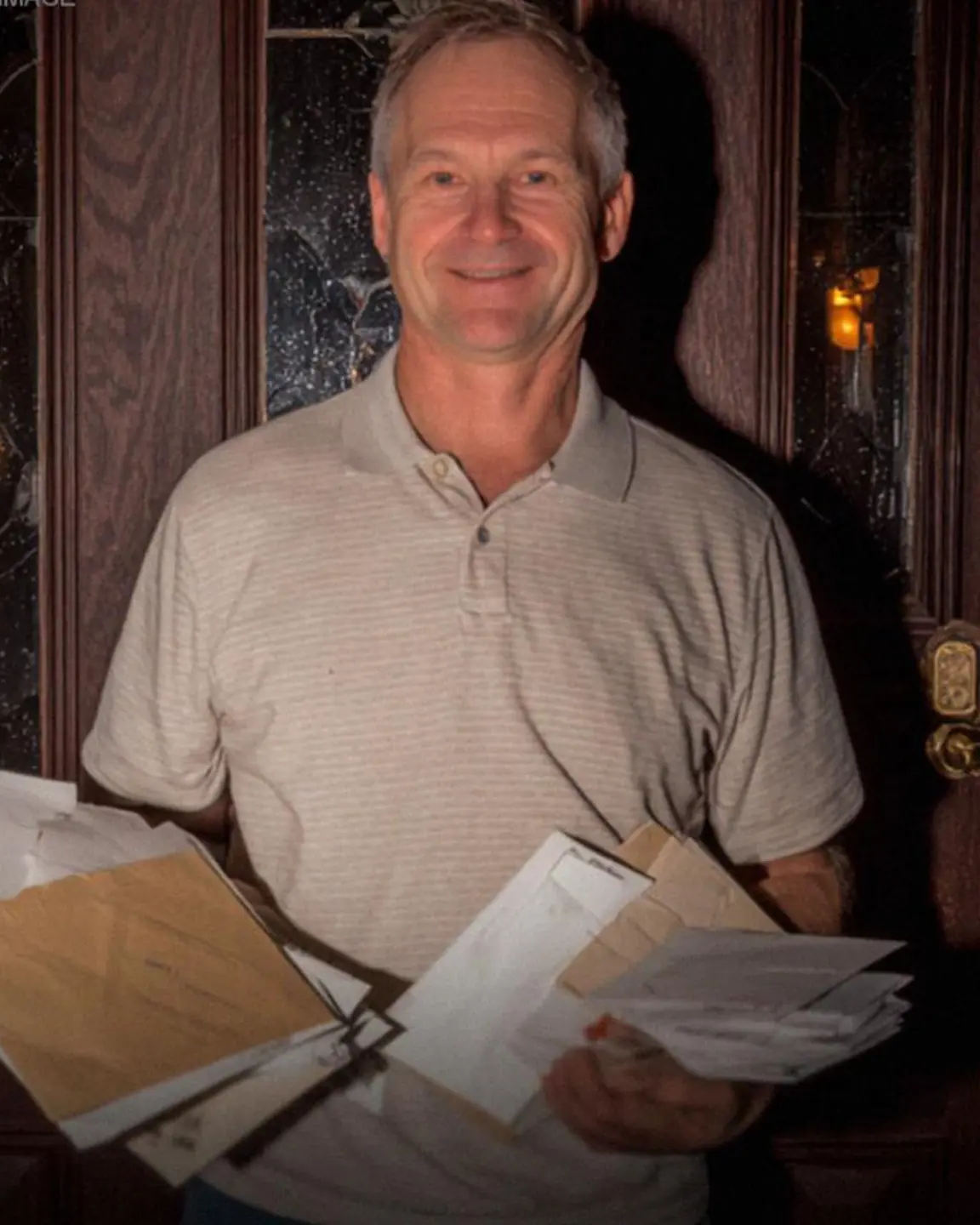
Late fifties, maybe early sixties. Tall. A little stooped at the shoulders. Gray threaded through dark hair. His hands were folded together like he was holding himself steady.
“Yes?” I asked.
His eyes searched my face carefully.
“Eleanor?” he said.
Something in my chest tightened.
“Yes.”
He swallowed.
“My name is Thomas,” he said. Then, almost apologetically, “Well. It’s not. But it was.”
The world went very still.
I stared at him.
He reached into his coat pocket slowly, like someone approaching a frightened animal, and pulled out a worn, folded sheet of paper.
I recognized the pale blue immediately.
It was one of my letters.
The one where I had written:
I would notice if you disappeared.
My knees felt weak.
“You kept them,” I whispered.
“Every one,” he said.
I stepped back automatically.
“Please,” I said. “Come in.”
—
We sat at my dining table.
The pie crust lay forgotten.
Up close, I could see the faint scar on his chin, the deep lines around his eyes.
“My real name is Daniel Mercer,” he said. “Thomas was my middle name.”
I nodded slowly, absorbing the sound of it.
“How did you find me?”
He gave a small, almost embarrassed smile.
“You mentioned your dad once. That he worked for the railroad. And that you lived near a river that flooded every spring.”
I had forgotten that detail.
“I remembered the town,” he said. “I drove there a few months ago. The school’s gone. But the public library kept old yearbooks. I found your picture. Your last name.”
My heart pounded.
“I hired someone to help track you down after that,” he added gently. “It took a while.”
“Why now?” I asked.
His eyes lowered to his hands.
“My wife died two years ago,” he said. “Cancer.”
I felt the word land between us like something fragile.
“I’m sorry,” I said softly.
“Thank you.” He nodded. “After she passed, I was going through boxes. I found your letters again.”
He looked up.
“And I realized something.”
“What?”
“You were the first person who ever made me feel… seen.”
The word caught in his throat.
I remembered the letter about his father’s temper. The one where he wrote about sitting in his closet during storms.
“You told me once,” he said carefully, “that you left the hallway light on because darkness felt too heavy.”
I smiled faintly. “You told me you named the thunder so it would sound less angry.”
He let out a breath that was almost a laugh.
“I’d forgotten that.”
We sat in silence, the weight of decades pressing gently around us.
“I didn’t come to disrupt your life,” he said. “I just needed to know you were real. That I hadn’t imagined the only safe part of my childhood.”
Tears blurred my vision.
“I was real,” I said. “And so were you.”
He nodded.
“I had a rough few years after we stopped writing,” he admitted. “But your letters… they were proof that someone out there believed I mattered.”
I felt something inside me rearrange.
“I didn’t know that,” I whispered.
“You couldn’t have,” he said.
He reached into his coat again and pulled out a small bundle tied with twine.
“My daughter helped me organize them,” he said. “She said if I didn’t go find you, I’d regret it.”
“You have a daughter?”
“Two,” he said, pride flickering through his grief. “They know about you. About ‘Eleanor with the hallway light.’”
I laughed through tears.
“I can’t believe you remember that.”
“I remember everything,” he said quietly.
The way he said it made the room feel smaller, warmer.
“Were you happy?” I asked before I could stop myself.
He considered that.
“Yes,” he said finally. “Mostly. It wasn’t perfect. But it was good.”
I nodded.
“I’m glad.”
“And you?” he asked gently.
I thought about my marriage. My career. The quiet evenings in this house.
“I’ve had good years,” I said. “And lonely ones.”
He studied me carefully.
“Did you ever wonder?” he asked.
“About what?”
“What would’ve happened if we’d exchanged addresses?”
The question hung there, delicate and dangerous.
“All the time,” I admitted.
He smiled, but it was soft, not regretful.
“I think we needed to meet now,” he said. “Not then.”
“Why?”
“Because back then, we would’ve tried to save each other.”
I felt the truth of it settle.
“And now?” I asked.
“Now,” he said, “we just get to know each other.”
No rescue missions. No childhood shadows.
Just two people who had once been lifelines to each other.
—
He stayed for coffee.
We talked about our parents, about the lives we built, about the strange way memory edits pain.
When he stood to leave, the sun was beginning to set.
“I’m staying at a hotel downtown,” he said. “Just for a few days.”
I walked him to the door.
“Eleanor,” he said, pausing on the porch.
“Yes?”
“I’m not here to rewrite history.”
I smiled gently.
“I know.”
“I just… didn’t want to disappear without you noticing.”
The echo of my childhood promise filled the air between us.
I stepped forward and hugged him.
It wasn’t romantic.
It wasn’t desperate.
It was something steadier.
“You didn’t,” I said into his shoulder. “Not ever.”
When he pulled away, his eyes were bright.
“Would you have dinner with me tomorrow?” he asked.
I thought about the shoebox in my closet.
About thunderstorms.
About hallway lights left on for comfort.
“Yes,” I said.
He smiled in a way that made him look, for a fleeting second, like the boy who had once confessed his fear of storms.
After he left, I went upstairs.
I pulled the shoebox from the closet and sat cross-legged on the floor.
I opened one of his earliest letters.
Hi Eleanor,
My teacher says we’re supposed to tell the truth. So here’s another one: I hope we never stop writing.
We had.
Life had interrupted.
But somehow, impossibly, it had circled back.
At fifty-five, I didn’t believe in fairy tales.

But I did believe in timing.
And when the thunder rolled faintly in the distance that night, I didn’t turn on the hallway light.
I smiled instead.
Because somewhere in town, a boy who once named storms had come looking for me.
And this time, neither of us was anonymous anymore.