
I realized our family traditions were hiding something unspoken
I realized our family traditions were hiding something unspoken
Story 11/02/2026 10:30
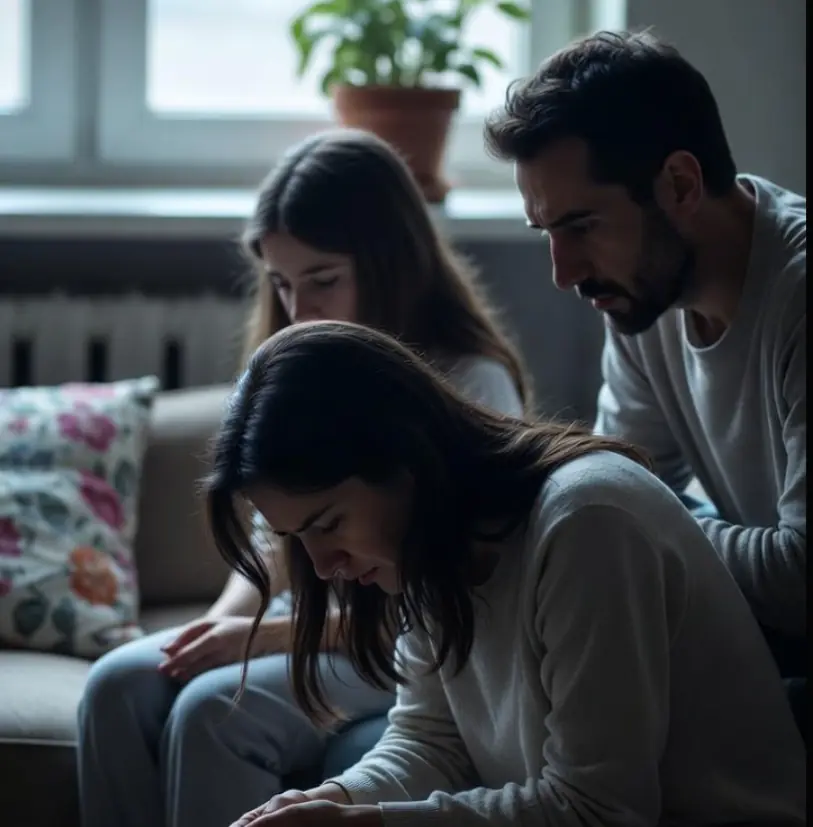
The waiting room of Dr. Aris's office was decorated in shades of seafoam green and muted beige—colors designed to project a tranquility that I felt absolutely none of. I sat on the edge of a velvet chair, my hands clasped tightly in my lap, watching my family. My husband, Robert, was intently studying a flyer about mindfulness, his jaw set in that familiar, rigid line. Our nineteen-year-old son, Caleb, was slumped in the corner, his hoodie pulled low as he scrolled through his phone with a frantic energy.
It had taken me six months of pleading, three "family meetings," and one tearful ultimatum to get them here. I had convinced myself that we just needed a professional to "tune us up." I believed that a mediator would finally explain to Robert why his silence felt like a wall, and show Caleb that his rebellion was just a cry for the structure he claimed to hate. I thought therapy would be the tool that fixed the broken parts of our machinery and returned us to the "perfect" family I saw in our old photo albums.
I was ready for solutions. I wasn't ready for the truth.
The first few sessions were an exercise in strained politeness. We sat in Dr. Aris’s office like strangers on a long-haul flight—civil, but intensely aware of the personal space between us. Robert spoke in bullet points about "communication efficiency," and Caleb offered one-word answers that acted like shields. I, the self-appointed architect of our healing, did most of the talking, filling the silences with my observations and my desire for things to be "better."
But during the fourth week, the seafoam-green tranquility shattered.
Dr. Aris turned to Caleb and asked a simple question: "When you look at your parents, what is the loudest thing you hear?"
I expected him to talk about the rules or the curfew. Instead, Caleb lowered his hoodie, his eyes red and raw. "I hear the sound of you guys pretending," he whispered. "I hear Mom’s 'happy voice' when she’s actually terrified, and I hear Dad’s 'everything is fine' silence when he’s actually disappointed. It’s so loud it makes me want to leave the room."
The silence that followed was a physical weight. I felt a sharp, defensive retort rise in my throat—I’m not pretending, I’m trying!—but Dr. Aris held up a hand, a silent request for me to stay in the discomfort.
Then Robert did something he hadn't done in years. He leaned forward, his hands trembling. "I’m not disappointed in you, Caleb," he said, his voice cracking. "I’m disappointed in myself. I don't know how to be the man you need me to be. I saw my own father stay quiet to keep the peace, and I thought that was strength. I didn't realize I was just becoming a ghost in my own house."
The "solutions" I had been looking for were suddenly nowhere to be found. Instead, there was vulnerability—a messy, frightening vulnerability that I realized I had been actively avoiding.
The drama of our sessions wasn't found in shouting; it was found in the difficulty of hearing hard truths. I had to listen to Caleb explain that my "helpfulness" felt like control. I had to hear Robert confess that my constant need to fix everything made him feel like he was just another project on my to-do list. I was the one who had brought us to therapy to "fix" them, only to realize that I was a primary source of the pressure they were both trying to escape.
It was a profound and painful realization. I had built my identity on being the "glue" of the family, never considering that the glue might be keeping everyone from moving.
The discomfort was constant. There were sessions where we left in separate cars, unable to even look at each other. There were nights when the silence at home felt even heavier than before, because now the silence was filled with the things we had actually said out loud. But slowly, the breakthroughs began to happen.
They weren't grand cinematic moments. They were small, quiet shifts in the tectonic plates of our relationships. It was the night Robert stayed in the kitchen after dinner to actually talk to Caleb about music—not to "bond," but just to be present. It was the day Caleb came to me and told me he was overwhelmed, trusting that I wouldn't immediately try to reorganize his entire life.
The breakthrough for me happened in a private session with Dr. Aris. "You’re so afraid of the family breaking," she said, "that you’re not letting them breathe. You have to trust that they can survive a little bit of a mess."
I realized then that I had been using the family as a shield against my own insecurities. If they were "perfect," then I was "successful." Therapy wasn't fixing the family; it was dismantling the false image I had forced them to live in.
Our final scheduled session didn't end with a "mission accomplished" or a return to the old photo-album version of ourselves. That version was gone, and truthfully, it had never been as solid as I remembered. Instead, we sat in those seafoam-green chairs and looked at each other with a cautious, newfound respect.
"I still don't like coming here," Caleb admitted, giving us a small, genuine half-smile. "But I like that I don't have to wear the hoodie as much."
"I’m still not great at the talking part," Robert added, reaching over to take my hand. "But I’m trying to stay in the room."
As we walked out into the cool evening air, I felt a sense of cautious hope. We aren't "fixed." Caleb still has his moments of withdrawal, and Robert and I still have to work at not falling back into our old patterns of silence and control. But the "loud pretending" has stopped.
I thought therapy would give me back the family I wanted. Instead, it gave me the family I actually have—one that is flawed, sometimes distant, and often messy, but finally, undeniably real. The seafoam-green waiting room is behind us now, but the hard truths we found there are the foundation we’re using to build something new. It’s not the "perfect" house I envisioned, but for the first time in a very long while, there’s enough room for everyone to breathe. We are a work in progress, and in the quiet of our home tonight, that feels like more than enough.
I realized our family traditions were hiding something unspoken
When my parents asked us to move in, i didn’t expect it to test my marriage
i found out i was the only one who didn’t know the truth
My husband’s success changed the way his family treated me
My brother and i stopped speaking over something that was never really about money

We agreed to an open secret in our family and it slowly tore us apart

The inheritance came with conditions none of us expected

Marrying Kavita: The Choice Everyone Fought—And the Truth I Didn’t Expect

A Father’s Instinctive Dash to Protect His Daughter




“What do you mean ‘separate property’? The house will be joint!” my mother-in-law screeched while I was signing the papers at the notary’s
He registered the apartment in his mother’s name — and had no idea what would happen seven days later

When my mother-in-law asked whose name the apartment was in, I smiled—and said nothing. That decision ended up saving my life

“Yes, I’m throwing you out—on New Year’s Eve! Do you really think I’m supposed to put up with insults in my own home?” Alice pointed her mother-in-law toward the door
“No, I’m not giving your mother any more money! Enough! Let her deal with her debts herself—I’m done!”
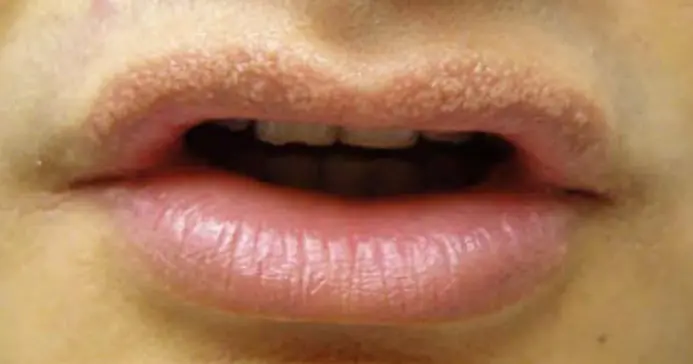
These White Bumps on Your Lips or Private Areas Could Be a Sign of Something Serious

How Does Drinking Coconut Water Affect Your Kidneys?
I realized our family traditions were hiding something unspoken

8 Warning Signs of Digestive Problems You Should Never Ignore
When my parents asked us to move in, i didn’t expect it to test my marriage
i found out i was the only one who didn’t know the truth
My husband’s success changed the way his family treated me

7 Surprisingly Handy Ways to Use Cloves
My brother and i stopped speaking over something that was never really about money
We agreed to an open secret in our family and it slowly tore us apart
My stepdaughter said something that changed how i saw my marriage
The inheritance came with conditions none of us expected

What condition causes frequent leg numbness, and what might be the reason behind it?

What You Should Know If You Enjoy Daytime Naps
Marrying Kavita: The Choice Everyone Fought—And the Truth I Didn’t Expect
A Father’s Instinctive Dash to Protect His Daughter

My Husband Took a Secret 15-Day Trip With His “Best Friend”—When He Came Back, I Asked One Question That Stopped Him Cold