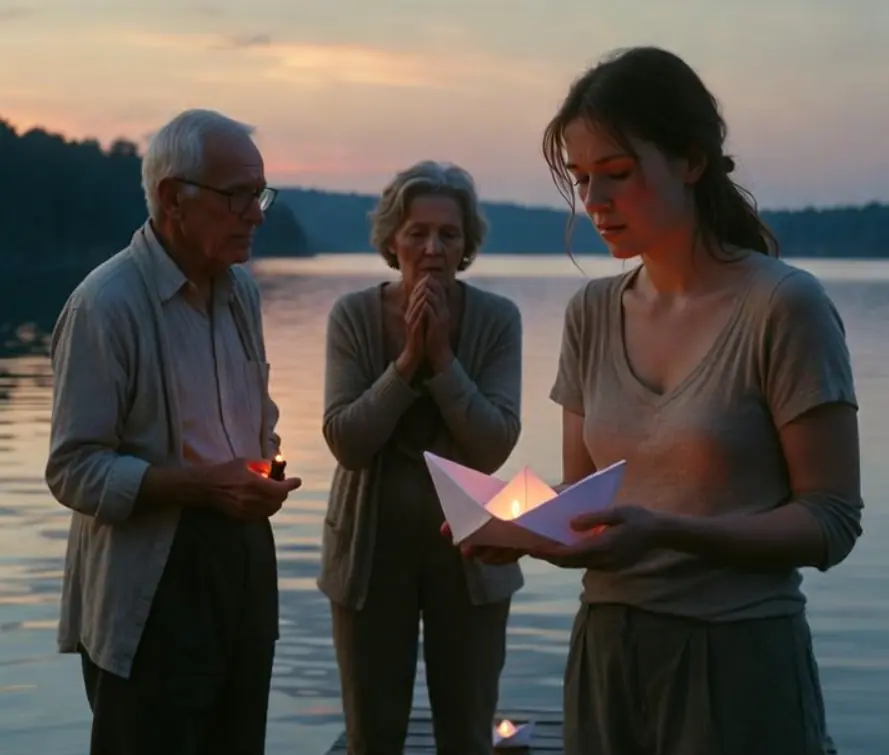
I realized our family traditions were hiding something unspoken
I realized our family traditions were hiding something unspoken
Story 11/02/2026 10:30
The wallpaper in my parents’ dining room featured a pattern of delicate, intertwining vines that never quite met. As a child, I used to trace those gaps with my finger, wondering why the artist had left them unfinished. It wasn't until I reached my thirties that I realized our family was exactly like that wallpaper: a collection of lives that lived side-by-side, touching at the edges, but defined by the empty spaces we refused to fill.
Our "open secret" wasn't a scandal or a crime. It was my father’s gambling. It began with "extra hours at the office" that turned into missing weekends, and eventually, the sudden, unexplained sale of the classic car he had spent a decade restoring. We all knew. My mother knew when the credit card statements began arriving at a private P.O. box. My sister, Claire, knew when she saw him at a local track when he was supposed to be at a dental appointment. And I knew because I was the one who accidentally found the ledger of debts hidden in a shoebox in the garage.
Yet, by a silent, unspoken vote, we agreed to ignore it. We chose "peace" over the truth.
The decision to maintain this forced harmony was rooted in a misguided sense of loyalty. My mother, a woman who valued the appearance of a stable, middle-class life above all else, set the tone. "Your father is under a lot of stress," she would say whenever a bill went unpaid or a holiday was strangely lean. "We just need to be supportive. We need to keep things normal."
"Normal" became our prison.
The emotional strain of pretending everything was fine acted like a slow-moving acid, eating away at the foundation of our relationships. Because we couldn't talk about the one thing that was actually happening, we stopped talking about anything real. Our conversations became a series of safe, hollow scripts. We talked about the weather, the neighbors’ new porch, and the latest movies. We performed the roles of a happy family at every Thanksgiving and birthday, our smiles bright and artificial, while the elephant in the room grew until there was barely enough air left to breathe.
As years passed, the silence created a profound sense of distance and mistrust. I found myself resenting my mother for her denial, seeing it not as strength, but as a lack of courage. I grew distant from Claire because we were both so exhausted by the labor of the lie that we didn't have the energy to support each other. Most of all, I felt a growing coldness toward my father. I didn't hate him for the gambling as much as I hated him for letting us all pretend it wasn't happening. I felt like a co-conspirator in a heist where the only thing being stolen was our intimacy.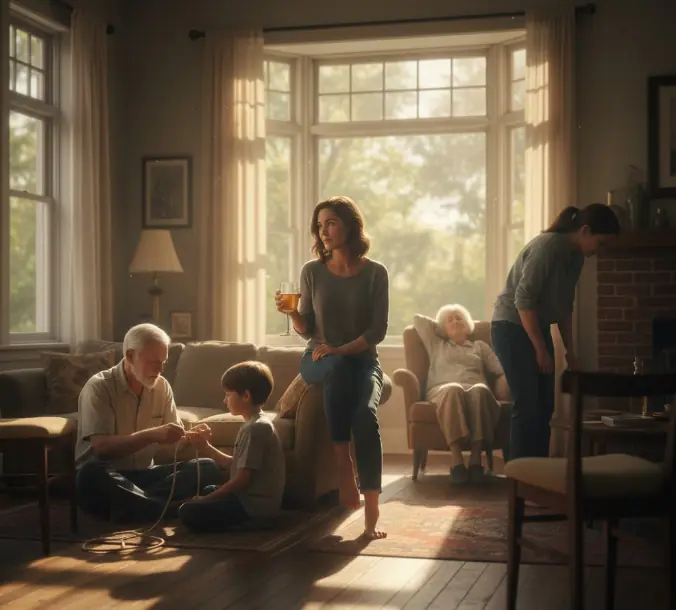
The drama of our lives was found in the "micro-avoidances." It was the way we would all look at our plates simultaneously when a bill collector called during dinner. It was the way we would overcompensate with loud, frantic laughter to fill the gaps in conversation. We were all carrying the same heavy secret, but because we couldn't share the weight, it was crushing us individually.
I felt a creeping sense of self-doubt. I began to wonder if I was the "difficult" one for wanting to speak up. Am I being ungrateful? I would ask myself. Am I trying to destroy our peace just to satisfy my own need for honesty? The gaslighting wasn't coming from my father; it was coming from the collective silence of the family.
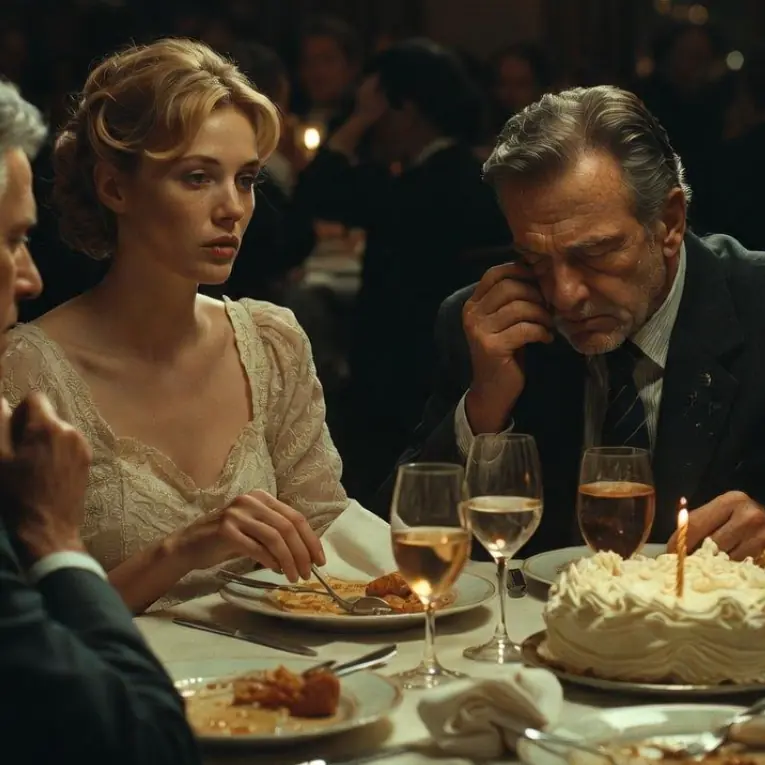
The breaking point arrived on my mother’s sixty-fifth birthday. We were at a nice restaurant—one we probably couldn't afford—and the atmosphere was thick with the usual forced cheer. My father stood up to give a toast, his hand trembling slightly as he raised his glass.
"To the best family a man could ask for," he said, his voice thick with a sentiment that felt unearned. "For always standing by me, no matter what."
I looked at Claire. She was staring at her water glass, her jaw so tight it looked like it might snap. I looked at my mother, who was beaming, her eyes shining with the desperate light of a woman who had successfully kept the facade intact for another year.
Something inside me finally broke. It wasn't a sudden explosion; it was a quiet, terminal exhaustion.
"Why are we doing this?" I asked. My voice wasn't loud, but in the vacuum of our "peace," it sounded like a gunshot.
The table went silent. The waiter paused a few feet away. My mother’s smile didn't falter, but her eyes went cold. "Not now, Elena. This is a celebration."
"No," I said, putting my napkin on the table. "We aren't celebrating anything. We’re performing. Dad, we know about the money. We’ve known for years. Claire knows, Mom knows, and I know. And the fact that we’re all sitting here pretending we don't is making me feel like I’m losing my mind."
The "open secret" was finally out in the air, and for a moment, the world felt like it had stopped spinning. My father sat down slowly, his face turning a gray, ashen color. My mother looked like she had been slapped.
"Elena, how could you?" she whispered, her voice trembling with a mix of shame and anger. "I did this for you children. I kept this family together."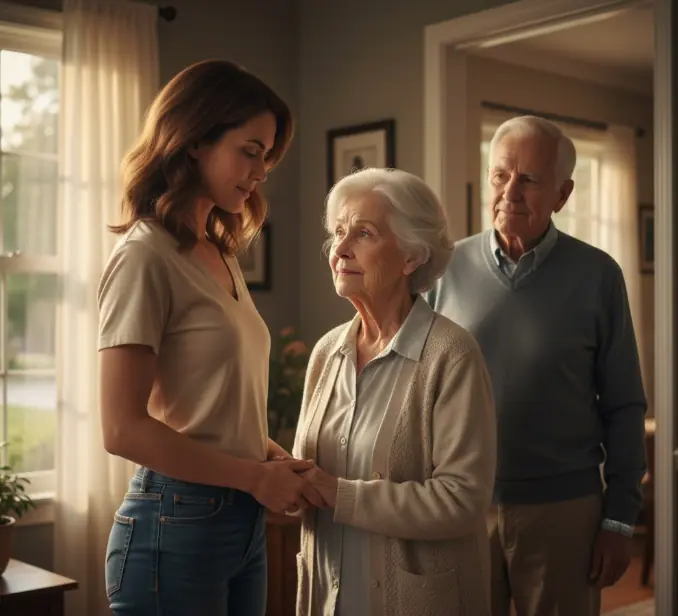
"You didn't keep us together, Mom," I said, and the honesty felt like a physical relief. "You kept us in the same room. But we haven't been 'together' in a decade. I don't even know who Claire is anymore because we only talk about nonsense. I don't know who Dad is because he’s always hiding. We’ve sacrificed our truth for a peace that doesn't actually exist."
The honest conversation that followed wasn't a cinematic reconciliation. It was messy, painful, and filled with the jagged edges of long-suppressed resentment. We sat in that restaurant for two hours after the check was paid, the facade finally stripped away.
Claire finally spoke, her voice breaking. "I’ve been so lonely," she admitted, looking at our father. "I wanted to help you, Dad. But you wouldn't let me because you wouldn't admit there was a problem. I felt like I was crazy for seeing what I saw."
My father didn't make excuses. For the first time, he didn't try to charm his way out of the situation. He just put his head in his hands. "I’m sorry," he whispered. "I was so ashamed, and when you all stopped asking, I thought... I thought that was the only way I could keep you."
The shift in the emotional direction of the family wasn't immediate, but it was real. By breaking the silence, we had finally cleared the air. The "peace" was gone, replaced by a raw, uncomfortable reality, but for the first time in years, the air felt breathable.
In the months that followed, the "distance" began to close. My father entered a support program, not because we forced him, but because he no longer had to expend all his energy maintaining the lie. My mother struggled the most—she had to learn that a messy, honest life is more valuable than a perfect, silent one.
Claire and I started talking again. Really talking. We talked about our anger, our fear, and the strange, shared trauma of the "quiet years." We are no longer the "perfect" family our mother dreamed of, and we still have a long way to go to rebuild the trust that was eroded by a thousand small silences.
But as I look at the wallpaper in my own home now, I don't look for the gaps in the vines. I look for the way the pattern holds together because the lines are bold and clear. I realized that the true "peace" of a family isn't the absence of conflict; it’s the presence of truth. We tore ourselves apart by trying to stay together under a lie, but we are finally sewing ourselves back together with the messy, difficult thread of the truth. It’s not a perfect stitch, and the scars are visible, but for the first time, the house is no longer haunted by what we refuse to say. We are finally, painfully, and beautifully, home.
I realized our family traditions were hiding something unspoken
When my parents asked us to move in, i didn’t expect it to test my marriage
i found out i was the only one who didn’t know the truth
My husband’s success changed the way his family treated me
I thought therapy would fix our family, but it revealed more than i was ready for
My brother and i stopped speaking over something that was never really about money

The inheritance came with conditions none of us expected
Marrying Kavita: The Choice Everyone Fought—And the Truth I Didn’t Expect
A Father’s Instinctive Dash to Protect His Daughter



“What do you mean ‘separate property’? The house will be joint!” my mother-in-law screeched while I was signing the papers at the notary’s
He registered the apartment in his mother’s name — and had no idea what would happen seven days later

When my mother-in-law asked whose name the apartment was in, I smiled—and said nothing. That decision ended up saving my life
“Yes, I’m throwing you out—on New Year’s Eve! Do you really think I’m supposed to put up with insults in my own home?” Alice pointed her mother-in-law toward the door
“No, I’m not giving your mother any more money! Enough! Let her deal with her debts herself—I’m done!”
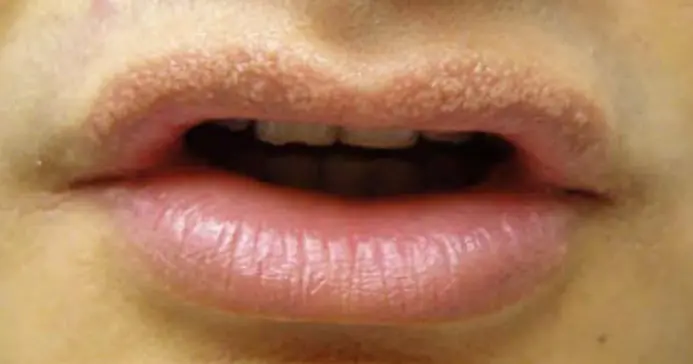
These White Bumps on Your Lips or Private Areas Could Be a Sign of Something Serious

How Does Drinking Coconut Water Affect Your Kidneys?
I realized our family traditions were hiding something unspoken

8 Warning Signs of Digestive Problems You Should Never Ignore
When my parents asked us to move in, i didn’t expect it to test my marriage
i found out i was the only one who didn’t know the truth
My husband’s success changed the way his family treated me
7 Surprisingly Handy Ways to Use Cloves
I thought therapy would fix our family, but it revealed more than i was ready for
My brother and i stopped speaking over something that was never really about money
My stepdaughter said something that changed how i saw my marriage
The inheritance came with conditions none of us expected

What condition causes frequent leg numbness, and what might be the reason behind it?

What You Should Know If You Enjoy Daytime Naps
Marrying Kavita: The Choice Everyone Fought—And the Truth I Didn’t Expect
A Father’s Instinctive Dash to Protect His Daughter

My Husband Took a Secret 15-Day Trip With His “Best Friend”—When He Came Back, I Asked One Question That Stopped Him Cold