
I realized our family traditions were hiding something unspoken
I realized our family traditions were hiding something unspoken
Story 11/02/2026 10:30

The air in my father’s old study always tasted of peppermint and aging paper. It was a room that had once commanded respect, a sanctuary where he had managed the affairs of our family with a quiet, iron-fisted precision. Now, two weeks after his funeral, the room felt smaller, the heavy oak desk dominated not by him, but by a thick manila envelope held by his longtime attorney, Mr. Henderson.
My two brothers and I sat in a row of mismatched chairs, the tension between us a tangible fourth presence in the room. There was Julian, the oldest, who had followed Dad into the world of corporate finance and carried himself with a permanent air of impatient authority. Then there was Marcus, the baby of the family, who had spent most of his thirties "finding himself" on our father’s dime. And then there was me, Claire, the middle child and the one who had spent a decade playing the role of the silent mediator, the one who kept the peace so the house wouldn't burn down.
We were there for the reading of the will. We all expected a straightforward division of the estate—the house in New Jersey, the savings accounts, the small portfolio of stocks. We expected a clean break and the financial means to finally go our separate ways.
But my father, even in death, was never one for the straightforward path.
"Your father’s estate is significant," Mr. Henderson began, his voice dry as parchment. "However, the distribution of the primary assets is subject to a specific codicil. To receive their share, all three siblings must live together in the family home for thirty consecutive days. During this time, you are required to eat dinner together every night, without outside guests, and you must complete one shared task: the sorting and digitizing of the family archives in the attic."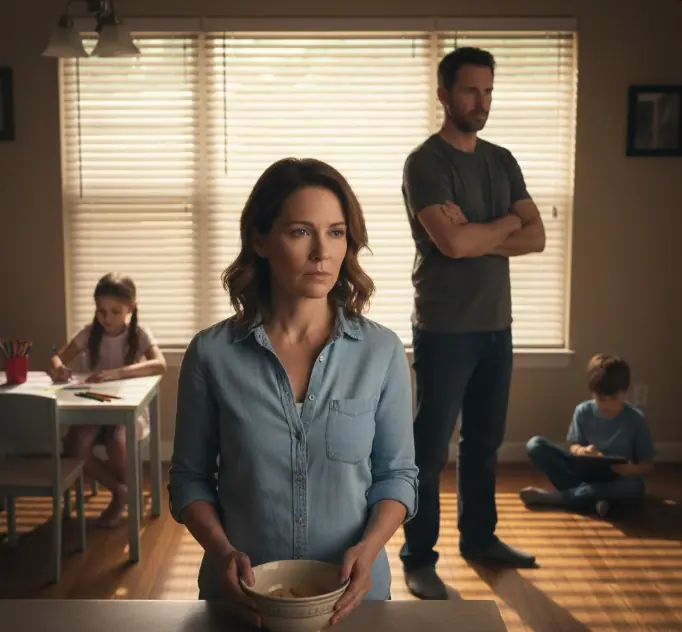
Julian let out a sharp, derisive laugh. "You’ve got to be kidding. I have a firm to run. Marcus has... whatever it is Marcus does. We aren't children, Arthur. This is absurd."
"The conditions are binding," the lawyer replied calmly. "If any one of you leaves or refuses to participate, the entire estate will be donated to the local historical society. You have forty-eight hours to decide."
The silence that followed was heavy with the weight of thirty years of buried history.
We moved back into the house that Friday. It was a bizarre, forced regression. Julian took his old room, now filled with his high school trophies; Marcus reclaimed the basement; and I returned to the floral wallpaper of my teenage sanctuary. The first few days were a masterclass in passive-aggression. We moved around each other like strangers in a crowded station, carefully avoiding eye contact in the hallways.
The "shared task" in the attic was the primary source of the drama. It was a dusty graveyard of our childhood—boxes of old school reports, fuzzy Polaroids, and letters my father had saved from his own parents. As we began to sort through the papers, the old rivalries resurfaced with a vengeance.
"Oh, look," Julian sneered, holding up a report card of Marcus’s from middle school. "Another 'Needs Improvement' in math. Some things never change, do they? You're still just waiting for a handout."
Marcus flushed, his hands tightening around a box of slides. "At least I’m not a robot, Julian. Dad loved you because you did exactly what he said. I actually had a life."
"You had a vacation," Julian snapped. "I’m the one who stayed here and helped him when his health started failing while you were off 'trekking' through Europe."
I sat between them, my hands trembling as I scanned a stack of old letters. "Stop it," I whispered. "We’re forty years old. Can we just do the work?"
But the work was the problem. The attic was a mirror, reflecting every childhood wound we had tried to heal. We fought over who had been the favorite, who had been the most neglected, and who had the right to the "good" memories. Private conversations in the kitchen late at night became exercises in shifting alliances. Julian would try to get me to agree that Marcus was a liability; Marcus would pull me aside to complain about Julian’s arrogance. I felt like the same ten-year-old girl again, trying to keep the boat from tipping over.
The tension reached a breaking point on the fifteenth night. We were sitting at the dining table, the silence broken only by the clinking of silverware.
"I can't do this anymore," Julian said, dropping his fork. "The money isn't worth this. I’m leaving in the morning."
"Good," Marcus shot back. "Leave. Go back to your cold office and your lonely life. At least the historical society will appreciate the house more than you do."
"Wait," I said, my voice rising for the first time. "Look at this."
I had brought a small, leather-bound journal to the table. I had found it that afternoon, tucked into a hidden compartment of a trunk I’d been digitizing. It wasn't a business ledger or a record of successes. It was my father’s private diary from the year our mother had passed away, when we were all under the age of twelve.
I began to read out loud.
The entries weren't about the stoic, demanding man we remembered. They were the words of a terrified, grieving father who felt completely out of his depth. He wrote about his fear that he was failing us. He wrote about Julian’s quiet anxiety and how he pushed him toward business because he wanted him to have the security he felt he was losing. He wrote about Marcus’s sensitivity and how he indulged him because he couldn't bear to see him sad. And he wrote about me—about how I was the "bridge" that kept the family together, and how he worried that the weight of that role would eventually break me.
“I see them drifting apart already,” one entry read. “They only speak through me. If I am gone, will they ever speak to each other again? I have to find a way to make them look at one another.”
The silence at the table shifted. It was no longer the silence of resentment, but the silence of realization.
Julian looked down at his plate, his jaw tight. Marcus wiped a stray tear from his cheek. For the first time in fifteen days—and perhaps fifteen years—we weren't looking at our father as a judge or a provider. We were looking at him as a man.
The remaining fifteen days were different. We still argued, but the edge was gone. We spent the nights in the attic, not just digitizing papers, but telling stories. Julian admitted how much he had hated the finance world, but felt he couldn't let Dad down. Marcus admitted how much he had used his "searching" as a way to avoid the fear of failing. And I finally told them how heavy the "bridge" had felt, and how I needed them to stand on their own.
By the thirtieth day, the archives were finished. We had digitized over five thousand documents, but the real work had happened in the spaces between the boxes.
When Mr. Henderson returned to the study to finalize the distribution, Julian stopped him.
"We don't need the money right now, Arthur," Julian said. "We’ve decided to put a portion of the estate into a trust to keep the house as a family retreat. And we’re donating the rest to the historical society ourselves—on our terms."
Marcus nodded in agreement. "We’re going to stay through the weekend. There’s still some work to do in the garden."
As I walked out onto the porch that evening, I realized that my father had achieved exactly what he wanted. The "inheritance" wasn't the numbers in the bank account or the deed to the property. Those were just the lures to get us into the room.
The true inheritance was the truth we had found in the attic. It was the perspective that we weren't just a collection of old wounds and rivalries; we were a family that had been waiting for a reason to find each other again. We had been so busy being "realistic" about our differences that we had forgotten to be honest about our love.
I looked at my brothers, who were currently arguing over the best way to trim the overgrown hedge—a loud, messy, and perfectly normal debate. I felt a profound sense of peace. The bridge was still there, but for the first time, it wasn't holding the weight alone. We were all standing on it together, looking toward a future that didn't feel like a debt, but like a gift. My father’s will hadn't just divided his assets; it had restored our hearts.
I realized our family traditions were hiding something unspoken
When my parents asked us to move in, i didn’t expect it to test my marriage
i found out i was the only one who didn’t know the truth
My husband’s success changed the way his family treated me
I thought therapy would fix our family, but it revealed more than i was ready for
My brother and i stopped speaking over something that was never really about money
We agreed to an open secret in our family and it slowly tore us apart
My stepdaughter said something that changed how i saw my marriage
Marrying Kavita: The Choice Everyone Fought—And the Truth I Didn’t Expect

A Father’s Instinctive Dash to Protect His Daughter



“What do you mean ‘separate property’? The house will be joint!” my mother-in-law screeched while I was signing the papers at the notary’s
He registered the apartment in his mother’s name — and had no idea what would happen seven days later

When my mother-in-law asked whose name the apartment was in, I smiled—and said nothing. That decision ended up saving my life
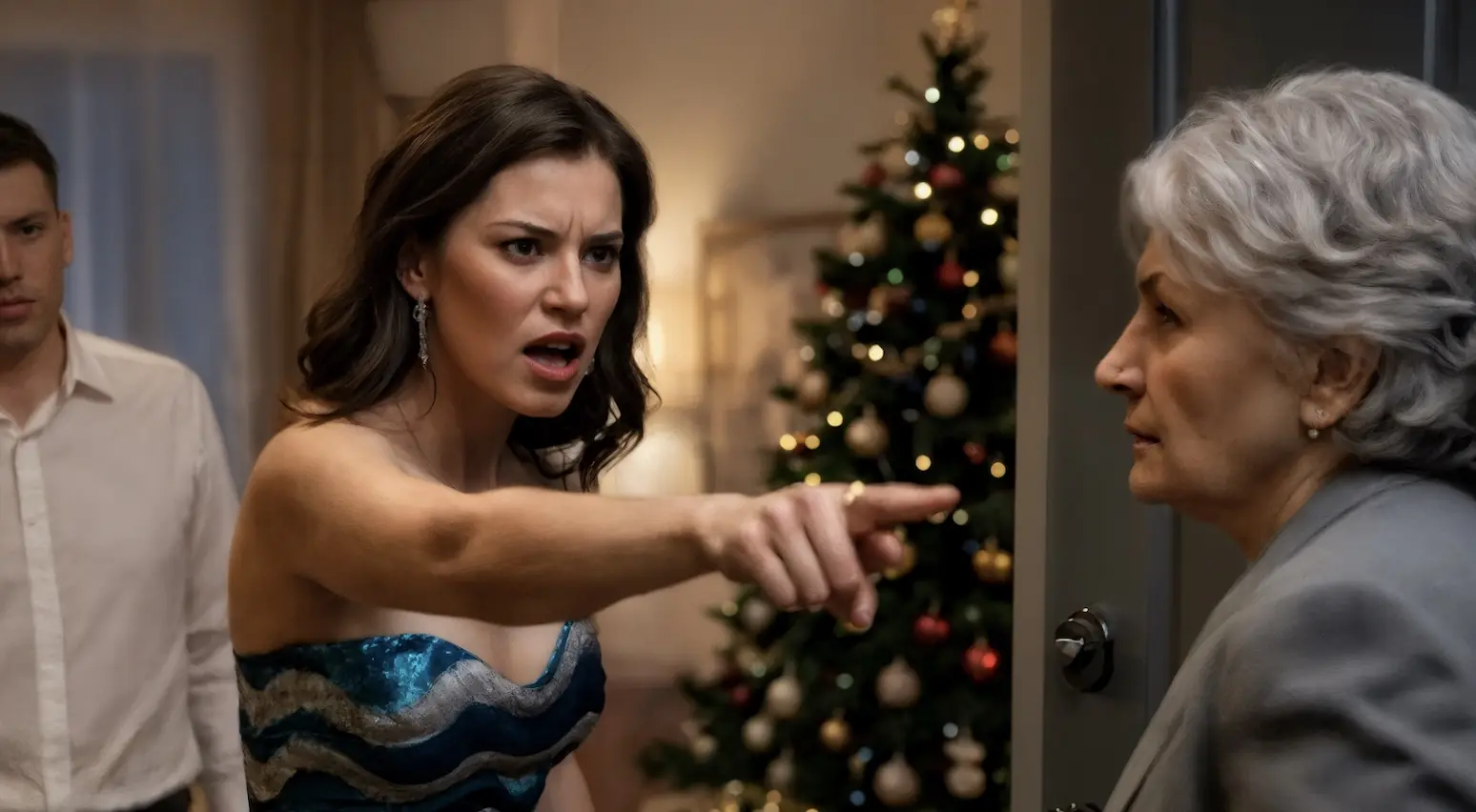
“Yes, I’m throwing you out—on New Year’s Eve! Do you really think I’m supposed to put up with insults in my own home?” Alice pointed her mother-in-law toward the door
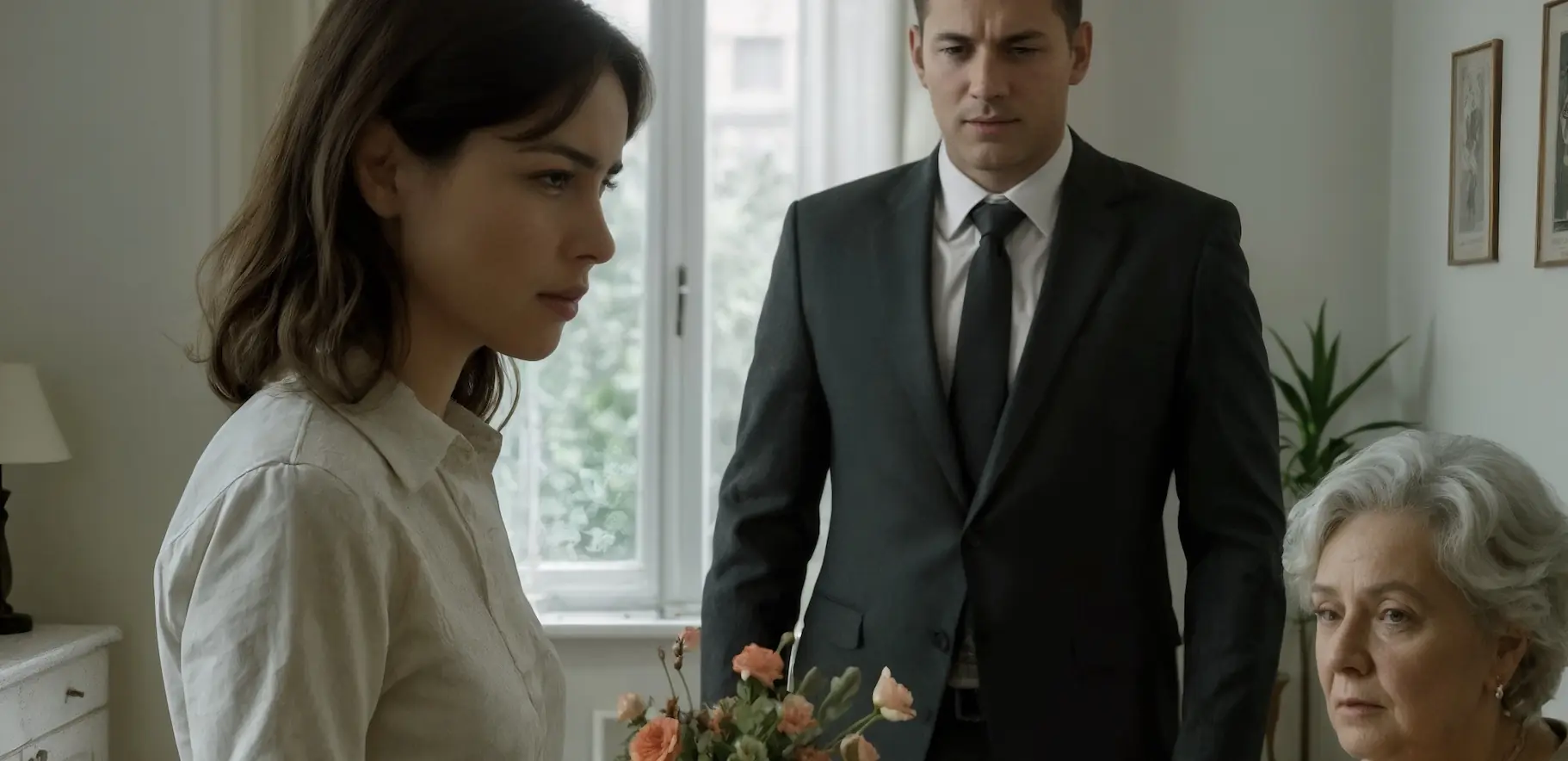
“No, I’m not giving your mother any more money! Enough! Let her deal with her debts herself—I’m done!”

These White Bumps on Your Lips or Private Areas Could Be a Sign of Something Serious

How Does Drinking Coconut Water Affect Your Kidneys?
I realized our family traditions were hiding something unspoken

8 Warning Signs of Digestive Problems You Should Never Ignore
When my parents asked us to move in, i didn’t expect it to test my marriage
i found out i was the only one who didn’t know the truth
My husband’s success changed the way his family treated me

7 Surprisingly Handy Ways to Use Cloves
I thought therapy would fix our family, but it revealed more than i was ready for
My brother and i stopped speaking over something that was never really about money
We agreed to an open secret in our family and it slowly tore us apart
My stepdaughter said something that changed how i saw my marriage

What condition causes frequent leg numbness, and what might be the reason behind it?

What You Should Know If You Enjoy Daytime Naps
Marrying Kavita: The Choice Everyone Fought—And the Truth I Didn’t Expect
A Father’s Instinctive Dash to Protect His Daughter

My Husband Took a Secret 15-Day Trip With His “Best Friend”—When He Came Back, I Asked One Question That Stopped Him Cold