A warm bowl of rice feels harmless—comfort food at its simplest. But the image of a microwave and a bowl of rice comes with a warning many people never hear: leftover rice can carry a food-poisoning risk if it’s stored or reheated the wrong way. The danger isn’t “microwaves” or “rice turning toxic.” It’s bacteria that can survive cooking and multiply quickly when rice is left at the wrong temperature.
So, should you stop reheating rice forever? Not at all. You just need to handle it correctly.
Why Leftover Rice Can Be Riskier Than You Think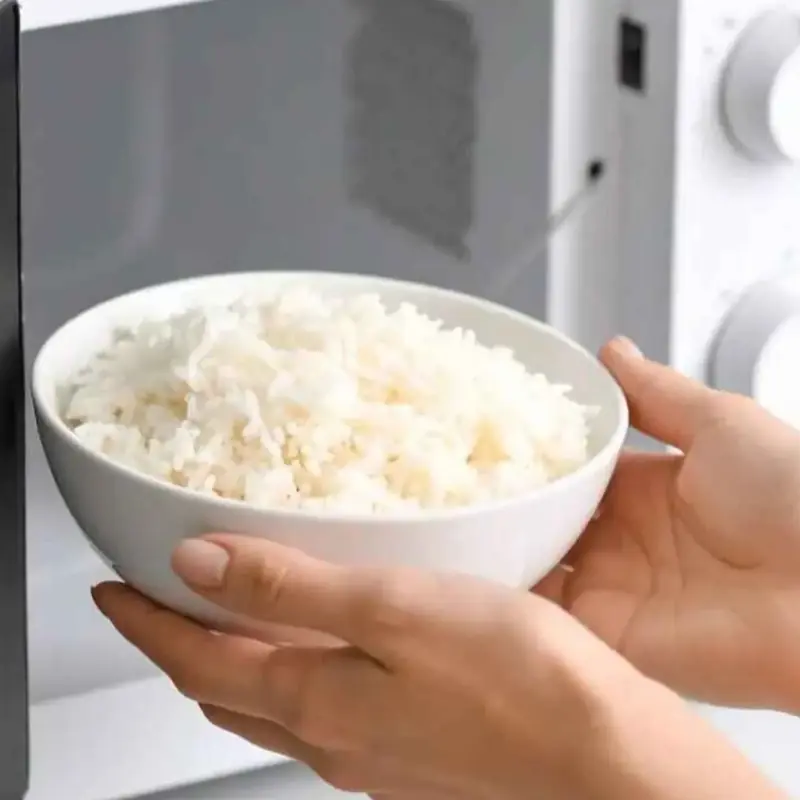
Cooked rice is a perfect breeding ground for bacteria because it’s moist, starchy, and often kept warm for long periods. The main concern is Bacillus cereus, a bacterium that can form heat-resistant spores. Cooking may kill many germs, but spores can survive. If rice sits out at room temperature, spores can “wake up,” multiply, and produce toxins.
Here’s the key point: reheating may kill some bacteria, but it may not destroy toxins already produced. That’s why the storage step is just as important as the reheating step.
What Happens If You Get Sick?
Food poisoning from improperly stored rice can come on fast. Symptoms often include:
-
nausea and vomiting
-
stomach cramps
-
diarrhea
-
sometimes fever (less common)
Many cases resolve within 24 hours, but dehydration can become serious—especially for children, older adults, pregnant women, and people with weakened immune systems. If symptoms are severe or persistent, medical attention is important.
The “Real Risk” Is Usually Storage, Not Reheating
A lot of viral posts blame reheating itself. In reality, the biggest risk comes from rice that was:
-
left sitting on the counter for hours
-
kept warm too long in a cooker without proper temperature control
-
cooled slowly in a large pot
-
stored in the fridge but for too many days
If you cool rice quickly and refrigerate it promptly, it’s typically safe to reheat.
How to Store Rice Safely (The Simple Rules)
Follow these practical steps to reduce risk:
1) Cool it fast
Don’t leave cooked rice at room temperature for long. If you’ve made a big pot, spread rice out on a tray or divide it into shallow containers so it cools quickly.
2) Refrigerate within 1–2 hours
As a rule of thumb, get leftovers into the fridge as soon as possible—especially in hot weather.
3) Keep it sealed
Store in airtight containers to reduce contamination and keep moisture consistent.
4) Don’t keep it forever
Leftover rice is best eaten within 1–2 days (some guidelines allow a bit longer, but sooner is safer).
How to Reheat Rice the Right Way
Reheating isn’t dangerous when done properly. Here’s how:
-
Reheat until steaming hot all the way through
-
Stir halfway through microwaving so heat distributes evenly
-
Add a spoonful of water and cover the bowl to keep rice from drying out
-
Reheat only once—don’t cool and reheat the same rice repeatedly
If rice smells odd, looks slimy, or has been forgotten on the counter, don’t “rescue” it with heat. Throw it away.
Who Should Be Extra Cautious?
While everyone should follow safe handling, extra caution matters for:
-
pregnant women
-
babies and young children
-
elderly people
-
anyone with chronic illness or a weakened immune system
For these groups, it’s smart to avoid rice that has sat out, even if it “looks fine.”