The house we inherited came with old arguments and a new beginning
The house we inherited came with old arguments and a new beginning
Story 20/02/2026 21:54
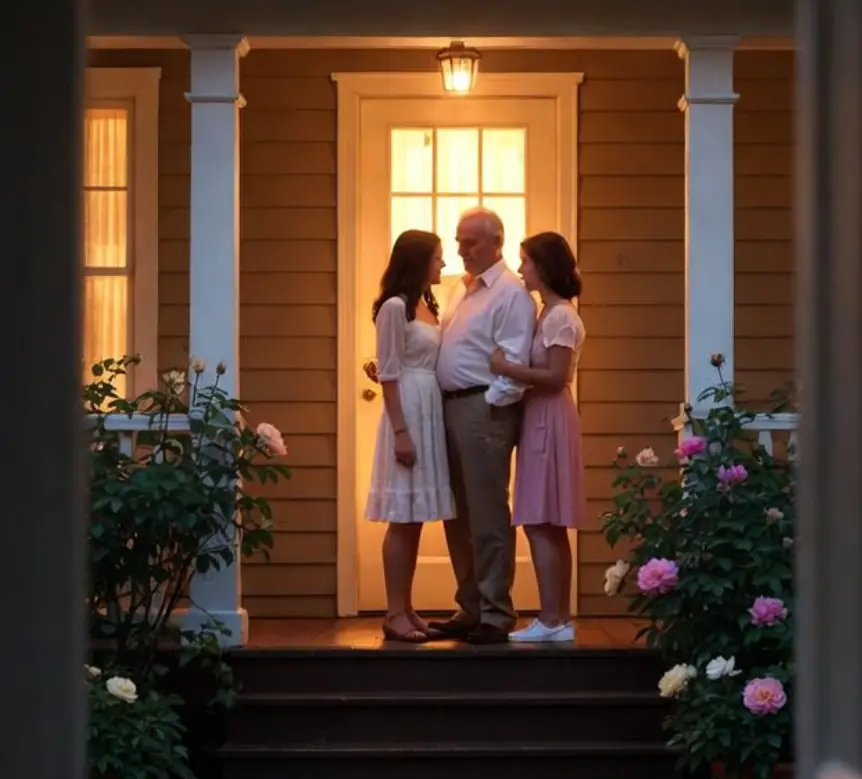
The house I grew up in was a sanctuary of memory. For twenty years, every scuff on the baseboards and every mismatched coffee mug told the story of my parents' marriage. My mother was the architect of our family's warmth; she was a woman of quick wit and gardener’s hands, and when she passed away four years ago, it felt as though the colors in the house had been muted by a heavy, gray frost.
I was thirty, with my own apartment and a career, but I visited my father every Sunday. We moved through those afternoons like two people walking on eggshells, careful not to disturb the silence she had left behind. I was content in our shared grief. It was stable. It was loyal.
Then, my father met Martha.
When he told me he was seeing someone, I felt a sharp, physical jolt of betrayal. It felt like a violation of the unspoken pact we had made to keep my mother’s ghost as the only woman in our lives. When they married a year later, the frost didn't melt—it hardened into a wall.
Martha was a retired schoolteacher, a woman of soft cardigans and an even softer voice. She was kind, which somehow made it worse. If she had been difficult, I could have fought her. But her patience was impenetrable. When she moved into my childhood home, she didn't paint the walls or throw out my mother’s old cookbooks. She lived among our memories with a quiet, careful reverence that I interpreted as a performance.
"You don't have to keep her things out for my sake, Martha," I said one afternoon, watching her carefully dust the framed photo of my parents on the mantle. "We know you're the one living here now."
Martha didn't flinch. She set the photo back exactly where it had been for two decades. "I’m not trying to take her place, Claire," she said softly. "I’m just trying to make sure the woman who built this house feels respected. She gave your father a beautiful life, and for that, I am in her debt."
I walked away, my heart a tangle of resentment and confusion. I viewed my father’s smile as a sign of forgetfulness. Every time I saw him laugh at one of Martha’s stories, I wanted to remind him of the laughter he had lost. I became a sentinel of the past, bringing up "Mom’s way" of doing things at every opportunity, waiting for Martha to slip up.
The distance between us became a comfortable habit. I was the visitor, the "real" daughter, and she was the addition—the person who held a title but not the history.
The wall began to crumble during a rainy week in October. I had come down with a severe case of the flu that turned into a stubborn bout of pneumonia. My father was away on a short fishing trip with friends—his first real vacation in years—and I was alone in my apartment, too weak to even boil water.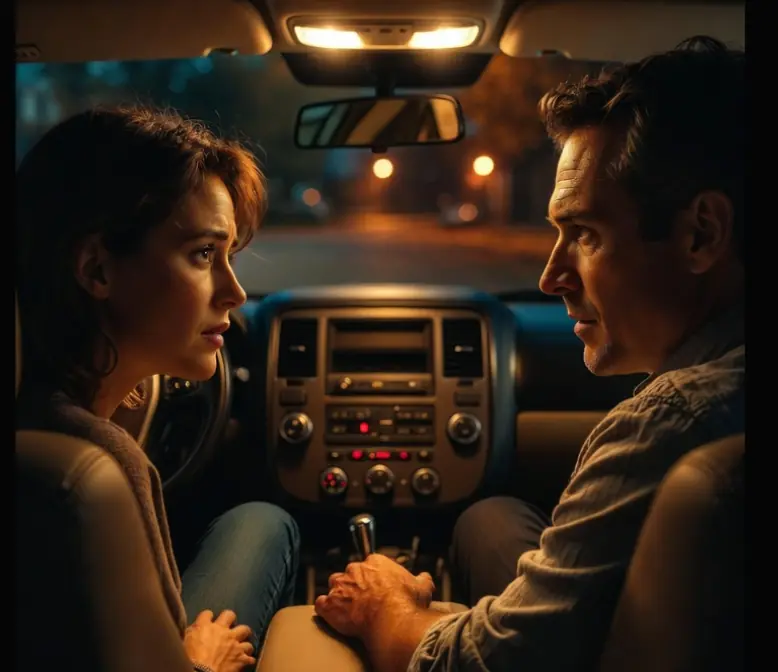
Against my protests, Martha drove into the city to pick me up. She didn't ask; she just arrived.
"Your father would never forgive himself if he knew you were here alone like this," she said, wrapping me in a thick wool blanket and helping me to her car.
For the next five days, I was a guest in my own history. I stayed in my old bedroom, the one with the faded posters and the shelf of childhood books. Martha moved through the house with a quiet, tireless efficiency. She brought me ginger tea and homemade soup, and she sat in the chair by the window, knitting while I drifted in and out of sleep.
One evening, as the fever was finally breaking, I woke up to find her looking at a small, leather-bound scrapbook I hadn't seen in years. It was my mother’s "garden journal," filled with pressed flowers and notes about which roses bloomed best in the Ohio soil.
"I’ve been reading this," Martha whispered, seeing me stir. "I didn't know if the soil near the porch was too acidic for peonies. Your mother knew exactly how to talk to this earth."
She looked at me, her eyes filled with a genuine, humble curiosity. "I’ve been trying to keep her rosebushes alive, Claire. I’ve never been much of a gardener, but I spend an hour every morning out there with her notes. I feel like if I can keep her garden blooming, then your father gets to keep a piece of the happiness he had before me. I don't want him to have to choose between the past and the present. I want him to have both."
I looked at the journal in her hands, then at the vase of fresh, late-season roses she had placed on my nightstand. I realized then that Martha hadn't spent the last year trying to replace my mother; she had spent it trying to protect her legacy. She had been a steward of our grief, holding the house together while my father learned how to breathe again.
My father chose happiness, but Martha was the one who was making that happiness sustainable. She wasn't an interloper; she was a bridge.
"I thought if he loved you, it meant he loved her less," I admitted, the honesty falling out of me in the quiet of the room.
Martha set the journal down and took my hand. Her touch was warm, steady, and lacked any of the insecurity I had projected onto her. "Love isn't a finite resource, Claire. It’s not a candle that burns out if you light another one. Your father’s heart just got bigger. There’s room for all of us in there."
The rest of my recovery was a slow, beautiful "realignment." I stopped looking for signs of betrayal and started looking for signs of care. I noticed how Martha had kept the cupboard stocked with my favorite tea. I noticed how she had repaired the loose hinge on the back door that my father had been meaning to fix for years. I noticed that she never asked me to call her "Mom," but she always treated me like a daughter.
When my father returned from his trip, he found us in the garden. Martha was holding the journal, and I was showing her exactly where the peonies needed to be divided.
He stood on the porch for a long moment, watching us. For the first time, I didn't see a man who was moving on; I saw a man who was finally home. He walked down the steps and put one arm around Martha and the other around me.
"The roses look good this year," he said, his voice thick with a peace I hadn't heard since I was a girl.
"Martha did it," I said, leaning my head against his shoulder. "She followed the map."
We are the Millers, and our family has a new definition now. It is a house with two stories—one written in the past with a woman who will never be forgotten, and one being written in the present with a woman who had the grace to wait for me to see her.
I’ve learned that loyalty to the dead isn't measured by how much we suffer in the present. It’s measured by how much we allow the love they gave us to grow into something new. My mother wouldn't have wanted me to stand guard over a cold hearth; she would have wanted the fire to be lit again.
Martha didn't change the colors of my childhood home. She just turned the lights back on.
I still miss my mother every single day. I still see her in the way the light hits the kitchen floor or the way the wind moves through the oaks. But now, when I visit on Sundays, the air doesn't feel heavy. It feels full. We sit on the porch, three adults who have navigated a storm and found a new shore.
Family isn't a closed circle. It’s a garden that requires different hands at different times to keep it blooming. And as I watch Martha and my father walking toward the house, hand in hand, I realize that I haven't lost a single thing. I’ve simply gained a witness to the beauty of a second chance.
Love doesn't require an ending to have a new beginning. It just requires the heart to stay open long enough for the seasons to change.
The house we inherited came with old arguments and a new beginning

The blended family vacation that almost ended in disaster
My mother thought my husband wasn’t good enough until he proved her wrong


The day my half-brother called me sister for the first time
Two stepsisters, one bedroom, and a lesson about sharing more than space
My stepmother wasn’t trying to replace my mom she was trying to love me
The stepfather i kept at a distance became the man who never left my side
He babysitter who almost broke our marriage helped us save it instead
My brother stopped speaking to me over money until we remembered who we were
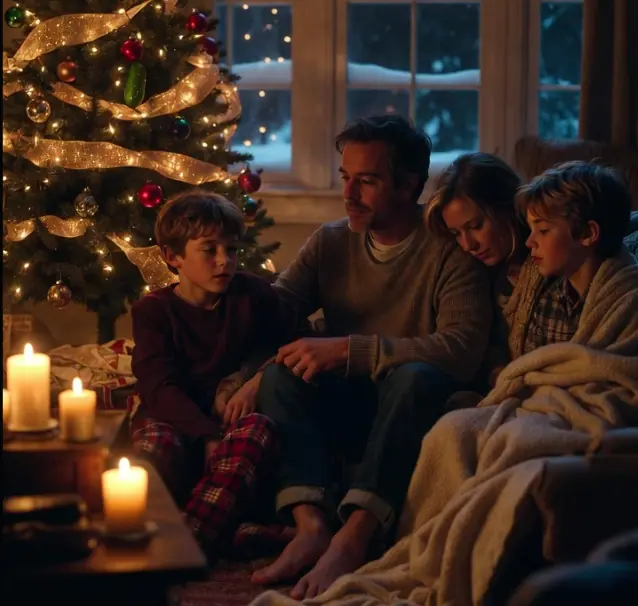
Our blended family almost didn’t survive the first christmas
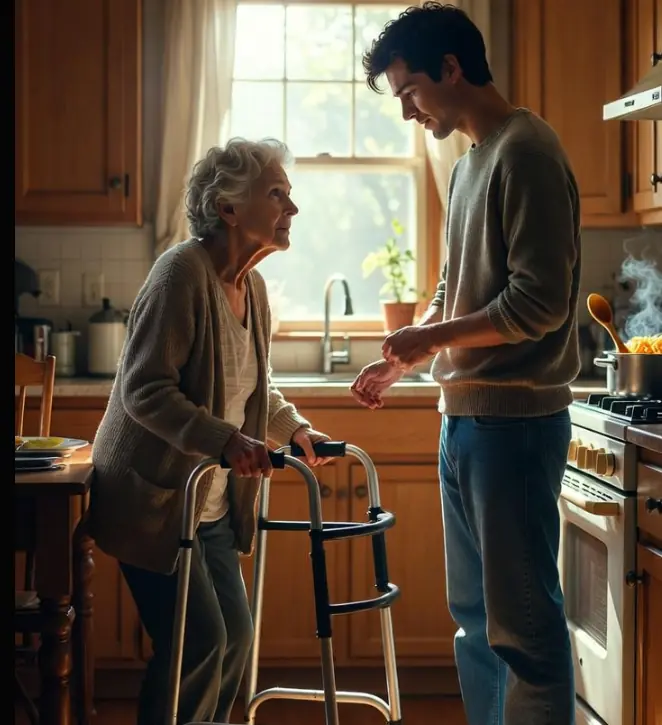
The day my son-in-law called me mom changed everything
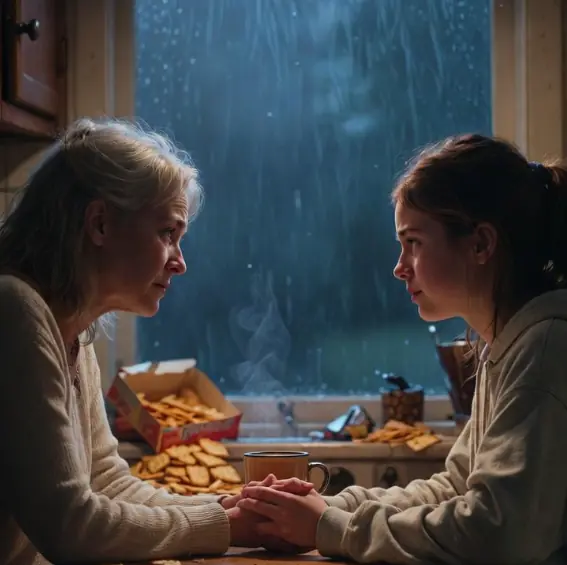
My daughter blamed me for the divorce until she learned the whole story
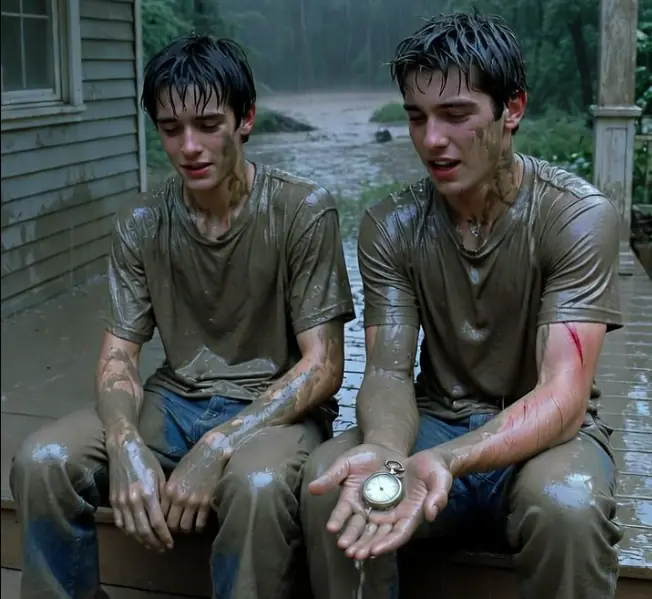
Two stepbrothers, one inheritance, and the lesson we never expected
The half-sister i resented became the person who saved our family

Scientists Sh.oc.ked — One Protein May Be the Root of Every Ca.nc.er
Thought salmon was the DHA king? The real champion is a fish you’ve probably ignored
If you often notice ringing in your ears, this might be a sign that you will suffer from ...
8 Unusual Signs That May Indicate Cervical Cancer – Women Should Know Early

Don’t Ignore These 20 Early Warning Signs That Your Body Could Be Fighting Can:cer
4 signs parents need to understand to save their children
Some fruits, though delicious and seemingly healthy, can become
The house we inherited came with old arguments and a new beginning
The blended family vacation that almost ended in disaster
My mother thought my husband wasn’t good enough until he proved her wrong
The day my half-brother called me sister for the first time
Two stepsisters, one bedroom, and a lesson about sharing more than space
Grandma moved in and brought more than just her suitcases
My stepmother wasn’t trying to replace my mom she was trying to love me
The stepfather i kept at a distance became the man who never left my side