Many People Think Salmon Is the “King of DHA” — But the Real Champion Might Surprise You
Okay, let’s talk facts.
Salmon has built a reputation.
Gym bros love it. Nutritionists recommend it. Moms swear by it for brain development.
And yes — salmon is rich in DHA (docosahexaenoic acid), one of the most important omega-3 fatty acids for:
-
Brain development
-
Eye health
-
Heart protection
-
Anti-inflammatory effects
But here’s the plot twist:
Salmon is not always the highest source of DHA per gram.
There’s another fish quietly outperforming it.
🐟 So… Who’s the Real DHA Champion?
In many cases, the true DHA powerhouse is:
Mackerel (especially Atlantic mackerel)


Per 100 grams, mackerel often contains significantly more total omega-3s (including DHA) than salmon.
Depending on the species:
-
Atlantic mackerel: ~1,000–1,500 mg DHA per 100g
-
Salmon (farmed Atlantic): ~700–1,200 mg DHA per 100g
Wild variations exist, but gram-for-gram, mackerel frequently wins.
And that’s not even the full story.
🧠 Why DHA Actually Matters
DHA is a structural fat found in:
-
Brain cell membranes
-
Retina tissue
-
Nervous system
It supports:
-
Cognitive function
-
Memory
-
Mood regulation
-
Infant brain development
-
Reduced cardiovascular risk
Low DHA levels are associated with inflammation, cognitive decline, and increased heart risk.
So yes — choosing the right fish matters.
🐟 Other Fish That Rival Salmon
Salmon is amazing, but it’s not alone in the omega-3 game.
Sardines


Small but elite.
Sardines are:
-
Extremely rich in DHA
-
Lower in mercury (because they’re small fish)
-
Packed with calcium and vitamin D
Nutrient-dense and budget-friendly.
Herring
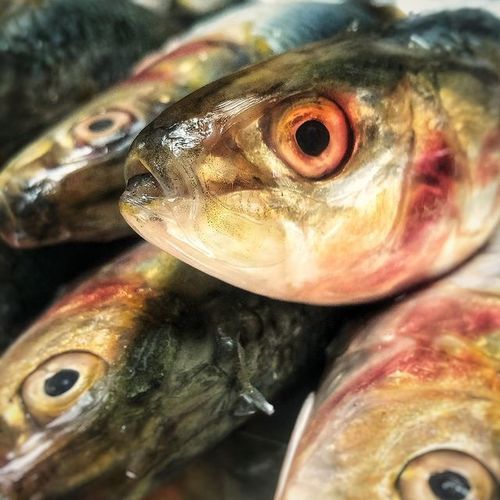


Another underrated omega-3 bomb.
Herring provides:
-
High DHA
-
Vitamin B12
-
Selenium
Very common in Nordic diets for a reason.
⚖️ Why Salmon Still Gets the Crown
So if mackerel sometimes beats salmon, why does salmon dominate the spotlight?
Because salmon is:
-
Widely available
-
Mild in taste
-
Easy to cook
-
Lower in strong “fishy” flavor
-
Marketed aggressively
It’s the most approachable omega-3 fish for the average consumer.
But nutritionally? It’s not unbeatable.
⚠️ One Important Factor: Mercury
Here’s where it gets real.
Large predatory fish tend to accumulate more mercury. However:
-
Atlantic mackerel → low mercury
-
Sardines → very low mercury
-
Salmon → generally low
The real concern comes with king mackerel (a different species) — which is high in mercury and should be limited.
Species matters. Always.
🥇 So Who Wins?
If we’re talking pure DHA density per gram:
👉 Atlantic mackerel often edges out salmon.
👉 Sardines and herring are extremely competitive.
If we’re talking practicality and popularity:
👉 Salmon wins.
The real takeaway?
Don’t rely on just one fish.
🧬 Smart Omega-3 Strategy
Instead of obsessing over one “king,” rotate:
-
Salmon
-
Mackerel
-
Sardines
-
Herring
Aim for 2–3 servings of fatty fish per week.
That’s the evidence-based sweet spot for cardiovascular and neurological health.
Final Thought
Salmon isn’t overrated — it’s just not alone at the top.
The real champion of DHA depends on:
-
Species
-
Source (wild vs farmed)
-
Portion size
-
Mercury content
Nutrition isn’t about hype.
It’s about data.
And sometimes, the quiet fish in the corner is the actual MVP. 🐟