There are moments in life that feel bigger than they really are. A quiet hug. A gentle touch. A small act of acceptance. To outsiders, these moments may seem ordinary, easy to overlook in the chaos of the world. But for those who understand the story behind them, they can mean absolutely everything.
For supporters of Little Punchy, this moment is one of those moments.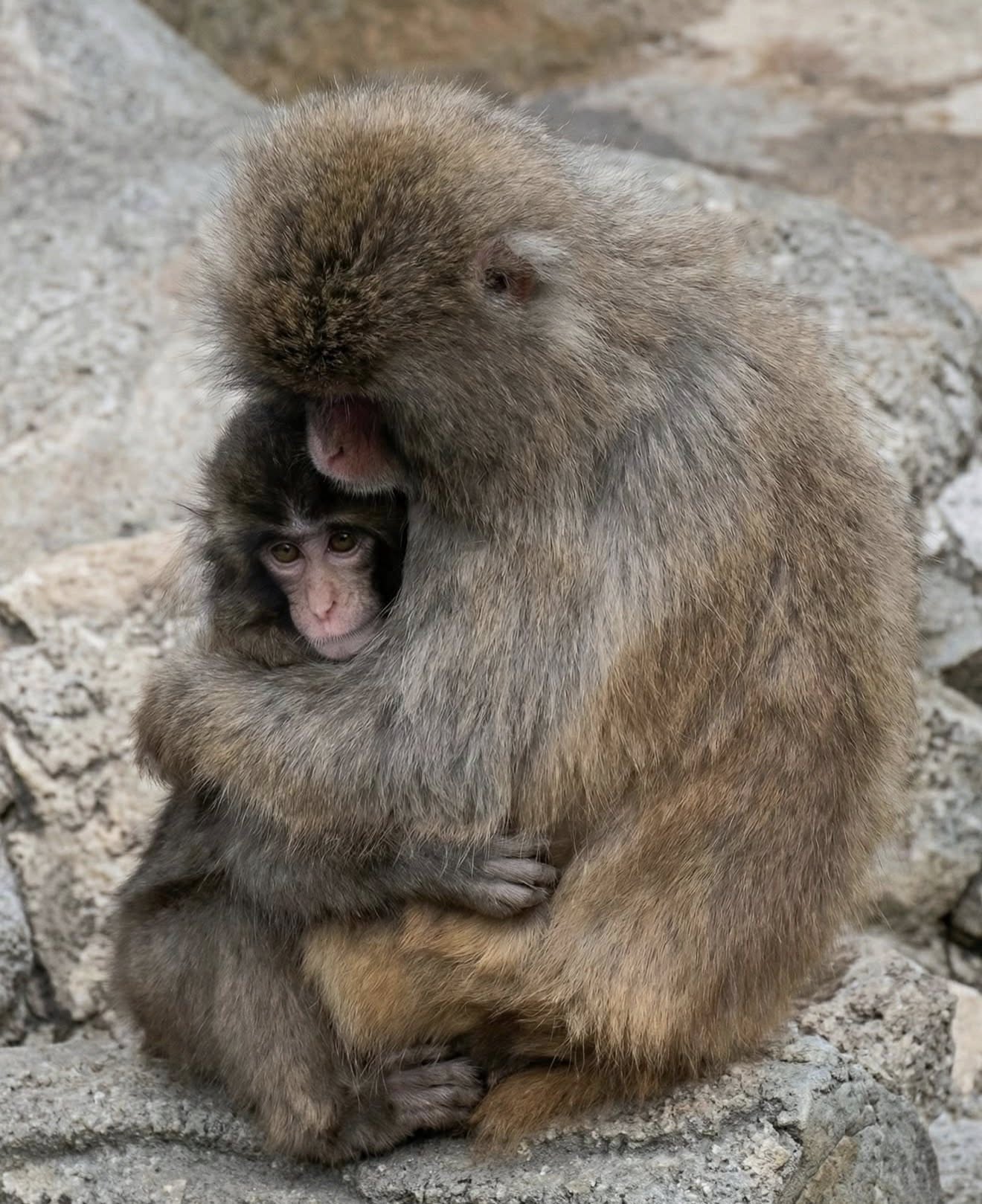
At first glance, the images seem simple enough: a small monkey surrounded by others, being groomed, held, comforted, and embraced by the troop around him. But anyone who has followed Little Punchy’s journey knows these pictures represent something far more powerful than physical closeness. They represent survival, healing, trust, and finally, belonging.
Because there was a time when this would have been impossible.
There was a time when Little Punchy lived every single day in fear.
Back then, he wasn’t the monkey being welcomed into the center of the group. He wasn’t being cuddled or protected. He wasn’t receiving affection from the others. Instead, he was the frightened baby constantly clinging to Mama Doll, desperately trying to make himself invisible so the older monkeys wouldn’t notice him.
Every movement he made seemed cautious. Every glance looked nervous. His tiny body carried the tension of someone who understood danger far too early in life. Even as a baby, he had already learned one heartbreaking lesson: safety was never guaranteed.
That’s what made his story so emotional from the very beginning.
Little Punchy wasn’t born into comfort or security. On Monkey Mountain, life was harsh, unpredictable, and often cruel for vulnerable monkeys. The troop hierarchy was strict, and weaker monkeys frequently found themselves isolated or bullied. For a tiny infant like him, survival depended not only on strength but also on luck, timing, and whether stronger members of the troop chose to tolerate his existence.
Unfortunately, tolerance was never something he could rely on.
Supporters remember those early days vividly. Little Punchy spent much of his time hiding behind Mama Doll, using her presence as a shield from the world around him. He seemed constantly alert, as though he expected aggression at any moment. The older monkeys intimidated him, and whenever tensions rose, his instinct was always the same: stay small, stay quiet, stay hidden.
It was heartbreaking because he looked so fragile.
While other young monkeys played freely or explored confidently, Little Punchy seemed trapped in survival mode. He wasn’t thinking about curiosity or adventure. He was thinking about avoiding conflict, avoiding attention, and avoiding pain.
And perhaps the saddest part of all was how alone he seemed.
Even when surrounded by the troop, there was often an invisible distance between him and everyone else. He existed near the group, but not truly within it. He watched from the edges. He lingered cautiously nearby but rarely appeared fully relaxed. It was as if he desperately wanted connection while simultaneously fearing rejection.
Anyone who has ever felt excluded or unwanted could recognize that feeling instantly.
That’s why these new moments hit so deeply for supporters.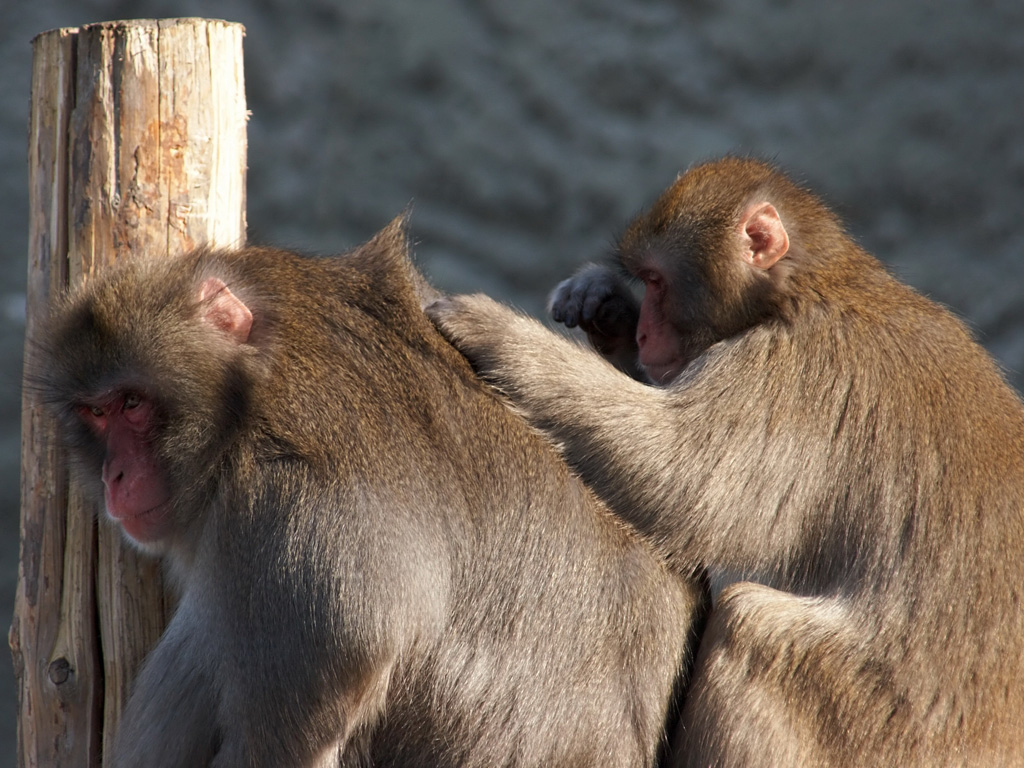
Because what we are witnessing now is not just physical contact. It is emotional transformation.
In the top panels, Little Punchy no longer looks like the terrified infant trying to disappear into the background. Instead, he is sitting among the troop members naturally, comfortably, almost peacefully. The others are not threatening him or forcing him away. They are actively interacting with him in gentle, affectionate ways.
And the grooming itself carries enormous meaning.
For monkeys, grooming is not merely about cleanliness. It is one of the strongest forms of social bonding within a troop. Grooming reinforces trust, strengthens relationships, and establishes emotional security between individuals. Monkeys groom those they accept. Those they feel connected to. Those they consider part of their social world.
That alone would already be emotional enough.
But then comes the image that truly breaks everyone’s hearts in the best possible way: the panel where Little Punchy is being held like a baby.
It’s almost impossible to look at that image without feeling overwhelmed.
There he is, cradled gently while the others sit closely around him, creating an atmosphere that feels unmistakably safe. For perhaps the first time in his life, he doesn’t look tense or defensive. He doesn’t appear ready to flee. His body language is soft. Relaxed. Vulnerable in the healthiest possible way.
And vulnerability like that only appears when fear begins to disappear.
That image says more than words ever could.
It tells the story of a monkey who spent so long believing he had to survive alone finally realizing he no longer has to.
It tells the story of emotional walls slowly coming down.
It tells the story of trust being built piece by piece.
Most importantly, it tells the story of acceptance.
For so long, Little Punchy existed on the outskirts of the troop dynamic. He survived, yes, but surviving is not the same thing as belonging. Survival means waking up each day hoping to avoid danger. Belonging means feeling safe enough to rest. Safe enough to connect. Safe enough to exist without fear.
That difference changes everything.
And supporters can see it clearly now.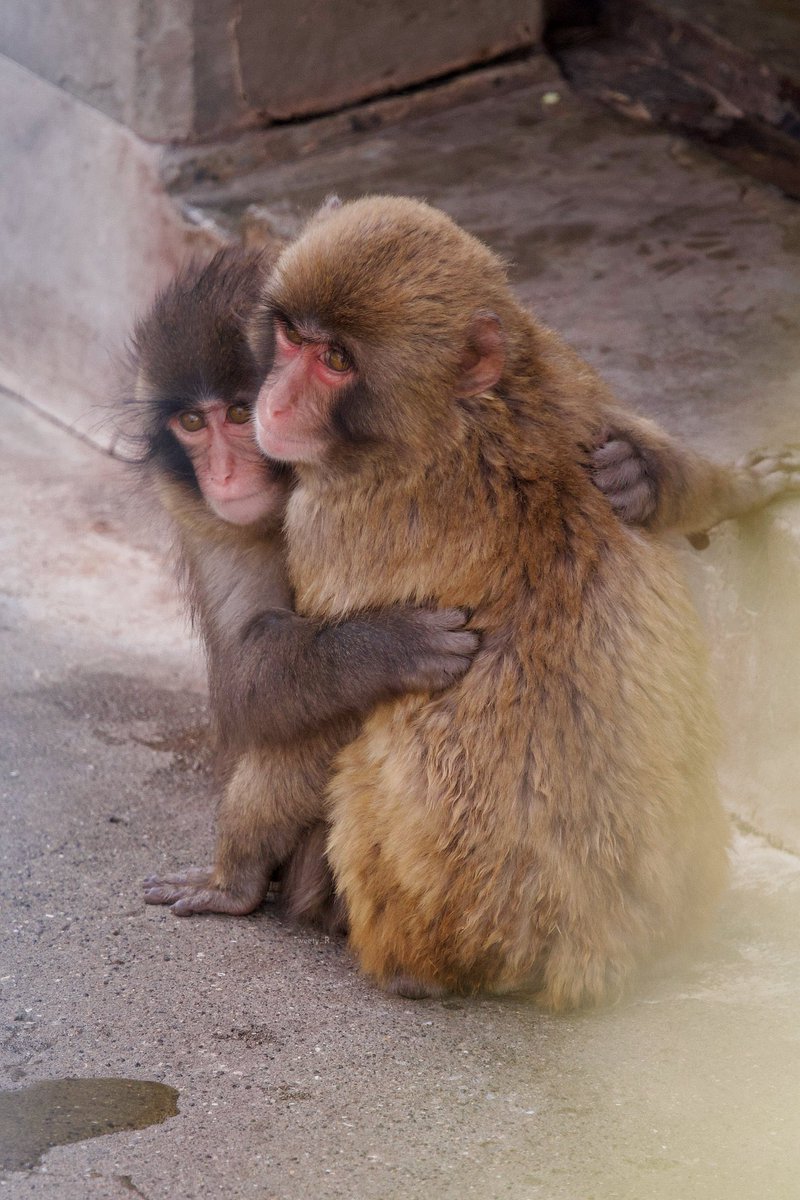
Even the bottom-right panel carries incredible emotional weight. The gentle face-touching between Little Punchy and another monkey may seem small to some viewers, but within primate behavior, these moments are deeply intimate. Face-touching requires trust. It requires calmness. It requires mutual comfort.
That is not the behavior of a monkey being rejected.
That is the behavior of a monkey being welcomed.
For longtime followers, these scenes feel almost unreal because they remember exactly where his journey started. They remember the frightened baby desperately clutching Mama Doll for protection. They remember the fear in his eyes. They remember the uncertainty surrounding whether he would ever truly integrate into the troop.
At times, it honestly felt hopeless.
There were moments when it seemed like Little Punchy would always remain an outsider. Some monkeys never fully recover socially after experiencing prolonged fear or rejection early in life. Trauma changes behavior. It changes confidence. It changes the ability to trust others.
And yet somehow, despite everything, Little Punchy kept moving forward.
Slowly.
Painfully.
Quietly.
One small step at a time.
That is another reason his story resonates so deeply with people. His transformation wasn’t instant or dramatic. There was no magical turning point where everything suddenly became perfect overnight. Instead, it was gradual. Tiny moments of progress stacked on top of each other until eventually supporters realized something incredible had happened.
He was no longer merely tolerated.
He was loved.
That distinction matters more than people realize.
Animals, especially social animals like monkeys, need emotional connection just as humans do. Isolation creates stress. Rejection creates anxiety. But companionship, affection, and protection create stability. They create confidence. They allow personalities to emerge.
And perhaps that is what feels most beautiful about Little Punchy’s recent transformation: we are finally getting to see who he really is beneath all the fear.
When survival is no longer the primary focus, something amazing happens. Playfulness returns. Curiosity returns. Comfort returns. Emotional openness returns.
Healing begins.
You can see traces of that healing throughout these interactions.
The way he allows himself to relax around the troop.
The way he leans into physical affection instead of shrinking away from it.
The way he remains close instead of retreating to isolation.
These are not small developments. For a monkey with his history, they are monumental.
It also says something important about the troop itself.
At one point, the social environment around him felt dangerous and unstable. But now, the group dynamic appears to have shifted enough for him to finally establish secure relationships. Whether through changing hierarchies, stronger bonds, or simple familiarity over time, the troop has begun treating him differently.
And that difference may have saved him emotionally.
Because every living creature needs to feel that they matter to someone.
Little Punchy matters now.
Not as an afterthought.
Not as a burden.
Not as the frightened baby hiding behind Mama Doll.
But as family.
That’s why supporters describe this moment as “full circle.” The contrast between past and present is almost impossible to ignore. The monkey who once struggled simply to exist peacefully within the troop is now being embraced at the center of it.
The emotional payoff feels earned because the audience witnessed every painful stage leading up to it.
They witnessed the fear.
They witnessed the loneliness.
They witnessed the rejection.
And now, finally, they are witnessing love.
In many ways, Little Punchy’s journey reflects something universally human as well. Even though he is a monkey, people connect deeply with his experiences because the emotions feel familiar. Most people know what it feels like to fear rejection. Most people understand loneliness. Most people know the pain of feeling unwanted or excluded.
And because of that, seeing him finally accepted becomes strangely healing for the audience too.
It reminds people that transformation is possible.
That fear does not have to last forever.
That even after difficult beginnings, connection can still happen.
Belonging can still happen.
Love can still happen.
That’s the power of stories like Little Punchy’s. They remind us that emotional recovery often happens slowly and quietly, through repeated acts of kindness and safety rather than dramatic miracles.
A gentle touch.
A grooming session.
A comforting embrace.
A peaceful moment shared beside others.
These things may seem small, but for someone who spent so long afraid, they are life-changing.
And perhaps the most beautiful part of all is this: Little Punchy no longer looks like he’s waiting for something bad to happen.
He finally looks safe.
For supporters who watched him struggle from the very beginning, that alone is enough to bring tears to their eyes.
Because after everything he survived on Monkey Mountain, after every moment of fear and isolation, Little Punchy is no longer just surviving.
He’s finally home.