When the body sends out these 4 signals, your cervical spine may be “crying for help”: Don’t wait until paralysis to regret it
When this area develops problems, the consequences can spread and become far more serious than many people realize.
In modern life, one of the most familiar sights is bowed heads: looking down at phones on the subway, leaning forward in front of computer screens at the office, and even at home. A sedentary lifestyle, prolonged sitting, and poor posture cause many people to frequently experience neck pain and shoulder stiffness, yet they often dismiss it as temporary fatigue.
In reality, according to rehabilitation specialists, these seemingly minor discomforts can be early warning signs of cervical spine disorders. The danger lies in the fact that the cervical spine is not only responsible for neck and shoulder movement, but also serves as a “traffic hub” for nerves and blood vessels connecting the brain to the entire body. When something goes wrong in this area, the consequences can be far-reaching and much more serious than expected.
Neck and shoulder pain – the earliest but most easily overlooked sign
The most common manifestation of cervical spine injury is pain, tightness, or soreness in the neck, shoulders, and between the shoulder blades. The pain may be dull and persistent, or worsen when bending the head forward or backward, or when rotating the neck. Some people also experience headaches, a heavy-headed feeling, and difficulty concentrating.
Common causes include prolonged muscle tension, dysfunction of the small joints in the neck, or early-stage cervical disc degeneration. If the pain does not stay confined to the neck but radiates down the arm, it may indicate that a nerve root is being irritated or compressed.
Numbness in the hands or fingers – a warning that nerves are being compressed
When you begin to feel numbness in your fingers, hands, or even the entire arm—sometimes accompanied by sensations like electric shocks or tingling—don’t rush to assume it’s just from “sleeping on your arm.”
According to doctors, this is often the result of cervical disc herniation, bone spurs, or cervical degeneration, which compress the nerve roots. Notably, the specific finger affected and which side of the body experiences numbness can help doctors pinpoint the exact segment of the cervical spine that is problematic.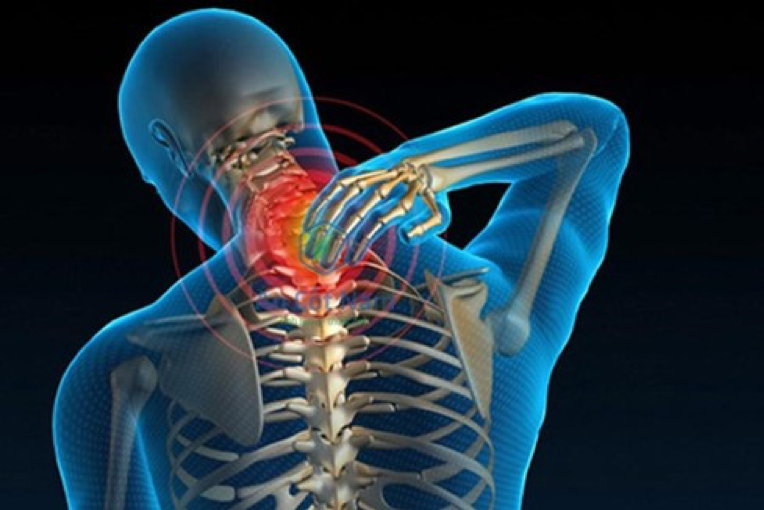
Dizziness when turning the head – not just an ear-related issue
Many people experience brief dizziness when turning their head, bending down, or looking up, sometimes accompanied by nausea but without fainting. These symptoms usually last from a few seconds to a few minutes and then subside with rest.
This may be a form of cervicogenic dizziness, which occurs when degenerative changes in the neck affect the vertebral arteries—important blood vessels supplying blood to the back of the brain. In addition, disrupted sensory signals from the neck to the brain can also cause a loss of balance.
Weakness in the arms or legs, unsteady walking – the most dangerous sign
Among the symptoms of cervical spine disease, weakness or clumsiness of the arms and legs is the most alarming. Patients may notice:
-
Weak hands, easily dropping objects
-
Difficulty buttoning clothes or using chopsticks
-
Unsteady walking, feeling as if “walking on clouds”
-
A sensation of tightness around the chest or abdomen
These symptoms indicate compression of the cervical spinal cord, also known as cervical myelopathy. The spinal cord is the “highway” transmitting signals between the brain and the limbs, so if damage persists without timely treatment, the ability to recover function decreases significantly, and there is even a risk of paralysis.
Don’t wait until the condition becomes severe to see a doctor
Doctors recommend that when any of the above signs appear, patients should seek medical attention early for clinical examination and imaging tests such as X-rays, CT scans, or MRI to accurately assess the extent of cervical spine damage.
The good news is that most patients can improve well with non-surgical treatments, including physical therapy, rehabilitation, properly guided cervical traction, and medication as prescribed. Surgery is only considered when there is clear spinal cord compression or when conservative treatment is ineffective.
The cervical spine does not “speak up” loudly, but the signals it sends always have a reason. Listening to your body a little earlier can help you avoid serious consequences later on.