A Simple Trick to Tell Real Honey From Fake: Just Flip the Bottle Upside Down
Honey has been treasured for centuries as a natural sweetener and a popular home remedy. However, with growing demand around the world, consumers are increasingly concerned about the quality and authenticity of the honey they buy.
Many people wonder: Is there a simple way to tell whether honey is genuine before bringing it home?
According to a popular method, the answer may be as easy as turning the bottle upside down and watching what happens inside.
Why Honey Authenticity Matters
Pure honey contains naturally occurring sugars, enzymes, antioxidants, and other compounds produced by bees from flower nectar.
Unfortunately, some products sold as honey may be diluted with sugar syrups, water, or other additives. While appearance alone cannot guarantee authenticity, certain visual clues may provide useful hints about quality.
One of the easiest methods involves observing how honey behaves inside the bottle.
The Upside-Down Bottle Test
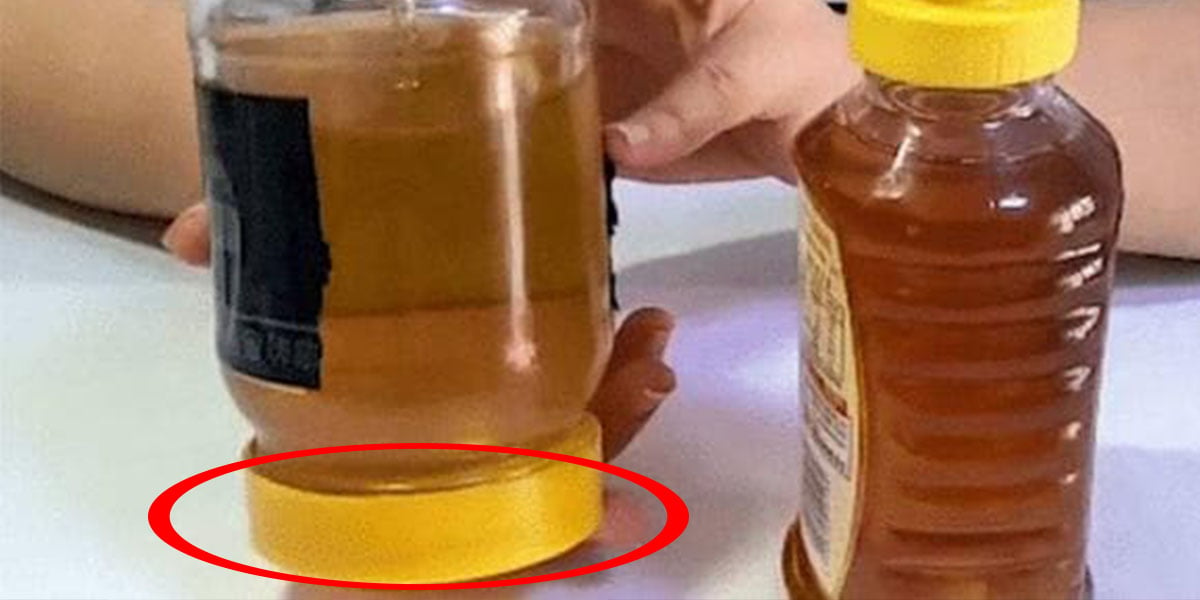
If the honey is sold in a transparent container, try gently shaking the bottle a few times and then quickly turning it upside down.
Watch the air bubbles that form inside.
Many honey enthusiasts believe that genuine honey typically produces numerous small bubbles that move slowly through the thick liquid and take a relatively long time to disappear.
Because pure honey is naturally dense and viscous, the bubbles tend to rise slowly rather than rushing to the surface.
By contrast, diluted or lower-quality honey may produce larger bubbles that disappear more quickly. The liquid itself may also flow more rapidly, resembling syrup rather than thick honey.
What the Bubbles Can Reveal
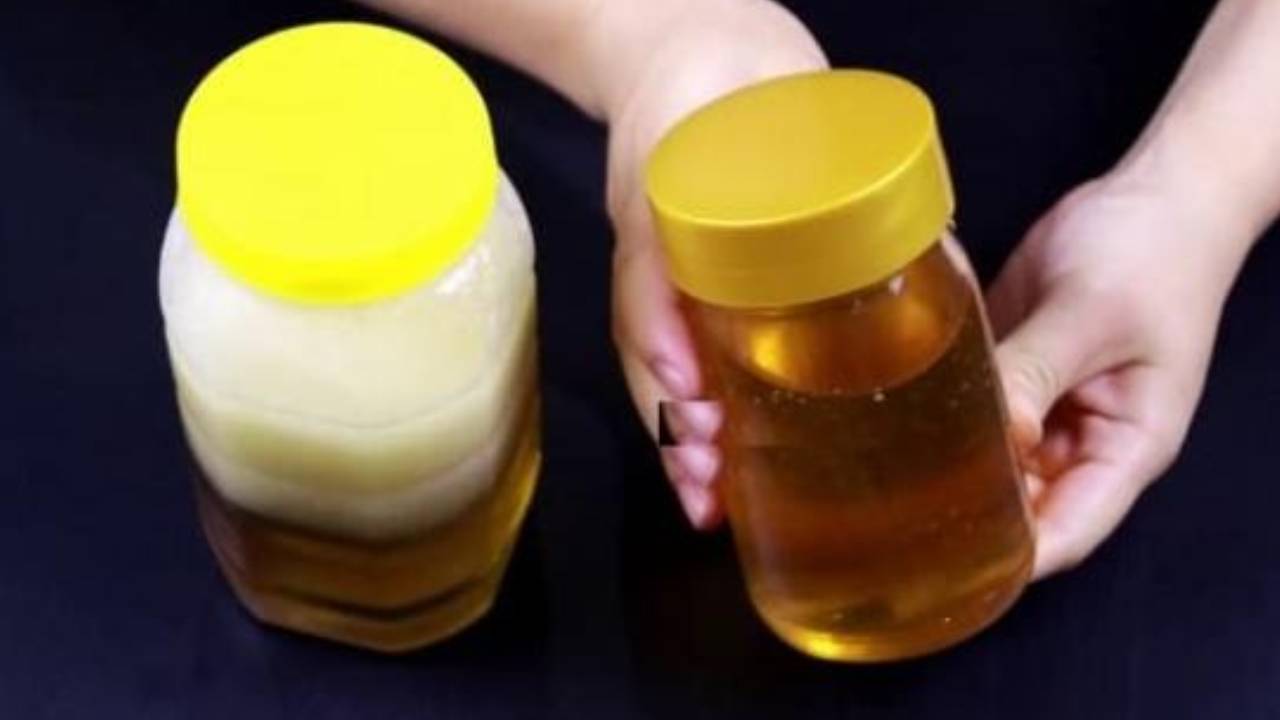
When observing the bottle, pay attention to:
Small, Dense Bubbles
These are often associated with thicker honey. The bubbles may remain visible for an extended period before fading away.
Large Bubbles That Disappear Quickly
This may suggest the honey contains more moisture or has been diluted, although this is not always the case.
Flow Speed
Pure honey generally moves slowly when the bottle is inverted. If the liquid runs very quickly, it could indicate a lower viscosity.
However, viscosity alone cannot definitively determine whether honey is authentic.
Other Simple Signs to Look For
1. Observe the Color
Many consumers assume that real honey must have a specific color, but this is not true.
Natural honey can range from pale gold to deep amber depending on:
- The flowers visited by the bees
- Geographic location
- Season
- Processing methods
A wide variety of colors can still indicate genuine honey.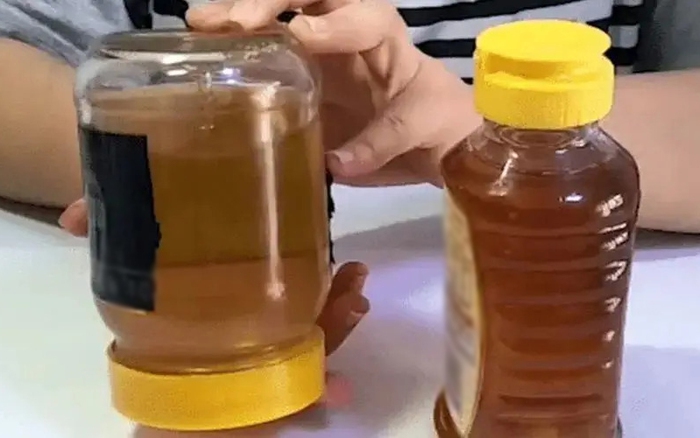
2. Check for Crystallization
One common misconception is that crystallized honey has gone bad.
In reality, crystallization is often a natural process that occurs in genuine honey, especially when stored at cooler temperatures.
The appearance of fine crystals does not necessarily mean the honey is spoiled. In many cases, it may actually be a sign that the honey is relatively unprocessed.
3. Try the Water Test
Another popular home method involves placing a spoonful of honey into a glass of water.
Many people believe that thicker honey tends to sink and dissolve more slowly, while diluted honey disperses more quickly.
Although this test can provide clues, it should not be considered definitive proof of authenticity.
4. Pay Attention to Aroma
Pure honey often carries a subtle floral scent that varies depending on its botanical source.
Honey that smells overly artificial or unusually sweet may warrant closer examination.
Why No Home Test Is Perfect
While the upside-down bottle trick is simple and interesting, experts caution that no single home test can guarantee whether honey is real or fake.
Several factors can affect how honey behaves, including:
- Temperature
- Moisture content
- Floral source
- Processing methods
- Storage conditions
Even genuine honey may flow more quickly on a hot day, while some adulterated products can be formulated to mimic the thickness of pure honey.
For this reason, the most reliable way to evaluate honey quality remains laboratory testing and purchasing from trusted, reputable producers.
Tips for Buying Better Honey
To increase your chances of buying high-quality honey:
✅ Purchase from reputable brands or local beekeepers
✅ Read ingredient labels carefully
✅ Avoid products with added sweeteners
✅ Be cautious of prices that seem unrealistically low
✅ Look for quality certifications when available
✅ Store honey properly in a cool, dry place
Final Thoughts
Flipping a honey bottle upside down is a quick and easy trick that may provide useful clues about the product inside. Small bubbles that rise slowly and thick, sluggish movement are often considered signs associated with higher-quality honey.
However, no visual test is foolproof. Factors such as temperature, processing, and storage can all influence how honey behaves. The best approach is to combine simple observations with careful label reading and purchasing from trustworthy sources.
A few seconds of inspection before buying may help you make a more informed choice and enjoy honey with greater confidence.