Doctors Warn of a Little-Known Cancer Symptom You Can See on Your Toenails
Most people rarely examine their toenails closely. We trim them, maybe paint them, and move on. But subtle changes in your nails — especially persistent discoloration or unusual streaks — can sometimes signal more than a minor fungal infection.
In rare cases, changes in the toenails may indicate subungual melanoma, a serious form of skin cancer that develops under the nail.
While this condition is uncommon, early detection is critical. Let’s break down what to look for — and when to take action.
What Is Subungual Melanoma?
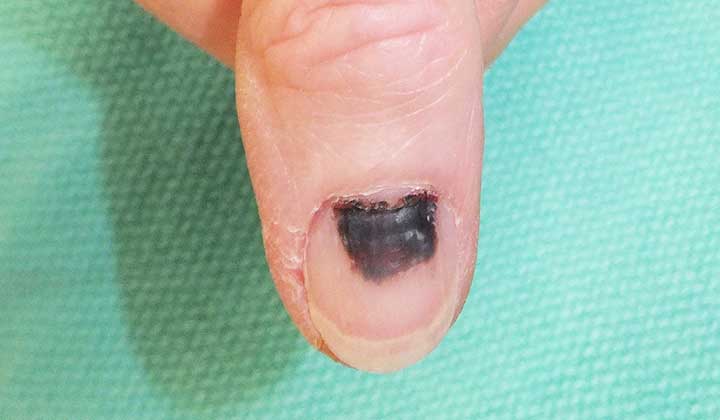
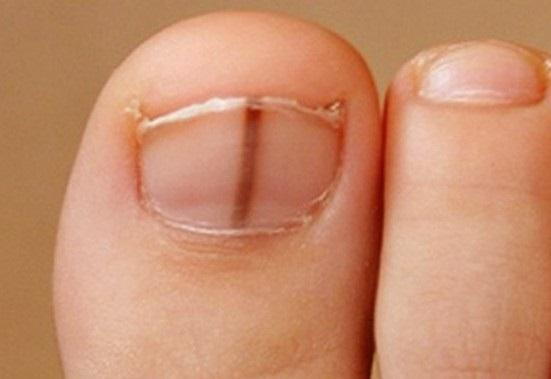

Subungual melanoma is a type of melanoma that occurs beneath the nail plate. Unlike typical skin melanoma caused by sun exposure, this type can appear on fingers or toes — often without obvious UV exposure.
It accounts for a small percentage of melanoma cases but is frequently diagnosed late because people mistake it for:
-
Bruising
-
Fungal infection
-
Nail injury
-
Pigmentation change
That delay can make treatment more complicated.
The Warning Sign Doctors Want You to Notice
The most common visible symptom is:
A Dark Vertical Stripe on the Nail
This may appear as:
-
Brown or black streak
-
Thin line that gradually widens
-
Irregular borders
-
Uneven pigmentation
Unlike a bruise, this streak does not grow out with the nail in the usual way.
If the line becomes darker, thicker, or spreads to surrounding skin, medical evaluation is essential.
Other Nail Changes That May Be Concerning
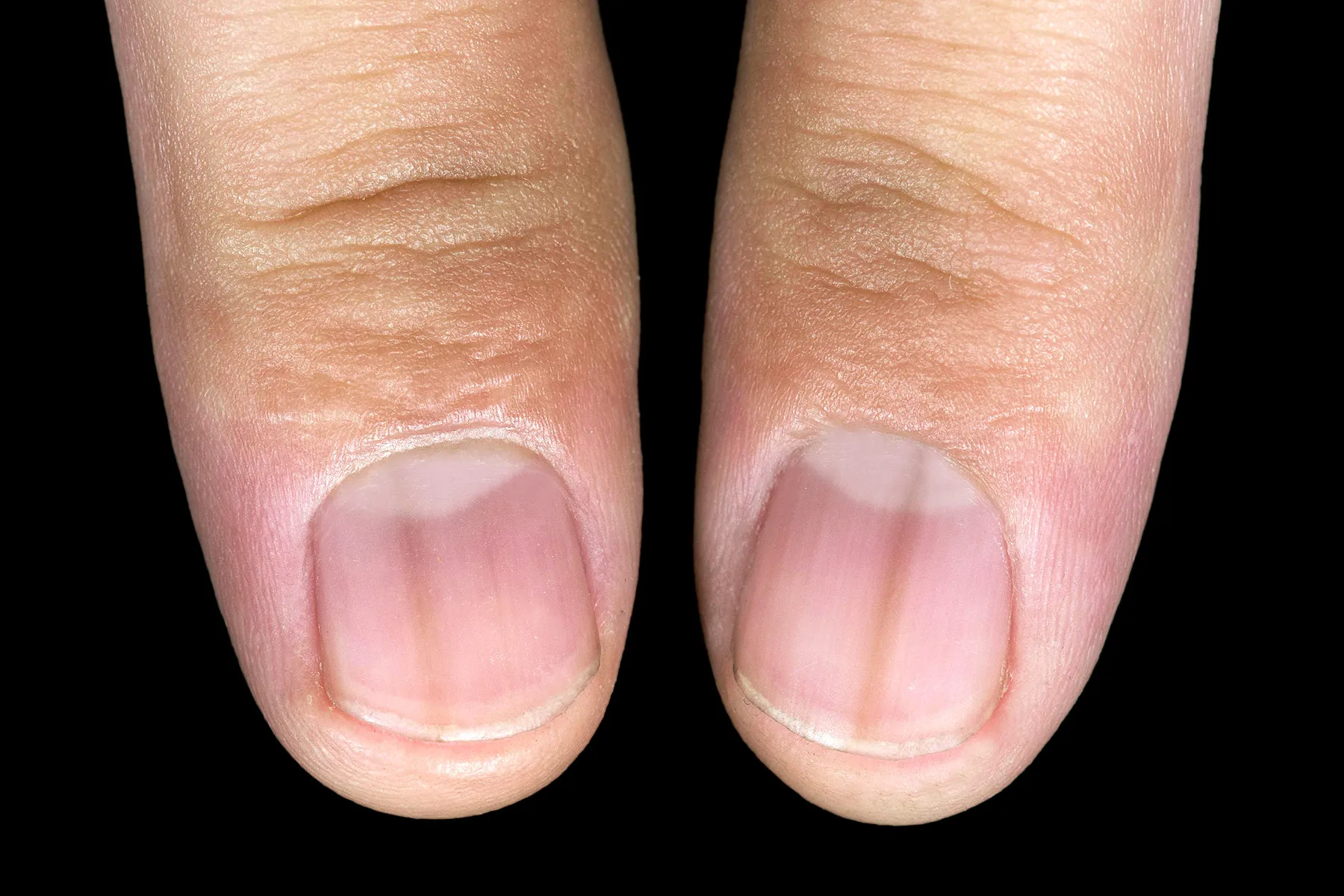
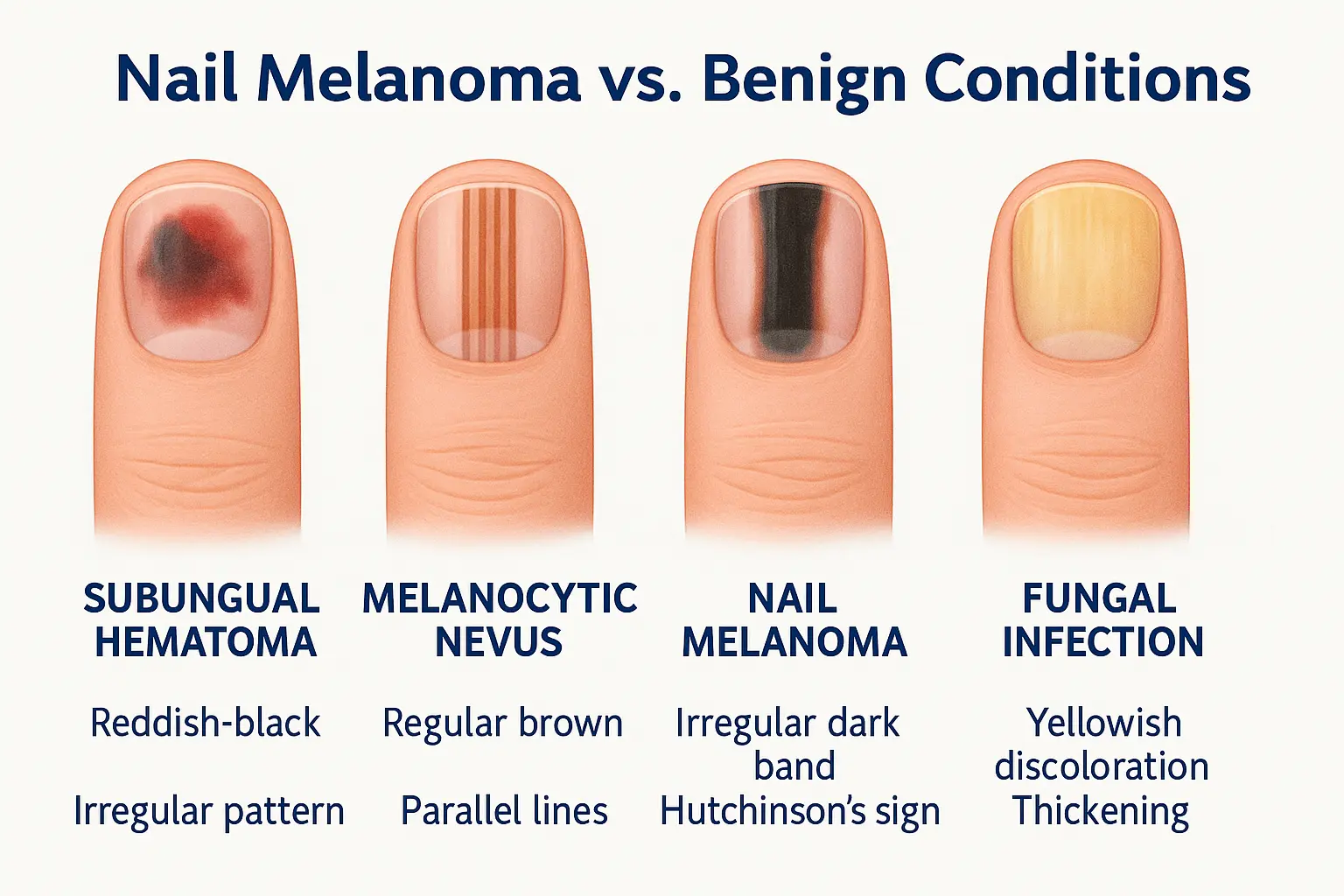
Beyond a dark stripe, additional warning signs may include:
-
Pigment spreading to the cuticle or surrounding skin (Hutchinson’s sign)
-
Nail splitting or cracking without injury
-
Persistent nail deformity
-
A bump under the nail
-
Bleeding without trauma
These changes often develop slowly, making them easy to ignore.
How Is It Different From a Bruise?
A common mistake is assuming a dark mark is from stubbing your toe.
Here’s how they differ:
Bruise (Subungual Hematoma):
-
Usually follows trauma
-
Reddish, purple, or black
-
Moves forward as nail grows
-
Gradually fades
Possible Melanoma:
-
No injury history
-
Brown/black vertical band
-
Does not move normally with nail growth
-
May widen over time
If you’re unsure, don’t guess — get it checked.
Who Is at Higher Risk?
Subungual melanoma can affect anyone, but risk increases in:
-
Adults over 50
-
Individuals with darker skin tones
-
Those with personal or family history of melanoma
-
People with chronic nail trauma
Importantly, this condition can occur even in people who rarely spend time in the sun.
Why Early Detection Matters


Melanoma is aggressive if left untreated. When detected early, treatment outcomes are significantly better.
Diagnosis typically involves:
-
Clinical examination
-
Dermoscopy
-
Nail biopsy
Early-stage melanoma can often be surgically removed with good prognosis. Advanced stages may spread to lymph nodes or other organs.
When Should You See a Doctor?
Seek medical advice if you notice:
-
A new dark stripe on one nail
-
A streak that is widening
-
Pigment spreading beyond the nail
-
Nail changes that persist longer than 6–8 weeks
-
Bleeding without clear injury
Do not attempt self-treatment with antifungal creams unless a doctor confirms infection.
Other Causes of Nail Discoloration
Not every dark mark means cancer. Common non-cancerous causes include:
-
Fungal infection
-
Trauma
-
Bacterial infection
-
Medication side effects
-
Benign pigmentation
However, only a medical professional can distinguish between harmless and dangerous changes.
Prevention and Awareness
While subungual melanoma is not fully preventable, awareness is powerful.
You can:
-
Examine your nails monthly
-
Remove nail polish periodically to inspect natural nails
-
Report unusual changes promptly
-
Protect feet from repeated trauma
Self-checks take less than a minute — but could make a life-saving difference.
Final Thoughts
Your body often gives subtle signals before serious illness develops. A small stripe on a toenail may seem insignificant — but in rare cases, it can be an early warning of melanoma.
Most nail changes are harmless. Still, persistent or unusual discoloration deserves medical evaluation.
When it comes to cancer, early action changes outcomes. If something looks different and doesn’t resolve, trust that instinct and consult a healthcare professional.
Sometimes, paying attention to the smallest details can protect your biggest asset — your health