Instead of using steel wool, this is the proper way to clean stainless-steel pots and pans to help extend their “lifespan”—a tip many people don’t know.
To clean stainless-steel pots and pans with burnt-on stains, people usually use steel wool. However, this can shorten their lifespan because it may damage the non-stick layer and create countless scratches on the surface.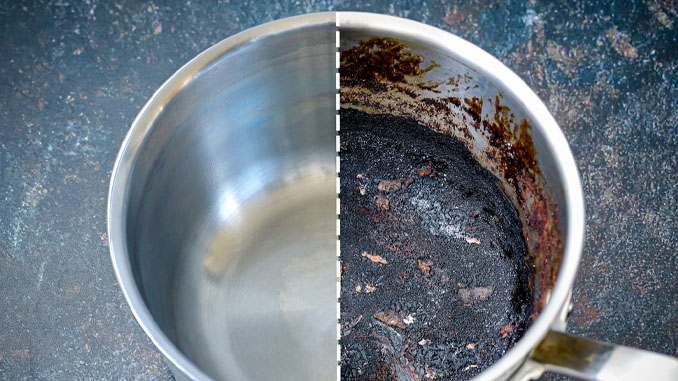
Steel wool is a kitchen-cleaning tool found in almost every household. But when used on stainless-steel cookware, it not only requires a lot of effort but can also leave surface scratches. Over time, stainless-steel pots and pans lose their appearance and deteriorate quickly.
Instead of using steel wool, with just a few simple tips below, cleaning stainless-steel pots and pans can help extend their “lifespan”—something many people are unaware of.
Use boiling water
First, pour about 100 ml of water into the non-stick pot or pan that needs cleaning and place it on the stove to boil. In other words, boil a small amount of water using the same cookware you want to clean.
When the water starts to boil, put in a piece of cloth or use a dish sponge to scrub thoroughly. In less than a minute, you’ll see the burnt stains and food residue come off completely—even without dishwashing liquid.
You can reduce the heat rather than turning off the stove completely while scrubbing. Then pour out the dirty water, and you’ll find the pot or pan shiny and clean, with no food residue or burn marks left. If you like, you can wash it again with dish soap; otherwise, simply rinse with clean water.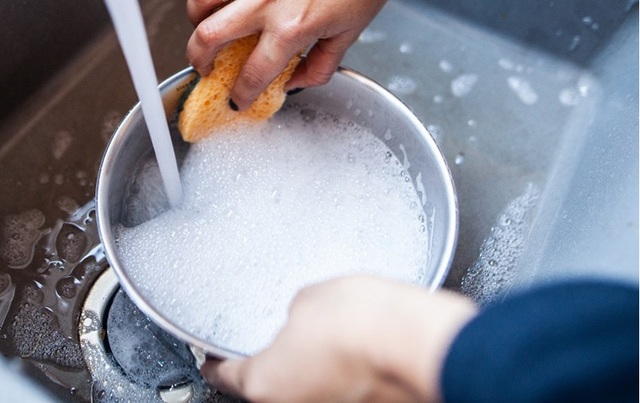
Use dishwasher tablets
Stainless-steel pots that have been heavily soiled for a long time can be cleaned thoroughly without much effort by soaking them in boiling water mixed with dishwasher tablets or detergent. First, boil about 2 liters of water, add one dishwasher tablet or some dishwasher powder, and then soak the pots and pans. Light stains may need about 2 hours of soaking, while heavier, long-standing stains should be soaked overnight. After that, the stains on stainless-steel cookware can be easily removed.
Dishwasher tablets contain oxygen-releasing agents that make it especially easy to remove burnt-on stains and long-standing grease.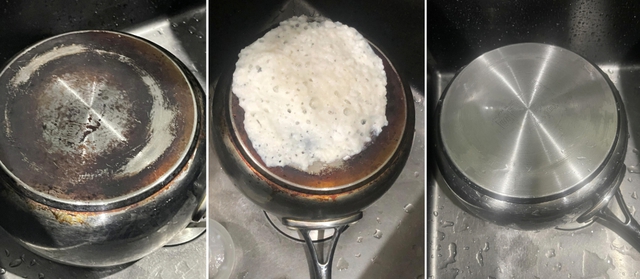
Use fermented rice for cleaning
Using fermented rice paste (mẻ) combined with baking soda, left to soak overnight and scrubbed with an abrasive pad instead of steel wool, is more effective for cleaning pots and pans. According to Dr. Vũ Thị Tần, a lecturer in Inorganic Chemistry at Hanoi University of Science and Technology, fermented rice contains lactic acid with mild acidity, which helps remove rust and effectively eliminates stains, restoring shine. When combined with baking soda—a mildly abrasive substance—it reacts with the acid in the fermented rice, creating a bubbling reaction that helps loosen burnt-on residue from the pan.
Fresh stains are much easier to remove, so it’s important to clean stainless-steel cookware regularly. Avoid letting dirt and grime build up over time, as this will make cleaning much more difficult later.