Why Your Legs Cramp at Night — and How to Stop It
Waking up in the middle of the night with a sudden, painful leg cramp can be both frustrating and exhausting. These cramps—often called nocturnal leg cramps—usually affect the calf muscles, causing them to tighten involuntarily. While they are common and usually harmless, understanding why they happen can help you prevent them.
What Causes Nighttime Leg Cramps?

There isn’t always a single clear cause, but several common factors can trigger them:
1. Muscle fatigue
Overusing your muscles during the day—especially from standing, walking, or exercise—can make them more prone to cramping at night.
2. Dehydration
Not drinking enough water can disrupt the balance of fluids and electrolytes in your body, increasing the likelihood of cramps.
3. Mineral imbalances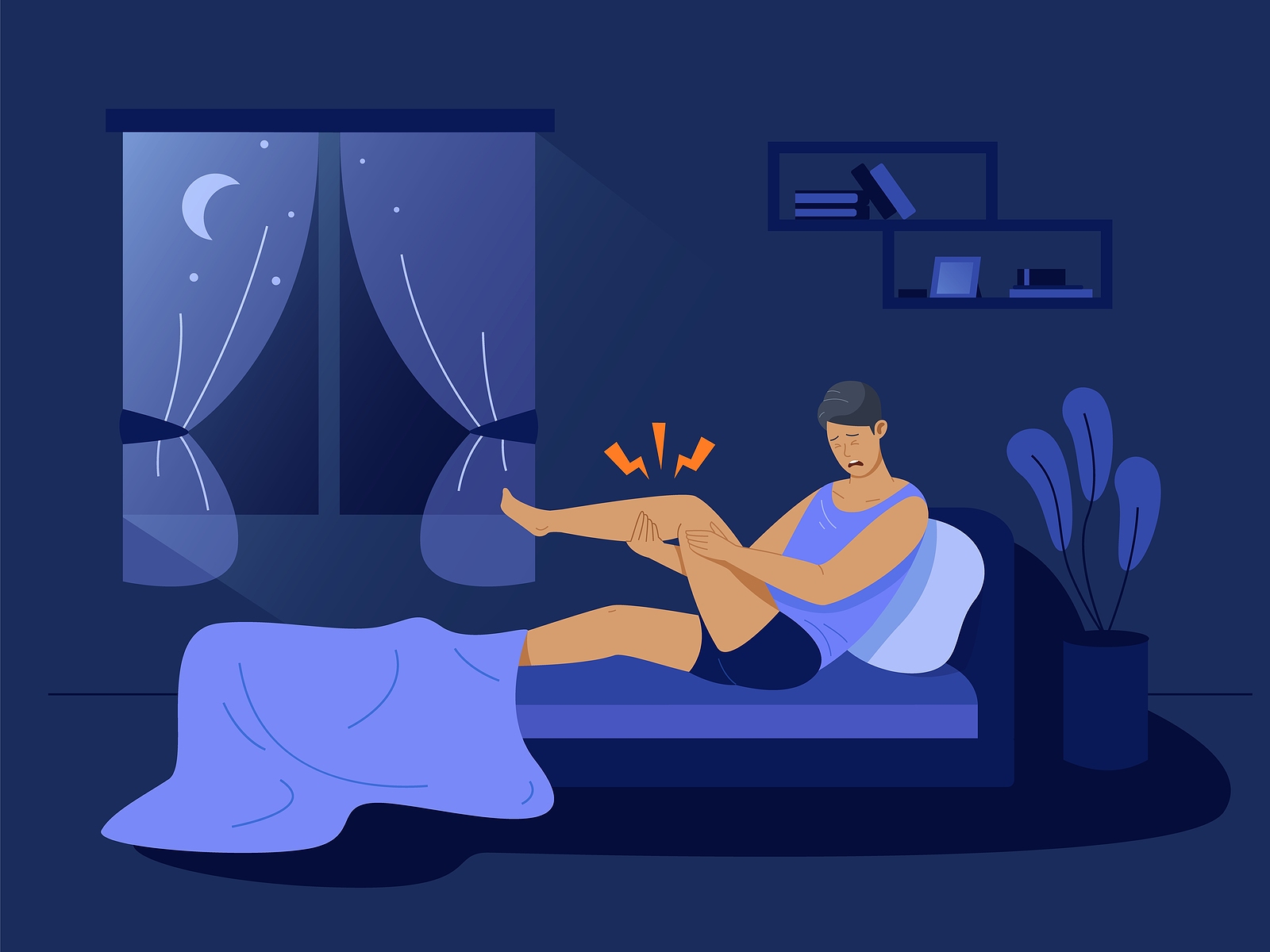
Low levels of minerals like magnesium, potassium, or calcium can affect how muscles contract and relax.
4. Poor circulation
Sitting or lying in one position for too long may reduce blood flow to your legs, contributing to cramping.
5. Sleeping position
Pointing your toes downward while sleeping can shorten calf muscles, making cramps more likely.
6. Certain conditions or medications
Pregnancy, nerve issues, or some medications (like diuretics) can also increase the risk of leg cramps.
How to Stop a Cramp When It Happens
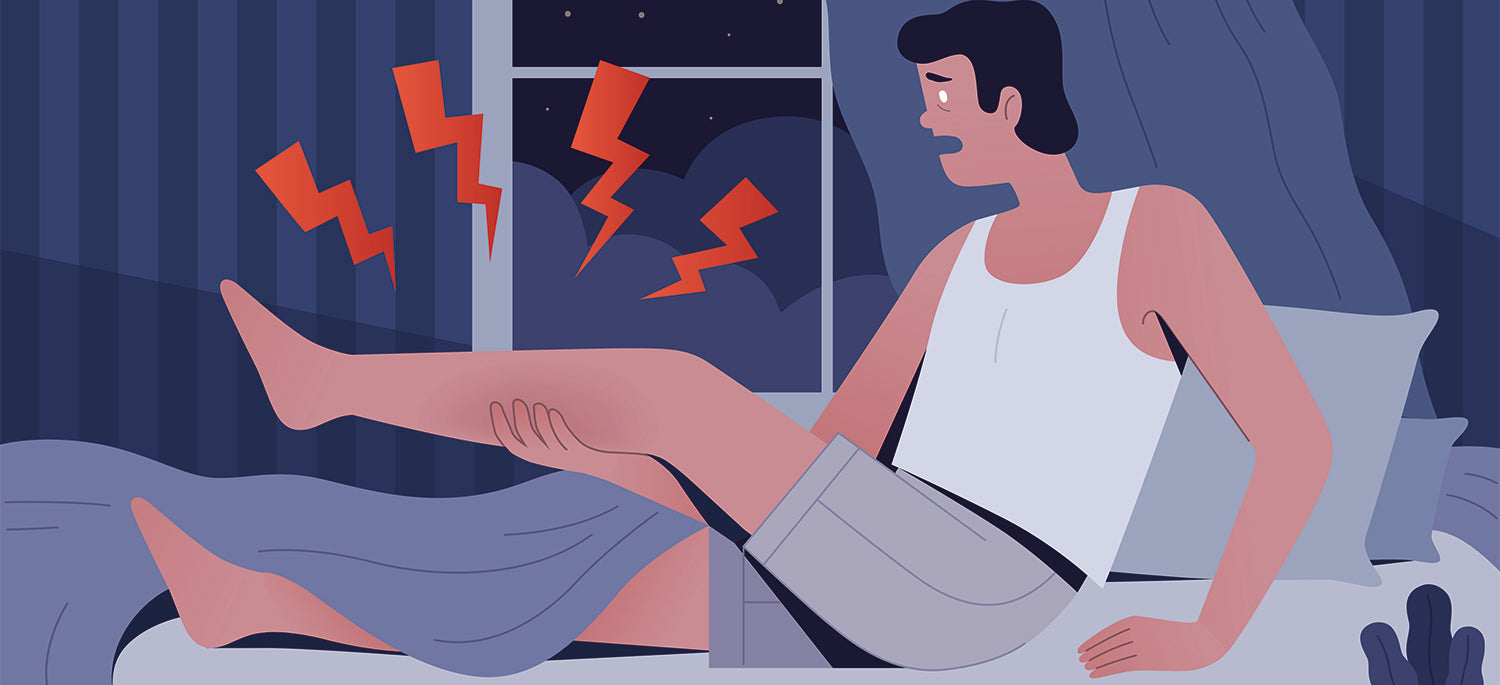
When a cramp strikes, quick action can help relieve the pain:
- Stretch the muscle: Gently flex your foot upward (toes toward your shin) to stretch the calf
- Massage the area: Rub the muscle to help it relax
- Apply warmth: A warm towel or heating pad can ease tightness
- Walk it off: Standing up and moving around may help release the cramp
How to Prevent Nighttime Leg Cramps
Stay hydrated
Drink enough water throughout the day, especially if you’re active.
Stretch before bed
Light stretching of your calves and legs can reduce muscle tightness.
Check your diet
Make sure you’re getting enough magnesium, potassium, and calcium from foods like bananas, leafy greens, nuts, and dairy.
Adjust your sleep position
Try to keep your feet in a neutral position—using a pillow to support your legs may help.
Wear proper footwear
Supportive shoes during the day can reduce muscle strain.
When Should You See a Doctor?
Occasional leg cramps are normal. However, you should consider medical advice if:
- The cramps are frequent or severe
- They disrupt your sleep regularly
- You notice swelling, redness, or weakness
- They may be linked to an underlying condition
Final Thoughts
Nighttime leg cramps can be painful, but they’re often manageable with simple lifestyle adjustments. Staying hydrated, stretching regularly, and paying attention to your body can go a long way in preventing them—so you can enjoy a more restful, uninterrupted night’s sleep.