For centuries, the iris has stood as one of nature’s most refined creations — a flower of poise, symbolism, and quiet authority. Its upright
petals seem almost architectural, rising with a sense of purpose, while its velvety folds soften that strength with grace. Named after Iris, the
Greek goddess who traveled along rainbows as a messenger between heaven and earth, the flower has long represented connection, wisdom,
hope, and transformation.
Yet beyond its beauty and mythology lies something less widely known: the iris is not only ornamental. Beneath its elegant bloom rests a
botanical legacy rooted in healing, fragrance, and therapeutic tradition. In particular, species such as Iris germanica and Iris florentina have
been valued for centuries for the remarkable properties of their rhizomes — commonly known as orris root.
Today, modern research is gradually confirming what ancient healers understood intuitively: the iris carries compounds that may support skin
health, digestion, respiratory comfort, emotional balance, and more. To understand the iris fully is to see where history, symbolism, and
science intersect.
A Flower Woven into History and Myth
Few flowers possess such layered cultural significance.
In Greek mythology, Iris was the divine courier who moved between realms, bridging gods and mortals. Her rainbow path symbolized
communication, clarity, and divine connection. The flower that bears her name inherited that meaning — becoming associated with hope,
messages, and spiritual awakening.
In ancient Egypt, iris motifs decorated temples and burial sites. They symbolized rebirth and the soul’s journey beyond physical life. The
flower’s structured elegance made it an emblem of continuity and renewal.
In Japan, the iris - known as shōbu — has long been linked to purification and protection. During seasonal festivals, iris leaves were placed in
baths to ward off negative influences and strengthen courage.
In France, the fleur-de-lis, widely believed to be inspired by the iris, became a royal emblem representing purity, honor, and divine authority.
Across civilizations, the iris was rarely regarded as merely decorative. It was a symbol of transcendence — a botanical expression of both
earthly beauty and spiritual depth.

The Healing Power Hidden Beneath the Soil
While the flower commands attention, its true medicinal value lies underground. The rhizome, once harvested, dried, and aged for several
years, develops into what is known as orris root. During this aging process, it acquires a subtle violet-like aroma and concentrates bioactive
compounds including isoflavones, flavonoids, triterpenes, and essential oils.
Historically, orris root has been valued for a range of properties:
-
Anti-inflammatory effects that soothe irritated skin and throat tissues
-
Antimicrobial activity supporting defense against certain bacteria and fungi
-
Antioxidant compounds that protect cells from oxidative stress
-
Expectorant qualities that help ease respiratory congestion
-
Digestive stimulation that reduces bloating and supports appetite
-
Calming aromatic influence that promotes emotional grounding
This rare balance — gentle yet active — made the iris a trusted remedy in traditional medicine.
Iris in Classical and Traditional Healing Systems
In ancient Greece and Rome, physicians such as Hippocrates and Dioscorides documented the medicinal use of Iris florentina. Preparations
were used to address coughs, sore throats, digestive discomfort, and skin conditions. Orris root was often ground and infused into honey or
wine to create soothing remedies.
In Ayurvedic and Traditional Chinese Medicine, iris was considered cooling and cleansing. Practitioners employed it to reduce excess heat,
support liver function, and restore skin clarity. It was also used to calm emotional agitation and grief, reflecting the long-recognized link
between physical and emotional well-being.
During the medieval period in Europe, orris root became a staple in herbal households. Beyond its medicinal applications, it was prized for
freshening breath, scenting fabrics, and serving as a base note in early perfumery. Its preservative qualities and fragrance made it invaluable in
both health and beauty preparations.
The Iris in Modern Skincare and Cosmetics
In contemporary times, iris extract has re-emerged as a sought-after ingredient in luxury skincare. Advances in botanical research have
highlighted its hydrating, regenerative, and protective potential.
Iris-derived compounds are associated with:
-
Supporting collagen production
-
Enhancing skin elasticity
-
Improving moisture retention
-
Calming redness and environmental irritation
-
Promoting a brighter, more even complexion
Prestigious skincare and fragrance houses incorporate iris not only for its delicate scent but for its restorative qualities. The same plant once
valued by ancient healers now finds its place in advanced cosmetic formulations.

Emotional and Energetic Dimensions
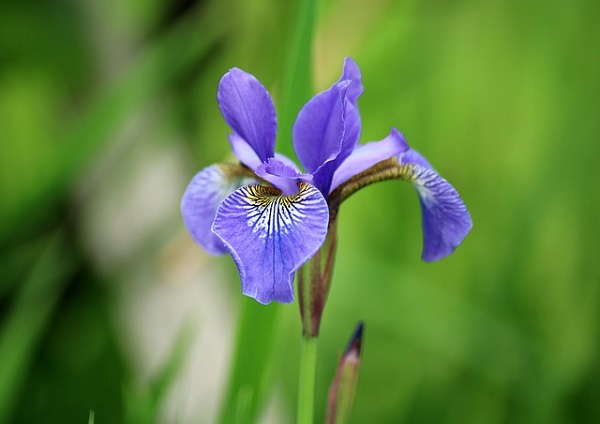
Beyond the physical body, the iris carries symbolic and emotional resonance. Its deep blue and violet tones are often associated with clarity of
thought and heightened awareness. In holistic traditions, it is linked to centers of communication and intuition.
In flower essence therapy, iris preparations are believed to support creative expression and emotional flow. The fragrance of aged orris root in
aromatherapy is described as grounding yet uplifting - a subtle balance that calms the nervous system without dulling awareness.
This duality - strength and softness, clarity and calm echoes the flower’s own structure.
Responsible and Safe Use
While iris has beneficial properties, caution is essential. Raw iris plant parts can be irritating if improperly prepared. Only properly dried and
aged orris root from reputable sources should be considered for use.
Internal consumption should always be approached with professional guidance, particularly for pregnant or breastfeeding individuals. Topical
preparations require patch testing to ensure skin compatibility.
As with many botanicals, the iris rewards respectful and informed use.
Scientific Perspectives and Emerging Research
Modern scientific investigations have begun exploring the pharmacological potential of iris compounds. Preliminary studies suggest:
-
Isoflavones may play a role in regulating abnormal cellular growth
-
Certain extracts demonstrate antimicrobial effects against specific bacteria
-
Flavonoids may contribute to neuroprotective mechanisms
While further research is necessary, these findings suggest that the historical uses of iris may have measurable biological foundations.
A Living Symbol of Grace and Resilience
The iris endures not only as a garden favorite but as a botanical bridge between eras. It has adorned ancient temples, medieval apothecaries,
royal emblems, and modern laboratories. It connects myth to medicine, fragrance to function.
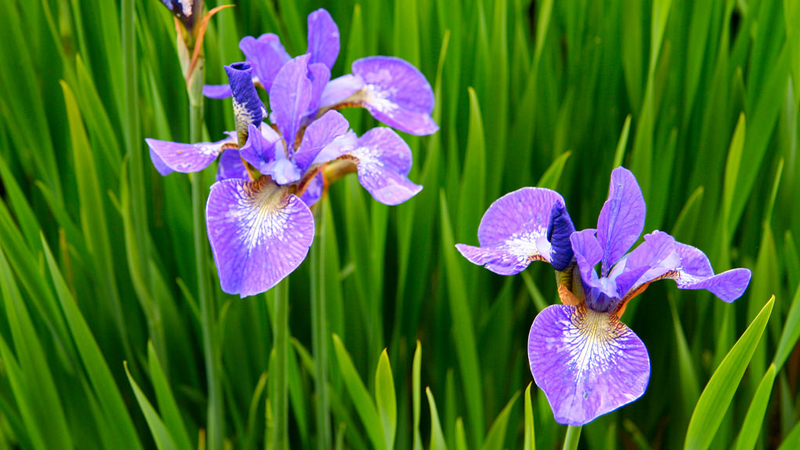
To encounter an iris is to witness a lesson in quiet resilience - upright yet supple, structured yet soft. Its healing capacity mirrors its form:
strength concealed within elegance.
Final Reflection
Within the folds of each iris petal lies a reminder that true power often arrives gently. Healing does not always come in dramatic gestures;
sometimes it blooms in silence, in fragrance, in steady renewal.
The iris teaches that wellness is not merely the absence of illness, but the harmony of body, mind, and spirit - a balance achieved through
attention, intention, and respect for the gifts of the natural world.
In rediscovering the iris, we rediscover something deeper: that beauty and healing have always grown side by side.