
Nobody Expected Punch to Turn This Small Box Into a Full Adventure
Punch Turned a Tiny Cardboard Box Into the Cutest Little Tank Ever
News 26/05/2026 10:26
These objects looted by British forces during their expedition against Benin in 1897. Whilst a large number of these artifacts ended up in the British Museum, others were dispersed amongst museums in the West. A lesser-known accomplishment of the Kingdom of Benin is the so-called Walls of Benin, which surrounded Benin City. The Walls of Benin were damaged by the British during their expedition and deteriorated further in the decades that followed. Parts of the walls are still visible today, though they are still facing the threat of destruction.
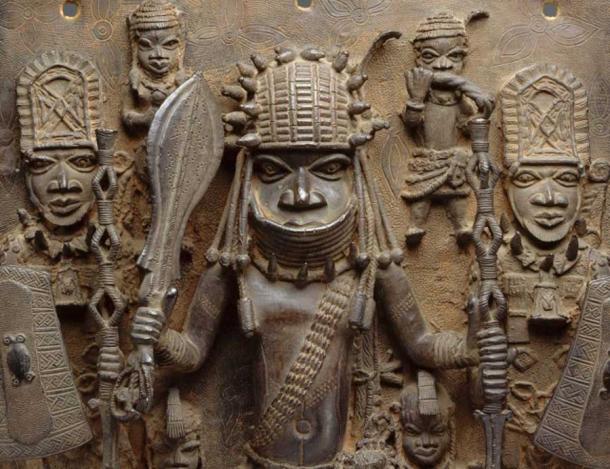
A closeup of one of the many Benin Bronzes that speak for the legendary Kingdom of Benin and its famous Walls of Benin earthworks. (Historical Association)
The Kingdom of Benin is known also as the Benin Empire or the Edo Kingdom. According to one oral tradition, the Edo people, the original ethnic group of the Kingdom of Benin, were once ruled by a line of semi-mythical kings known as the Ogisos (meaning “Kings of the Sky”). There were about 36 Ogisos who ruled over the Edo people. During the reign of the last Ogiso, his son and heir, Ekaladerhan, was banished, as punishment for an offence committed by one of the queens. The queen had changed the message from the oracle to the Ogiso.
Following his banishment, the prince travelled to the land of the Yorubas, another ethnic group in the western part of modern-day Nigeria. The oracle of the Yorubas prophesied that a king would come out of the forest. Therefore, when Ekaladerhan arrived at the Yoruba city of Ife, he was welcomed, and appointed king. Ekaladerhan changed his name to Imadoduwa, meaning “I did not misplace my royalty”
After some time, Imadoduwa’s father died, and the throne of Benin was left vacant. A delegation of Edo chiefs came to Ife to ask Imadoduwa to return to their lands and take the place of his father as Ogiso. Whilst he had been a prince, Imadoduwa was well-loved by the Edo people.
Imadoduwa, however, would not abandon his new subjects. Instead, he told the Edo delegation that he had seven sons and was willing to send one of them to rule as king. The prince chosen to return with the delegation was Oranmiyan, who spent the next few years living amongst the Edo people. When Oranmiyan’s wife gave birth to a son, Eweka, Oranmiyan returned to Ife. Eweka became the first oba (roughly equivalent to king) of Benin.
According to another version of the oral tradition, the Edo people had become dissatisfied with the rule of the Ogisos during the 13th century. Therefore, they invited Oranmiyan from Ife to rule over them. In this version of the story, Oranmiyan is not related to the Ogisos of Benin. This version of the story also has Oranmiyan’s son, Eweka, becoming the first oba of Benin.
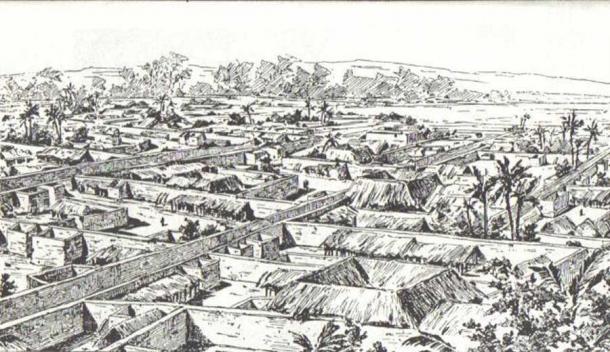
The Walls of Benin in a drawing from the 19th century. (Nigerian Embassy)
In the late 13th century, royal power was firmly established in the Kingdom of Benin. This contributed towards the kingdom’s rise as a regional power in the 15th century. Oba Ewuare, who reigned between 1440 and 1480, was arguably the most famous ruler of the Kingdom of Benin. Ewuare is said to have been a powerful warrior and magician. During his reign, the hereditary succession to the throne was established.
Additionally, Ewuare conducted numerous military campaigns that served to enlarge his kingdom. At its maximum extent, the Kingdom of Benin stretched from Onitsha (in present-day Nigeria) in the east, through the forest region of southwestern Nigeria, and into modern-day Ghana in the west.
Ewuare is also credited with the rebuilding of Benin City, known also as Edo. According to tradition, Benin City, was founded in 1180, and was known originally as Ibinu. Benin City is situated on a plain on a branch of the Benin River and served as the capital of the Kingdom of Benin. It is believed that the Walls of Benin were constructed during Ewuare’s reign.
These walls consist of two parts, a moat and a rampart. A ditch was dug to form the inner moat, and the excavated earth was used to form the outer rampart. The Walls of Benin no doubt contributed towards the defense of the city. Additionally, the walls may be viewed symbolically as a representation of the kingdom’s power.
According to the 1974 edition of the Guinness Book of Records, the Walls of Benin were the “world’s largest earthworks carried out prior to the mechanical era.” Elsewhere, it is claimed that they were “four times longer than the Great Wall of China and consumed a hundred times more material than the Great Pyramid of Cheops.” Furthermore, it is asserted that the walls “extended for some 16,000 km [9,942 miles] in all, in a mosaic of more than 500 interconnected settlement boundaries,” and that it covered an area of 6,500 square kilometers (2,510 square miles). This grand project is thought to have been carried out completely by the Edo people, and it took an estimated total of 150 million hours to complete.
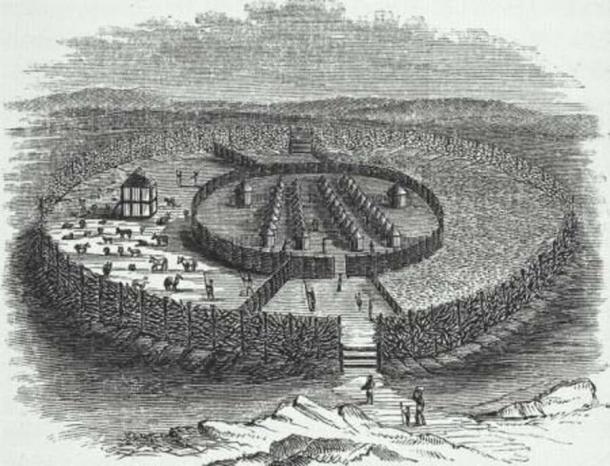
(Representational image, not the actual walls of Benin) Before the earthwork and stone walls of Benin the ancient city was still walled off using wood and brush. (Nigerian Embassy)
Although the Walls of Benin are certainly monumental achievements, much more can be said about the urban nature of Benin City as well. Around 1485, shortly after the end of Ewuare’s reign, the Kingdom of Benin had its first contact with Europe. It was the Portuguese, who were sailing along the coast of Africa, who first encountered the Kingdom of Benin. Consequently, trade between the Portuguese and the Edo people developed. In exchange for tropical goods and slaves later on, the Portuguese provided their African counterparts with European products and guns.
It is also from these Portuguese explorers and merchants that descriptions of Benin City were brought back to Europe. For instance, the Portuguese were surprised to find a great kingdom in the middle of the African jungle and called the kingdom’s capital the Great City of Benin. Additionally, the Portuguese considered Benin City as one of the best-planned and most beautiful cities in the world.
To put this into perspective, at that time, the Portuguese, and other Europeans, by extension, regarded few settlements in Africa as cities. A more detailed description of the city is provided by a Portuguese ship captain by the name of Lourenco Pinto in 1691, and is as follows:
“Great Benin, where the king resides, is larger than Lisbon; all the streets run straight and as far as the eye can see. The houses are large, especially that of the king, which is richly decorated and has fine columns. The city is wealthy and industrious. It is so well governed that theft is unknown and the people live in such security that they have no doors to their houses.”
Another 17th century account, this time by a Dutch visitor named Olfert Dapper, describes the houses at Benin City like this:
“Houses are built alongside the streets in good order, the one close to the other,… Adorned with gables and steps … they are usually broad with long galleries inside, especially so in the case of the houses of the nobility, and divided into many rooms which are separated by walls made of red clay, very well erected.”
Dapper goes on to note that the wealthy inhabitants of the city would keep these walls “as shiny and smooth by washing and rubbing as any wall in Holland can be made with chalk, and they are like mirrors. The upper storeys are made of the same sort of clay. Moreover, every house is provided with a well for the supply of fresh water”.
Apart from these accounts by early European travelers, the planning and design of Benin City has also been a subject of investigation by modern scholars. It has been argued by Ron Eglash, an ethno-mathematician, that Benin City was planned according to fractal design. This means that the planning of the city involved “careful rules of symmetry, proportionality and repetition.” Eglash pointed out that “the city and its surrounding villages were purposely laid out to form perfect fractals, with similar shapes repeated in the rooms of each house, and the house itself, and the clusters of houses in the village in mathematically predictable patterns.”
At the very center of Benin City was the court of the oba king, from which the city’s main streets radiated. There were 30 of these streets, each being about 37 meters (120 feet) wide. The streets ran at right angles to each other and were equipped with an underground drainage system that served to channel storm water away from the city. Many side streets extended from these 30 main streets.
Benin City was divided into 11 divisions. Since the city was planned according to fractal design, each of these divisions was a small replication of the oba’s court at the center of Benin City. These divisions consisted of several compounds containing houses, workshops, and public buildings. Indeed, during its heyday, Benin City was a highly sophisticated urban center.
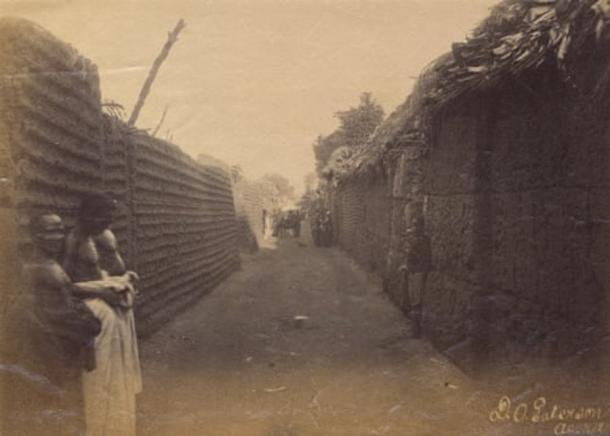
One of the earliest photographs of the Wall of Benin earthworks in present-day Nigeria. (Nigerian Embassy)
Punch Turned a Tiny Cardboard Box Into the Cutest Little Tank Ever
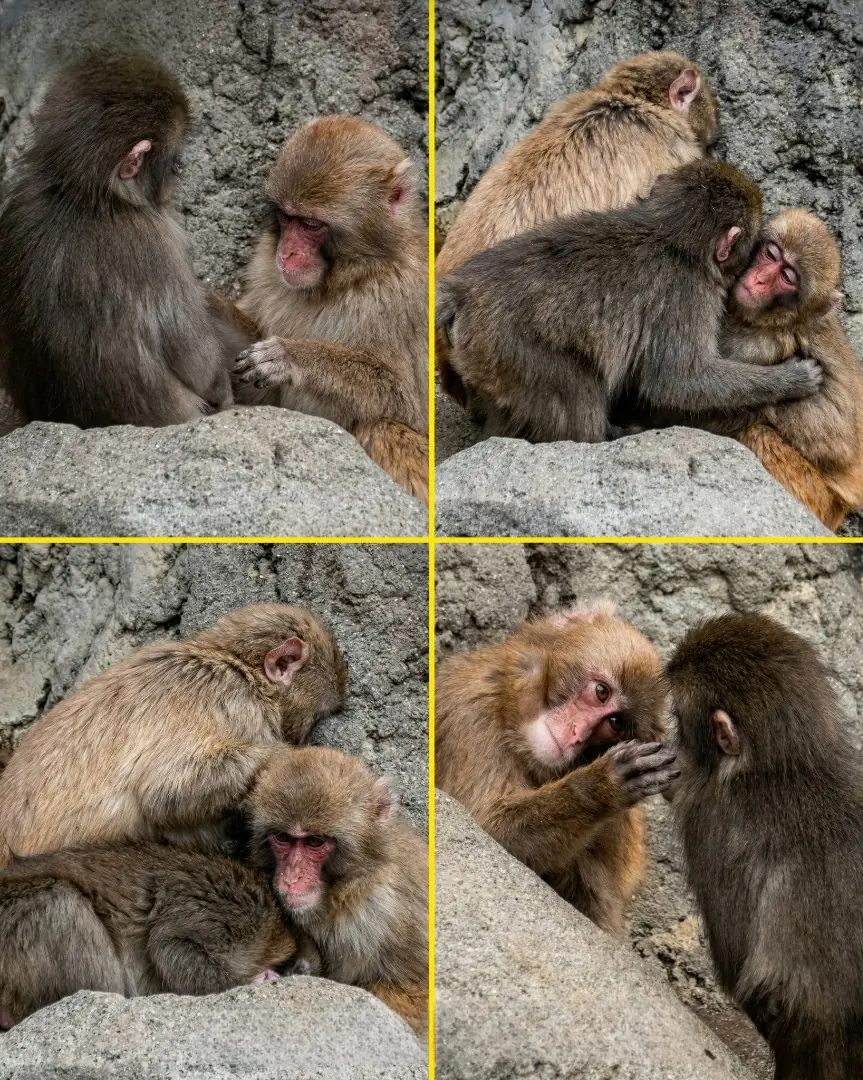
From Rejected to Loved: Little Punchy’s Emotional Journey Finally Comes Full Circle

In His Own Little World: How a Toy Helped a Baby Macaque Heal

Not Rejection, But Protection: What Punch the Monkey Teaches Us About Fear and Trust

3 Months vs. 9 Months: A Beautiful Reminder That Some Things Never Change

More Than Caretakers: The Quiet Love That Turned Into Family at Ichikawa Zoo

From Storms to Smiles: Understanding the Emotional Seasons We All Go Through

When Safety Becomes Home: The Meaning of Truly Belonging 🌿

How Trust Is Built Slowly—and Why It Lasts So Deeply

The Power of Stillness: What Punchy Teaches Without Words

Not Through Words, But Through Staying: A Story of Trust and Connection

A Small Act of Care Before a Sweet Moment with Momo-chan

Even When Everything Was Shaking, Punchy Never Let Go

Sometimes We Don’t Notice the Signs Until They Become Loud
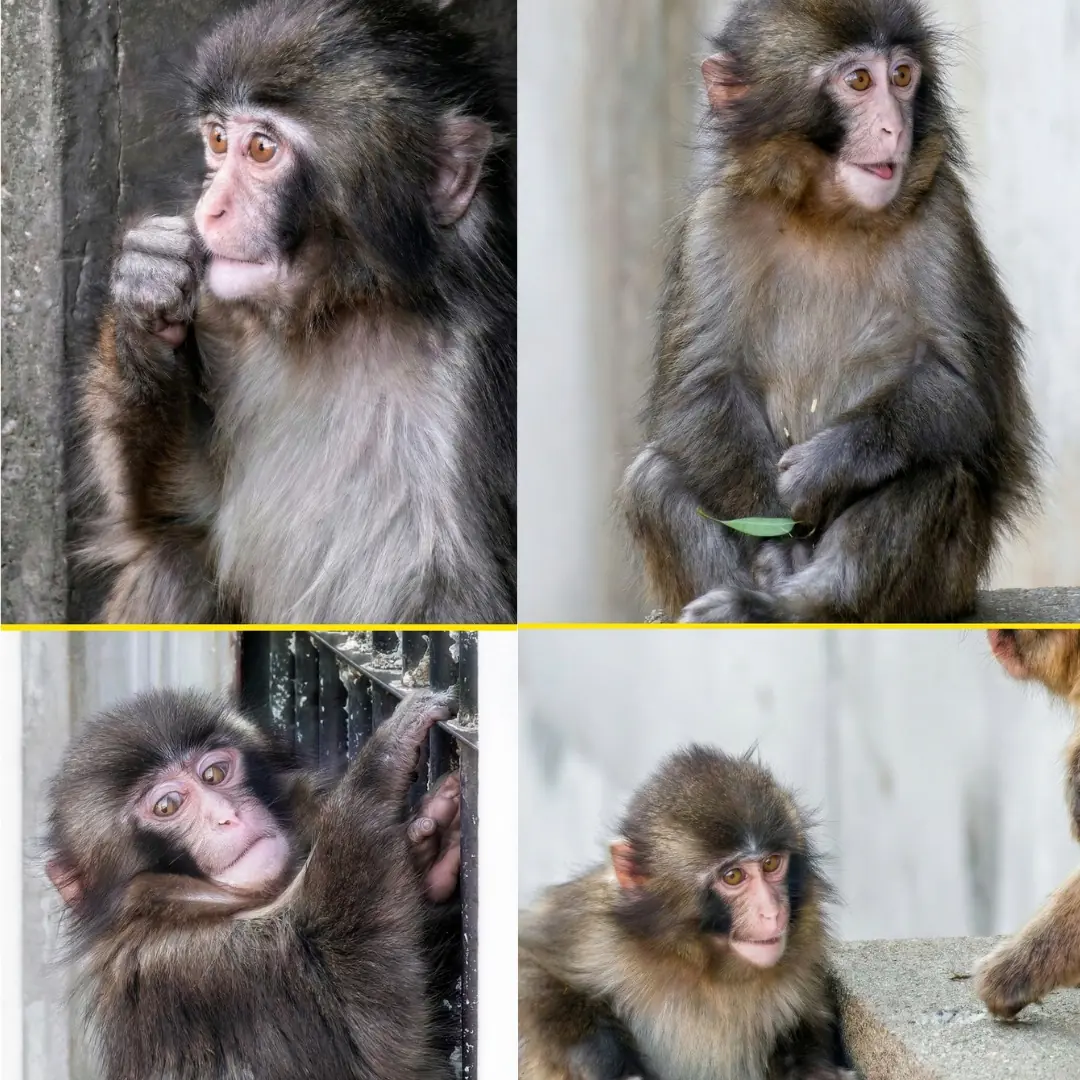
Little Punchy’s Transformation: From Hiding in Fear to Exploring with Confidence

Punch – The Baby Monkey Who Found Comfort in a Toy

What Do You Really See When You Look Into Punchy’s Eyes?

A Monkey, a Toy, and a Question About Emotion: What Is Punchy Really Feeling?

The Lonely Monkey Who Treated a Toy Like Family—Punch’s Emotional Story

The Untold Truth: How Bullying Affects a Monkey

Is Eating One Avocado a Day Good for You?

Experts reveal 3 boiling habits you should stop today.

The secret function of your padlock that most people never notice.

Your dog's unusual greeting may reveal more than you ever expected.
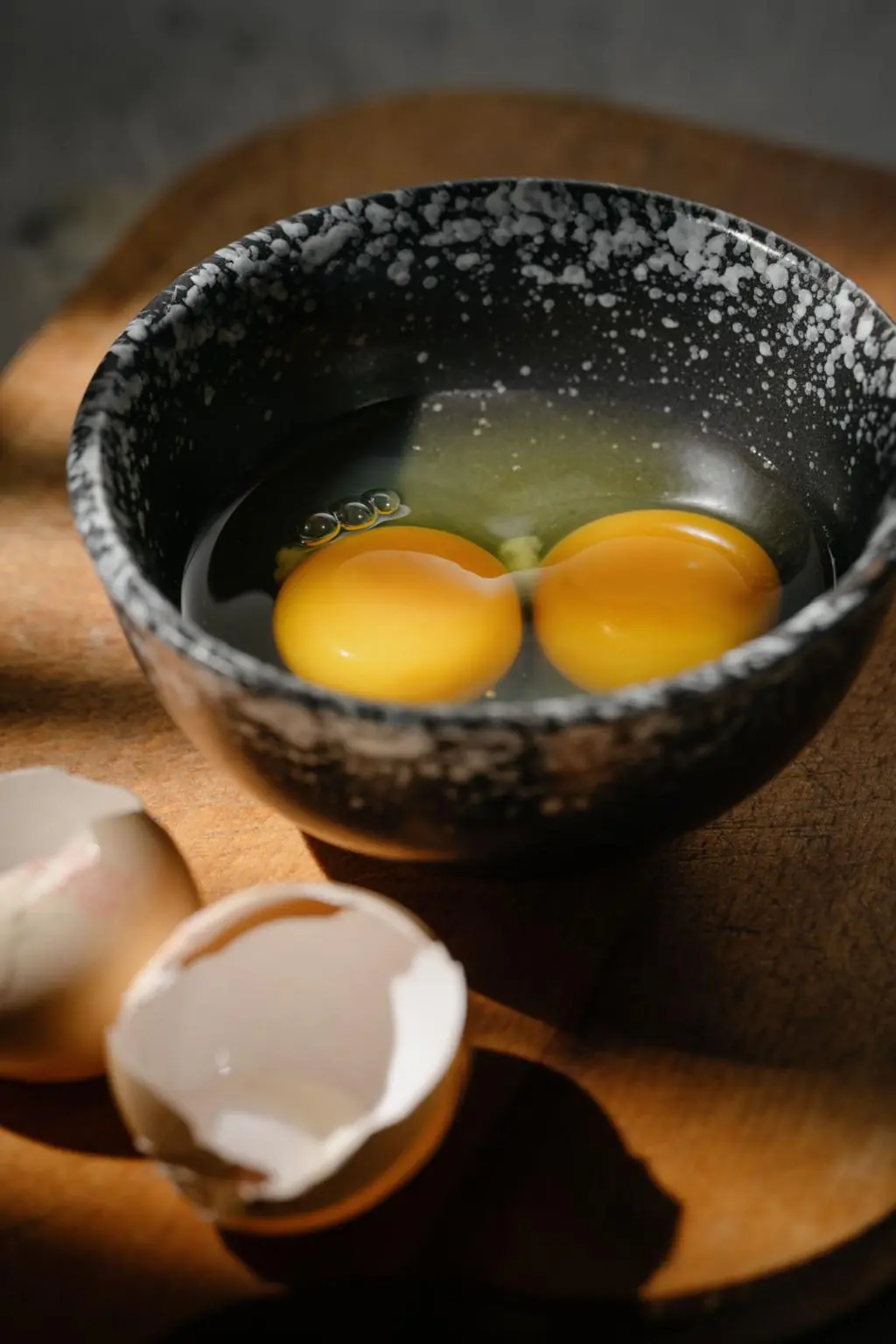
Double-yolk eggs are rare—but are they healthier than ordinary eggs?

New studies explore how a common spice may support healthy cell research.

The Earlier You Notice These 11 Kidney Warning Signs, the Better 👇

You Probably Eat Cucumbers in Salads—But Do You Know What They May Do for Your Body? 👇

A simple hotel-room trick that may improve hygiene and peace of mind.

Doctors Say Most People Use This Incorrectly—Here's What You Should Know 👇

This tiny piece of jewelry has over 4,000 years of history.

4 Changes in Your Skin That May Signal Liver Problems

Every minute counts. Learn the signs before it's an emergency.

If You Have Arthritis, These 7 Symptoms May Be Your Body's Warning Signs ⚠️

Don't dismiss morning heel pain as "normal." It could be your body's first warning sign… 👣 See more

Bitter-tasting vegetables may signal natural toxins—learn how to stay safe.

Can eating eggs daily affect your health? Here's what experts say.

Sleep Interrupted at 3 or 4 A.M.? Here Are Some Possible Explanations

10 Digestive and General Health Symptoms That May Warrant Testing for Parasites

6 Symptoms That Could Suggest an Underlying Digestive Disorder