
Why Eating Onions Might Be Good for Your Health — Experts Explain
You Eat Onions Every Day—But Do You Know What They Do?
News 14/04/2026 10:59
The truth, though, is a bit more complicated. There are stories in the Bible that we know for a fact really happened. We have found ancient tablets created by other countries that tell the same stories written in the Bible - proof that these things really happened.
But they’re never exactly the same. The people who went to war against Israel don’t write about how great Israel is – they tell the story from their own point of view. And from the other side, it’s always a little bit different.
Case and point: the Moabite Stele, a 2,800 year-old stone slab that tells the story of 2 Kings 3, about a war between the kingdom of Moab and Israel. The author of this stone slab, though, is the King of Moab – and from his point of view, he wasn’t some evil, pagan warlord. He was a hero.
The Biblical story doesn’t give a lot of details about why the war started. It mentions that Moab was “rebelling” against Israel, and it suggests that God let it happen to punish the Israelites for worshiping false idols – but it doesn’t really worry itself with what Moab’s grievances might be.
The Moabite Stele, though, was written by Mesha, the King of Moab – and he’s very clear about it. “Omri, King of Israel, oppressed Moab many days,” he writes. Israel, it seems, invaded a Moabite city called Medeba. Mesha’s father had tried to negotiate with him peacefully, but when he asked the Israelites to let Medeba go, the Israelites threatened to “destroy it forever”.
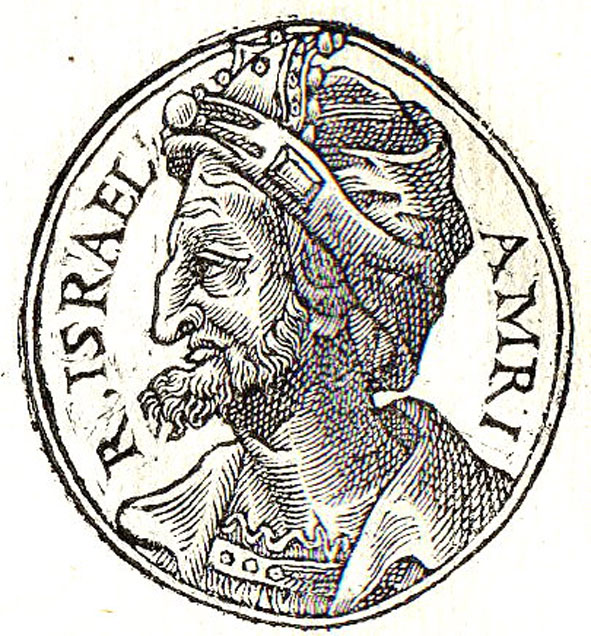
Depiction of Omri from Guillaume Rouillé's ‘Promptuarii Iconum Insigniorum’. (Public Domain)
The Moabites, it seems, had been putting up with this kind of thing for a while. Medeba wasn’t the first city they’d taken – it was just the last straw. About a dozen cities are listed as towns that Israel stole from the Moabites, meaning that they’d been slowly encroaching on Moabite land for years.
It fills in some gaps in the Biblical record. The town Nebo, for example, is first mentioned in the Bible as a Moabite town where Moses died. The next time we hear about it, though, is in a verse complaining that the Moabites have “despoiled” it and “taken” it from Israel.
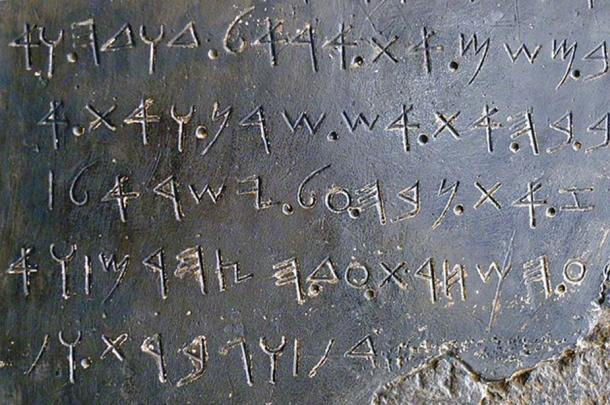
Detail of a portion of lines 12–16. The middle line (14) reads "Take Nabau (Nebo) against Israel." (Mbzt/CC BY 3.0)
The Israelite’s history doesn’t really explain when Nebo stopped being part of Moab and became their city – but Mesha makes it clear. The Israelites took it by force. This, to the Moabites, was part of Israel’s “oppression”, invading their cities and threatening to destroy them if they complain.
Mesha, unlike his father, didn’t just ask the Israelites nicely if they would please let his people go – he went to war.
His description of the war reads a lot like a biblical story. It’s pretty clear that the Moabites were heavily influenced by the people they called their “oppressors”. It’s written in a language that’s nearly identical to Hebrew, and, like a Biblical story, credits every victory to the will of god. The only difference is that, in this case, that god’s name is Chemosh.
“The king of Israel fortified Ataroth,” Mesha says, “and I assaulted the wall, and captured it, and killed all the warriors of the wall, for the well-pleasing of Chemosh and Moab.” After his victory in Ataroth, he relates, he went on through Israel, taking back cities he felt were his by right.
The Moabites got a little brutal when they reached Nebo. After attacking the town at night and killing “in all seven thousand men”, the Moabites pulled aside all the women and offered them as human sacrifices to Chemosh.
From there, the Moabites went on, conquering cities, building new ones, and rebuilding their former kingdom. They seem to have taken Israelite slaves, as Mesha boasts that he put “the chosen men of Israel” to work digging ditches.
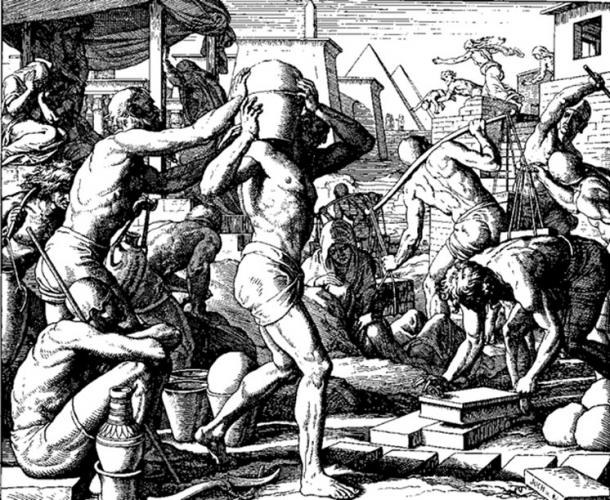
The Egyptians Afflicted the Israelites with Burdens (woodcut by Julius Schnorr von Carolsfeld from the 1860 Die Bibel in Bildern). (Public Domain) King Mesha also had Israelite slaves.
The last few words on the stele have been too badly damaged to read, but most of it is more or the less same thing: Mesha boasting about all the cities he conquered. The last legible words talk about Horonaim, a city he claims Israel stole from Moab. “I assaulted it, and I took it,” Mesha boasts. “Chemosh restored it in my days.”
The Moabite Stele gives a different side of the story from the Bible – but that doesn’t necessarily mean it’s the full truth. Just as the Israelites left out some of the details that make them look bad, King Mesha left out some details, too.
In the Biblical version of the story, the Israelites form an alliance with Judah and Edom to fight back against Moab. With the help of a little divine intervention, the Israelites turn the tide of the war and start fighting back. Moab still wins the war in the end, but the Israelites include a little detail that Mesha leaves out - how he won.
King Mesha, according to the Israelites, took his first-born son up to his city’s walls and burned him to death as an offering to Chemosh. The wording is a little vague what happened next – either the sacrifice worked and the Moabites started fighting the Israelites back, or else the Israelites just got so disgusted they left. Either way, the war ended with King Mesha offering up his own son as a human sacrifice.
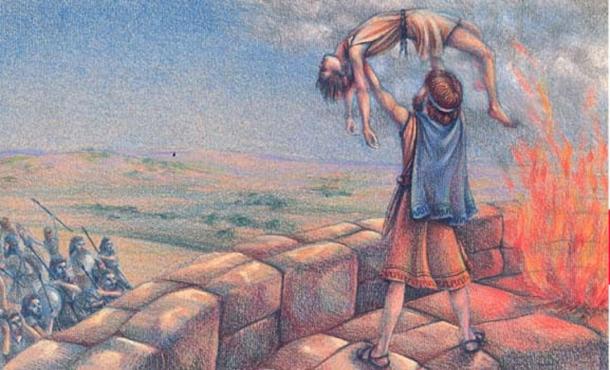
The war ended with King Mesha offering up his own son as a human sacrifice. (Phyllis Saroff)
When you have two versions of one story, it’s hard to know who to trust. For the most part, though, there aren’t really as many contradictions here as there are details that one side opted to leave out.
King Mesha claims that he was just taking back land Israel stole from him, and there’s nothing in the Israelite version that really proves that isn’t true. If anything, it actually fills in some of the gaps on why they started talking about Moabite cities as if they owned them.
The Israelites claim that Mesha murdered his own son, but nothing in Mesha’s story really contradicts that. He makes it clear that he’s perfectly comfortable turning Israelite women into human sacrifices, which makes it pretty plausible. Perhaps this was something he thought he had to do to win, but would rather everyone forgot.
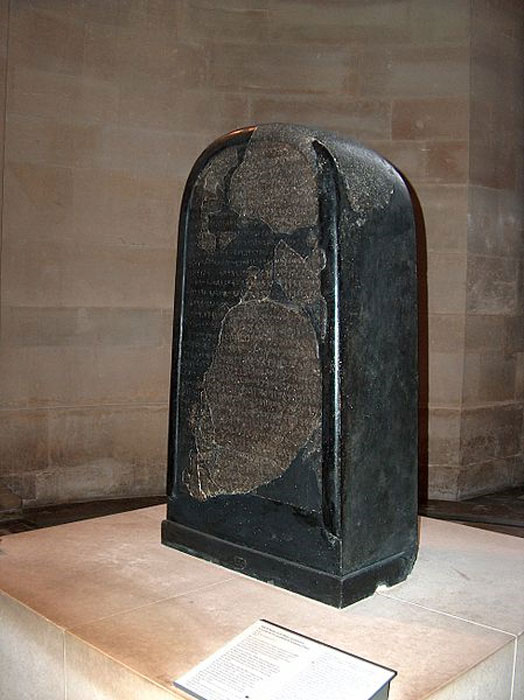
The Mesha stele. (Paterm/CC BY SA 4.0)
More than anything, though, this is an incredible glimpse into how history gets told. When any one country gets to control the story, there are always some little details that get left out. From every new angle, a story takes on a new light – even the Bible.
You Eat Onions Every Day—But Do You Know What They Do?

When Chaos Becomes Connection: Punchy’s Story

When a Monkey Gets Sick: Signs to Watch and How Experts Care for a Macaque Like Punch
Authenticity Isn’t Consistency—It’s Being Real

He’s more than just adorable… he’s slowly learning what safety feels like

The Life-Saving Determination of a Cat: How Loyalty Made the Difference

A Silent Moment That Spoke Louder Than Words

The Power of Quiet Resilience in a Harsh World

The Monkey Hug That Reminds Us What Comfort Really Is

You Think It’s Cute—But Here’s Why Monkeys Really Hug

When Punch Needed It Most: The Monkey Hug That Brought Millions to Tears

When Punch Falls for Someone, He Acts Human… But That Might Be Only the Beginning
When Little Hearts Break: The Story of Punchy’s Quiet Struggle

From Fragile to Fearless: Punch the Macaque’s Story of Trust and Love

Too Much Love, Not Enough Understanding: Luna’s Story

Little Punchy’s Adventure: How a Tiny Monkey Found Safety and Trust

With his paw over his eyes, he looked like he was trying to shut out the world he never chose.

From Hiding in Fear to Living in Comfort: The Story of a Kitten Saved by Kindness

Little Punchy Takes a Giant Step Toward Play and Friendship

From Play to Trust: How Small Moments Build Lasting Bonds

Red or itchy skin with ring-shaped spots could be your body sending a warning

12 Signs That May Help Identify a Brain Aneurysm Early

7 Days of Coconut Water on an Empty Stomach: Surprising Changes You Should Know

Do You Let Your Cat Sleep With You? Here Are Some Risks to Be Aware Of
Walnuts: Healthy or Risky? Here’s What Doctors Say
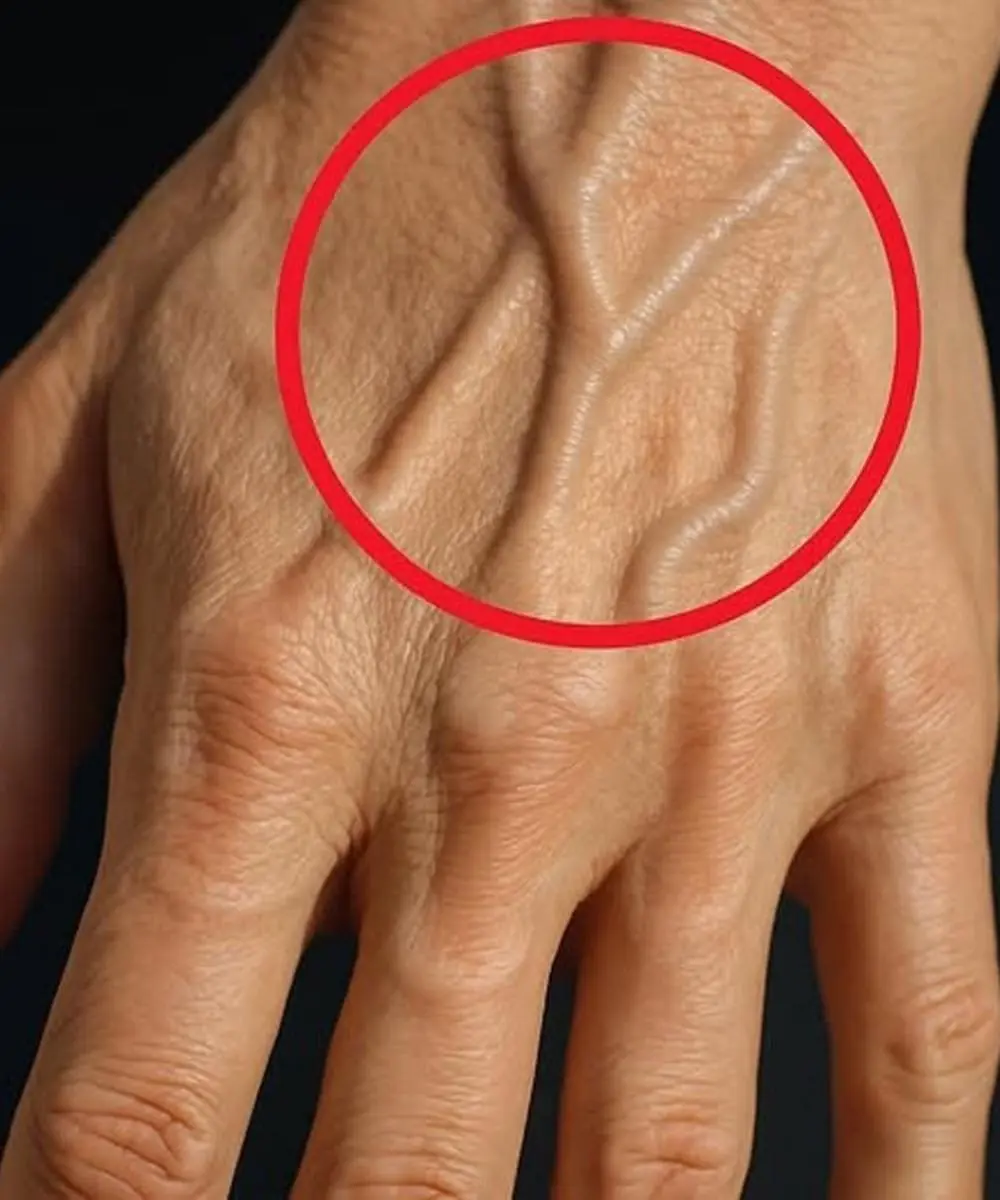
What Changes in Your Hand Veins Could Be Telling You

Waking Up at 3–4 A.M.? Here’s What It Could Mean

A Neck Lump Could Be More Serious Than You Think

You Might Be Surprised: The Effects of Eating Too Much Rice

Dreams of loved ones may reflect memory, emotion, and healing.

Struggling to Drink 8 Glasses of Water? Here’s a Better Way
How Daily Ginger Consumption Impacts Your Health

Keep These 4 Items Away from Your TV to Avoid Unnecessary Expenses

Exploring the Nutritional Value of Chicken Gizzards

Eating Grilled Corn: How It Affects Your Body

Bananas for Breakfast: Good or Bad? Experts Reveal the Truth
You Eat Onions Every Day—But Do You Know What They Do?

6 Plants Snakes Tend to Favor and 3 That Could Help Deter Them

How to Deal with Wall Peeling and Mold Easily at Home

The Surprising Benefits of Onions, According to Doctors