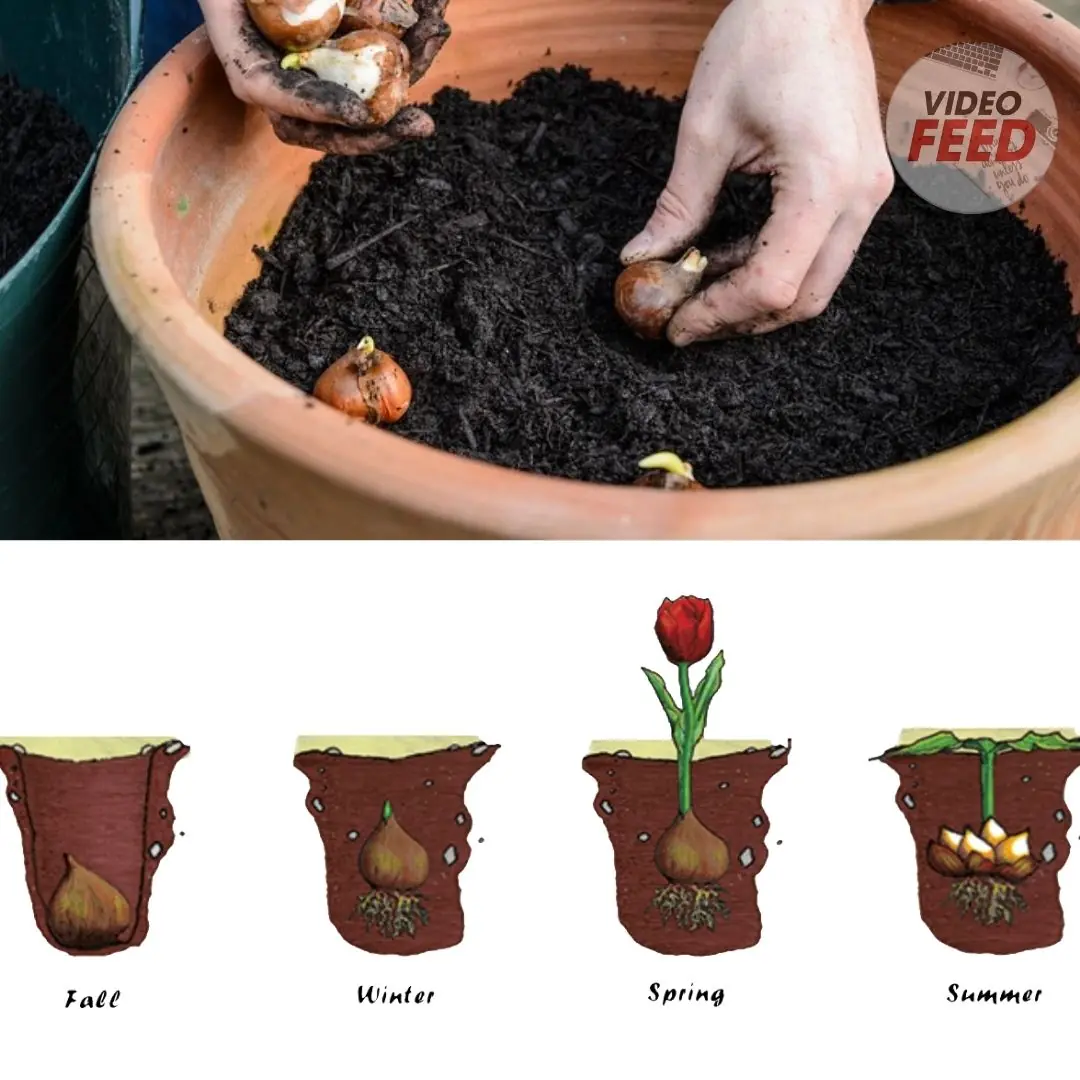
Tulips are stunning perennial flowers which grow from bulbs and bloom in the Spring. They are an absolute staple for the garden regardless of its size and an unmissable addition to bring color!
Here is my planting guide with tips to ensure your success.
Types of Tulips
Tulips were made popular in Europe by the Dutch in the 16th century during ‘tulip mania’ and remained a household favorite ever since! The most common sub-genre is Tulipa x gesneriana with thousands of Tulips cultivars to match all taste and love of colors (except for pure blue).
Tulips are extremely versatile: you can enjoy their blooms in your flower borders, beds and containers. They also make an excellent cut flower. The tulip flower has different shapes, divided into groups. Here are the most commonly found:
- Single: a cup or goblet-shaped single flower. Probably the most well-known example of the genus. Darwin Hybrids fall under this category.
- Double: a fully double large flower, resembling the bowl-shaped bloom of a peony. Exceptionally long-lasting.
- Fringed and Parrot: fringed tulips have goblet-shaped blossoms with delicate fringes on the edges. Parrot tulips have deep frilly edges, very wavy and exotic looking.
- Fosteriana: pointed and tight long blooms, with large wide flowers. Regal names mostly inherited from their previous group name ‘Emperor’ tulips.
- Viridiflora: sometimes called ‘green tulips’ as they have green petals with only a hint of color at the top. Naturalizes well.
- Triumph: has a conical shape that opens to a cup, a classic. Strong stems with good resistance to winds.
Flowering time
Spring-flowering bulbs flower in the Spring (that much is self-explanatory) but when exactly? I prefer the three-tiered horticultural classification based on flowering time as it is more practical to plan the bloom display in your garden:
- Early Spring: flowers from March to April. These includ Single, Double and Fosteriana Tulips.
- Mid-spring: flowers from April to May. These include Triumph, Parrot and Darwin Hybrids (a type of single-flowered tulip).
- Late Spring: flowers from May to June. These include Single, Double, Viridiflora and Fringed Tulips.
When preparing your display for next Spring, remember to select Tulips from all 3 flowering groups to ensure a continuous show of colors from March to June! Make sure to record bloom times for your specific area on your garden planner.
Other spring-flowering bulbs such as Daffodils, Crocuses, Fritillarias and Snowdrops will flower in mid to late Winter, earlier than Tulips. You can add some of these bulbs or corns in your garden to enjoy flowers even sooner!

When to plant Tulips
Tulips are usually planted in the Autumn, from October all the way to December as they will need 8–12 weeks of cooler weather (temperatures below 10°C | 50°F) in order to bloom. Don’t plant them too early if you typically have wet winters as they could rot.
If you live in a year-round warm climate (growing zone 9 and above), you will have to chill your bulbs to ensure blooms. You can dig up your tulips after blooming, store them and prepare to repeat this process every year or treat them as an annual (replacing them with new bulbs every year).
Top tip: Your growing zone is based on how cold the winter temperatures in your area are which impacts the types of plants that will survive in your garden over the winter. If you are unsure, speak to someone at your local garden center or simply Google it!
Where to plant bulbs
Tulips, and most bulbs, prefer to be grown in full sun, that is an area of your outdoor space receiving at least 6–8 hours of sun per day.
They will likely bloom the first year even if the planting conditions are not ideal but for them to naturalize (multiply), it’s best to give them enough sun. Some bulbs, such as Snowdrops, Bluebells, Muscari and Daffodils can tolerate more shady areas as they naturally occur in woodlands.

Soil type
Tulips like good drainage and a rich slightly acidic soil (pH 6–7). If you have heavy clay soils, add some grit at the bottom of the planting hole. If your soil is sandy and nutrient-poor, you may want to add some bone-meal or appropriate fertilizer pellets to ensure the bulbs will have enough energy to re-bloom.
If you plant your tulips in containers, make sure there is a drainage hole (to avoid water build-up) and use a potting compost mix (and not your garden soil).
How to plant bulbs
Planting Tulips is very simple. There is but one rule: pointy side up! This rule also applies to other types of bulbs. If you are unsure, lay the bulb on its side: the emerging shoots will find their way.

Well, there is a second rule, but it’s more of a guideline really: the planting depth should be about twice the height of the bulb (so between 10–15 cm | 4–6 inches deep for Tulips). However, you can plant them deeper, especially if dealing with cooler temperatures to ensure the tulips will behave as a perennial.
To get them in the ground, you can either use a long or short bulb planter, an auger (to drill a hole into the ground) or dig a trench. The best method really depends on the surface area you want to plant and proximity to existing planting.
After-blooming care
Once your tulips bulbs have flowered, you can cut off the bloom stock to avoid seed production but leave the foliage to yellow and die off naturally. This process can take up to 6 weeks but is important because the leaves are still producing energy which in turns feeds the bulb and ensure a blossom for the following year. This is a good time to apply a nitrogen-rich fertilizer to ensure nutrients will be available.

Tulips follow a cycle where after blooming, the bulb naturalizes (produces off-shoots) in the summer and starts growing again in the Winter after a period of dormancy. Typically, Tulips will last 5 years for varieties that naturalize well. Daffodils are excellent at coming-back and can go on proudly for decades.
Top tip: If you need the space in your borders or containers for another planting, you can lift the tulips and keep the foliage attached to die off while in storage. Use crates with a lot of aeration to allow good airflow.
Common pests
Unfortunately, Tulips are enjoyed by the pests in our gardens too! Rodents and slugs will enjoy feasting on the bulbs. Deer will love snaking on the young leaves emerging in Spring so try to protect these if you can. If you have deer issues, Daffodils and Hyacinths are a good alternative to Tulips for Spring color as they are usually labelled deer-resistant (part of the onion family). Planting baskets can be used when planting tulips in the ground. Apply appropriate repellent for slugs and other pests you may deal with in your gardens.

Top tip: Bulbs have a papery skin around them which can come undone. If you leave this skin on the ground, it can attract rodents so make sure to clean thoroughly after planting or top-up with mulch to reduce the risk of your bulbs being dug up and eaten.
How to achieve a stunning display
Tulips are truly show-stoppers when planted in large drifts – who hasn’t been inspired by the designs of the Keukenhof? You can get a very impressive show in a smaller space too, even if you don’t have large flower borders. The secret is to create bulb lasagnas in containers.
Bulb lasagnas are essentially layers of bulbs planted on top of each other in a container: plant your tallest and late blooming flowers at the bottom and work you way up to shorter and earlier varieties. If you leave in a growing zone cooler than 7, make sure to protect your containers from freezing temperatures.

You can mix and match too: some of my containers this year have Dahlias tubers or Gladiolus corns at the bottom and an upper layer of tulips. This way, once the Tulips are done, the same footprint will be full of color all season long until the first frosts. Here are more tips for you to choose your colors and Tulips as well as inspiration to create an amazing show.
If you prefer to plant your bulbs in the ground, plant them into drifts (large groups of the same variety or a curated mix) or smaller groupings for a more natural planting. Under-planting them with a ground cover such as Lamium, Primrose or Pansies provides a lovely backdrop for the blooms.
