Passing gas is one of the most natural biological processes, yet it’s often treated as something embarrassing or inappropriate in social settings. Because of this, many people choose to hold in their farts when they’re around others. But have you ever wondered what actually happens inside your body when you do that? Does the gas just disappear, or does it go somewhere else?
Let’s break it down scientifically, so everything is clear and easy to understand.

How Gas Forms in the Body
Gas in the digestive system is completely normal. It mainly comes from two sources:
- Swallowed air: Every time you eat, drink, or even talk, small amounts of air enter your digestive tract.
- Bacterial fermentation: In the large intestine, gut bacteria break down undigested food (especially fiber), producing gases like carbon dioxide, methane, and hydrogen.
This gas needs to go somewhere, and your body usually releases it either through burping or passing gas (flatulence).
What Happens When You Hold It In
When you consciously hold in a fart, you’re essentially tightening the muscles in your rectum—especially the anal sphincter—to prevent the gas from escaping. But the gas doesn’t just vanish.
Instead, several things can happen:
1. The Gas Stays in Your Intestines
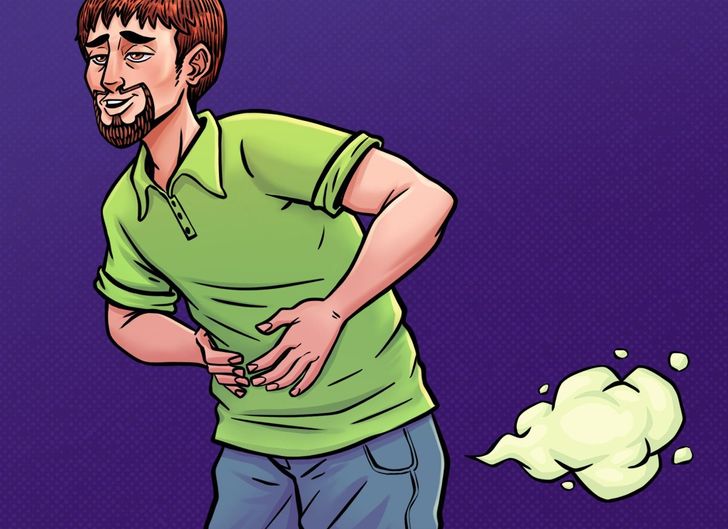
The most immediate effect is that the gas remains trapped in your colon. This can lead to:
- A feeling of pressure or fullness
- Bloating
- Mild to moderate abdominal discomfort
The longer you hold it, the more uncomfortable it can become.
2. The Gas Moves Back Up the Digestive Tract
Gas doesn’t always stay in one place. It can actually move backward through the intestines. In some cases, this gas may travel up toward the stomach and be released as a burp instead.
However, this doesn’t always happen efficiently, and it doesn’t eliminate all the trapped gas.
3. Some Gas Gets Reabsorbed into the Bloodstream
This part surprises many people.
A portion of the gas—especially gases like hydrogen and methane—can be absorbed through the intestinal walls into the bloodstream. From there, it travels to the lungs and is eventually released when you breathe out.
So technically, yes—some of the gas you hold in can leave your body through your breath.
4. You’ll Eventually Have to Release It
No matter how long you try to hold it, your body will eventually need to release the gas. This might happen:
- Later, when you feel more comfortable
- During sleep, when your muscles relax
- Unexpectedly, if pressure builds up too much
In other words, holding it in is usually just delaying the inevitable.
Is It Harmful to Hold in a Fart?
Occasionally holding in gas is generally harmless. Your body can handle it without any serious consequences.
However, doing it frequently may lead to:
- Increased bloating and discomfort
- Abdominal pain
- A feeling of digestive sluggishness
In rare cases, especially for people with digestive conditions like irritable bowel syndrome (IBS), holding in gas can make symptoms worse.
Why It Can Feel Painful
When gas builds up, it stretches the walls of your intestines. This stretching activates nerve receptors, which your brain interprets as discomfort or pain.
That’s why holding in a fart can sometimes feel like sharp cramps or pressure in your abdomen.
When Should You Be Concerned?
Most of the time, gas is completely normal. However, if you frequently experience:
- Severe abdominal pain
- Excessive bloating
- Unusual changes in digestion
…it may be worth looking into your diet or consulting a healthcare professional.
The Bottom Line
Holding in a fart doesn’t make the gas disappear - it simply changes where it goes and how long it stays in your body. Some of it may move around your digestive system, some may be absorbed and exhaled, but most of it will eventually need to be released.
So while it’s understandable to hold it in during certain situations, your body is designed to let that gas out for a reason. Letting it pass naturally is usually the most comfortable and healthiest option.