The Mysterious World of the Pygmy Peoples
Deep within the dense rainforests of Central Africa lives one of the world’s most fascinating and ancient human communities: the Pygmy peoples. Known for their short stature and rich forest-based culture, Pygmy groups have long captured the curiosity of anthropologists, historians, and travelers alike. Yet beyond common stereotypes lies a complex world shaped by tradition, resilience, and an intimate relationship with nature.
Who Are the Pygmy Peoples?
The term “Pygmy” refers to several indigenous groups living primarily in the rainforests of Central Africa, including regions of the Democratic Republic of Congo, Cameroon, Gabon, Central African Republic, and Rwanda. Some of the most well-known groups include the Mbuti, Aka, Baka, and Twa.
These communities are traditionally hunter-gatherers, with lifestyles deeply adapted to the forest environment. Their average adult height is shorter than that of neighboring populations, a trait believed to be influenced by genetics, nutrition, and long-term adaptation to rainforest life.
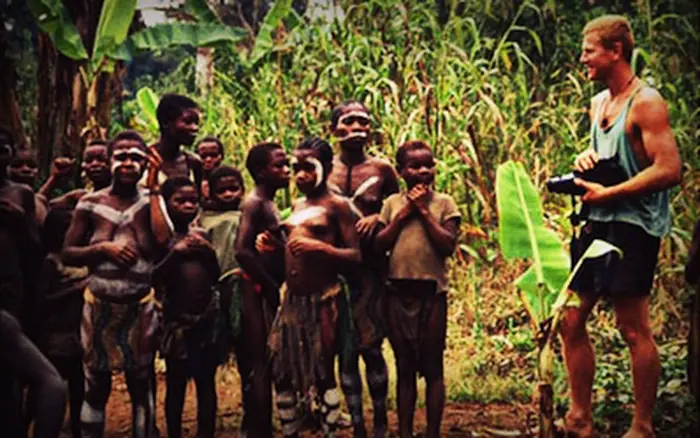
Why Are Pygmy Peoples Shorter in Stature?
For decades, scientists have studied the physical characteristics of Pygmy populations. Research suggests that their shorter height is not a disease or disorder, but rather an evolutionary adaptation.
Possible explanations include:
-
Easier movement through dense forests
-
Lower caloric needs in environments with limited food resources
-
Faster growth and earlier reproduction in challenging conditions
Importantly, Pygmy peoples are physically healthy and proportionate, and their stature does not reflect weakness or inferiority.
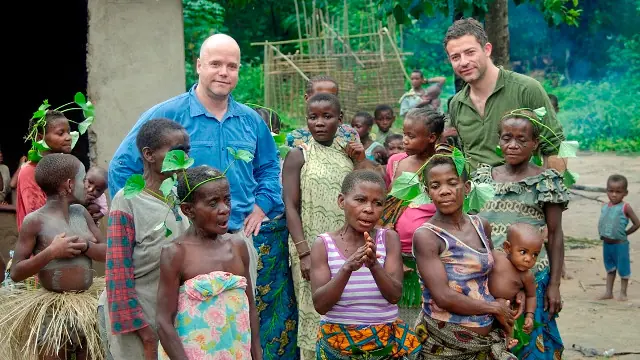
A Life Intertwined With the Forest
The rainforest is central to Pygmy identity. It is not merely a source of food, but a living system filled with spiritual meaning.
Traditionally, Pygmy communities rely on:
-
Hunting with nets, spears, or bows
-
Gathering fruits, roots, honey, and medicinal plants
-
Deep knowledge of animal behavior and seasonal cycles
Music and oral storytelling play a vital role in daily life. Polyphonic singing—complex, layered vocal harmonies—is one of the most remarkable cultural expressions of Pygmy peoples and has influenced world music traditions.
Social Structure and Values
Pygmy societies are generally egalitarian, with strong emphasis on cooperation, sharing, and group decision-making. Leadership is informal and based on experience rather than authority.
Key values include:
-
Mutual support and collective responsibility
-
Respect for elders and ancestral knowledge
-
Strong family and community bonds
Gender roles are often more balanced than in many agricultural societies, with both men and women contributing actively to subsistence and decision-making.
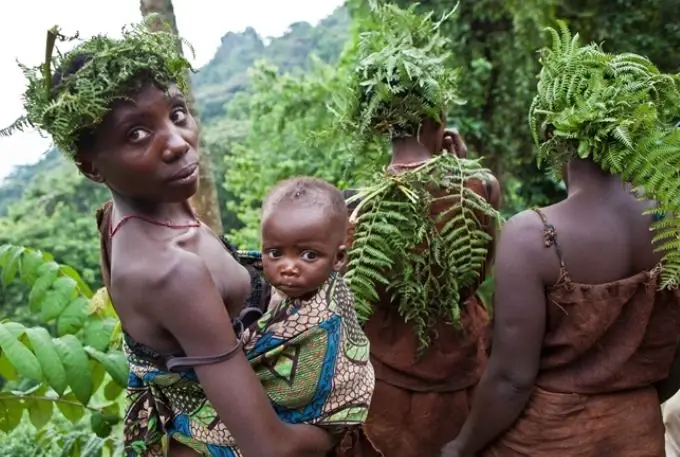
Challenges in the Modern World
Despite their rich cultural heritage, Pygmy peoples face significant challenges today.
These include:
-
Loss of ancestral forest land due to logging and mining
-
Discrimination and marginalization by surrounding populations
-
Limited access to healthcare, education, and legal protection
In some regions, Pygmy communities are forced to abandon traditional lifestyles and settle on the margins of modern society, often under harsh conditions.
Preserving a Disappearing World
Anthropologists and human rights organizations stress the importance of protecting Pygmy cultures—not as museum artifacts, but as living societies with the right to self-determination.
Efforts to support Pygmy communities focus on:
-
Land rights and forest conservation
-
Culturally appropriate education
-
Healthcare access that respects traditional knowledge
Protecting the rainforest also means protecting the people who have lived in harmony with it for thousands of years.
Conclusion
The world of the Pygmy peoples is not defined by mystery alone, but by adaptation, knowledge, and resilience. Their story challenges modern assumptions about progress, success, and humanity’s relationship with nature.
Understanding and respecting Pygmy communities is not only an anthropological responsibility—it is a reminder that human diversity is one of our greatest strengths.