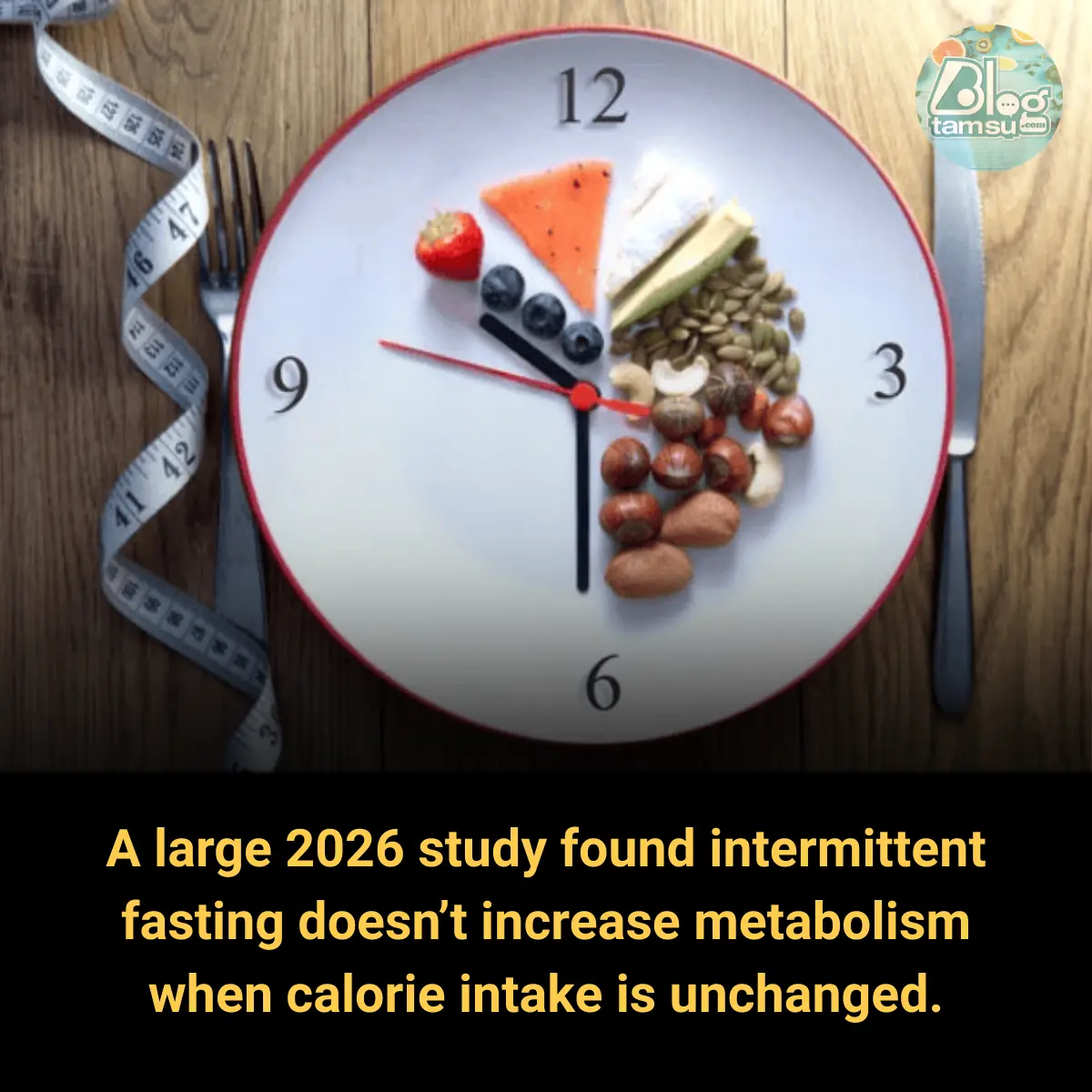
The image is instantly recognizable to anyone who’s tried dieting: a plate designed like a clock, surrounded by foods arranged like a schedule. It’s a visual shorthand for time-restricted eating and intermittent fasting—methods built on when you eat, not necessarily what you eat. The bold caption makes a strong claim: a large study found intermittent fasting doesn’t increase metabolism when calorie intake is unchanged.
That statement is largely consistent with what many researchers have been concluding for years: if total calories and protein are matched, intermittent fasting typically does not produce a special “metabolic boost” compared with traditional calorie restriction. In other words, fasting is not a cheat code that speeds up your engine while you keep fuel intake the same.
Why “metabolism boost” is a misunderstanding
When most people say “metabolism,” they mean total daily energy burn. That includes:
-
Resting energy expenditure (the calories your body uses at rest)
-
Thermic effect of food (energy used for digestion)
-
Activity and exercise
-
Non-exercise activity (fidgeting, walking, standing)
Intermittent fasting changes timing—often compressing eating into 8–10 hours or alternating fasting days with eating days. But timing alone doesn’t automatically increase total daily energy expenditure. Multiple reviews have emphasized that the benefits people see from intermittent fasting tend to be energy-deficit dependent—meaning the key driver is usually reduced calories, whether intentional or accidental.
What recent evidence says when calories are equal
Across randomized trials and meta-analyses, a common pattern appears:
-
Intermittent fasting (including time-restricted eating) often leads to weight loss when it helps people eat fewer calories overall.
-
When compared to continuous calorie restriction with similar calorie intake, results are often comparable—no consistent “extra” advantage.
A 2024 BMJ systematic review and network meta-analysis comparing intermittent fasting approaches with continuous energy restriction and unrestricted eating supports the broader idea that outcomes depend heavily on the overall energy balance, not a unique metabolic trick.
That doesn’t mean intermittent fasting is useless. It means its most reliable benefit is practical: it may help some people maintain a calorie deficit more easily (fewer meals, fewer snacking windows, simpler rules).
Why intermittent fasting can still work for some people
Even if metabolism doesn’t rise, fasting schedules can change behavior in ways that matter:
1) Appetite and structure
For some, a shorter eating window reduces mindless grazing and late-night calories.
2) Adherence
Some people prefer “clear boundaries” (eat between X and Y) over constant calorie counting.
3) Food quality improvements
When people plan fewer meals, they sometimes prioritize protein and whole foods—though this depends on the individual.
Research comparing time-restricted eating, caloric reduction, and unrestricted eating continues to explore these differences in real-world settings, including outcomes like caloric intake and metabolic measures.
The important nuance: “Same calories” is hard to achieve in real life
Many social posts imply a clean experiment: same calories, just different timing. In real life, people rarely keep calories identical when they adopt intermittent fasting. Some eat less without realizing it; others compensate and eat more during the window. That’s why results vary—and why anecdotes online are all over the map.
A separate line of research also suggests that how fasting is implemented (early vs. late eating windows, or fasting paired with energy restriction) can influence certain cardiometabolic markers, but that’s not the same as a blanket metabolism boost.
 So what should you do if your goal is fat loss?
If you’re choosing between intermittent fasting and standard calorie restriction, the “best” method is the one you can follow while meeting nutrition needs.
A practical checklist:
-
Calories still matter most for fat loss. Fasting won’t override a surplus.
-
Protein and strength training help preserve muscle, which supports healthy body composition.
-
Sleep and stress management influence hunger and cravings more than most people realize.
-
Choose a method you can sustain—because consistency beats novelty.
Who should be cautious with fasting
Intermittent fasting isn’t ideal for everyone. People who are pregnant, have a history of eating disorders, have diabetes requiring medication, or struggle with hypoglycemia should talk to a clinician before trying restrictive schedules.