At first glance, this puzzle looks simple - just a few lines and numbers. But like most viral brain teasers, it’s designed to mislead your first instinct and reward careful observation.
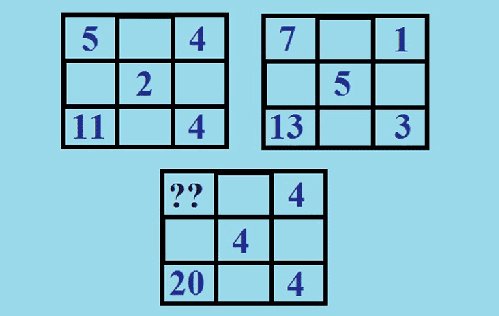
You’re given three visual patterns:
1. A grid → equals 92. A plus sign → equals 1
3. A square-like shape → equals ?
So the challenge is: What rule connects these shapes to the numbers?

1. Step One: Identify the Pattern
Let’s analyze the first example.
The grid (top image)
It looks like a tic-tac-toe board with:
- 3 vertical lines
- 3 horizontal lines
Where do they meet?
👉 Each vertical line crosses each horizontal line.
So:
- 3 × 3 = 9 intersections
✔ That matches the given answer: 9
2. Second Example: The Plus Sign
Now look at the plus shape:
- 1 vertical line
- 1 horizontal line
They cross at only one point.
👉 1 × 1 = 1 intersection
✔ Matches the answer: 1
3. The Hidden Rule
Now the pattern becomes clear: The number represents how many intersections are formed by the lines
This is not about counting squares or shapes - it’s about counting crossing points.
4. Final Shape Analysis
The last figure looks like a square grid, but simpler:
- 2 vertical lines
- 2 horizontal lines
Now apply the rule:
👉 2 × 2 = 4 intersections
5. Final Answer
👉 The missing number is: 4
6. Why This Puzzle Tricks People
This puzzle is clever because:
1. It looks like a square-counting puzzle
Your brain assumes it’s about shapes, not intersections.
2. It uses visual distraction
The lines form boxes, which mislead your attention.
3. It rewards pattern recognition
Once you see the rule, the answer becomes obvious.
7. What This Puzzle Teaches
This puzzle is not about math complexity - it’s about thinking correctly.
It teaches you to:
- Look for patterns, not assumptions
- Focus on structure, not appearance
- Break down visuals into simple rules

Final Take
The answer isn’t hidden - it’s just easy to overlook.
👉 Grid = intersections
👉 Not squares, not shapes, just crossing points
And once you see it:
What seemed confusing suddenly becomes simple.
That’s the power of a good puzzle - it doesn’t test what you know… it tests how you think.