Feng Shui masters say these 4 apartment floors bring wealth and stability — are you living on one of them?
Facts 08/01/2026 23:23
Hacks Everywhere: How the Age of Digital Shortcuts Is Rewriting Power, Privacy, and Survival
“Hacks” used to mean clever shortcuts — a faster way to clean your house, boost productivity, or save money. Today, the word carries a darker, sharper edge. In the digital age, hacks are no longer just tricks. They are weapons, opportunities, and wake-up calls, quietly shaping how governments, corporations, and ordinary people live online.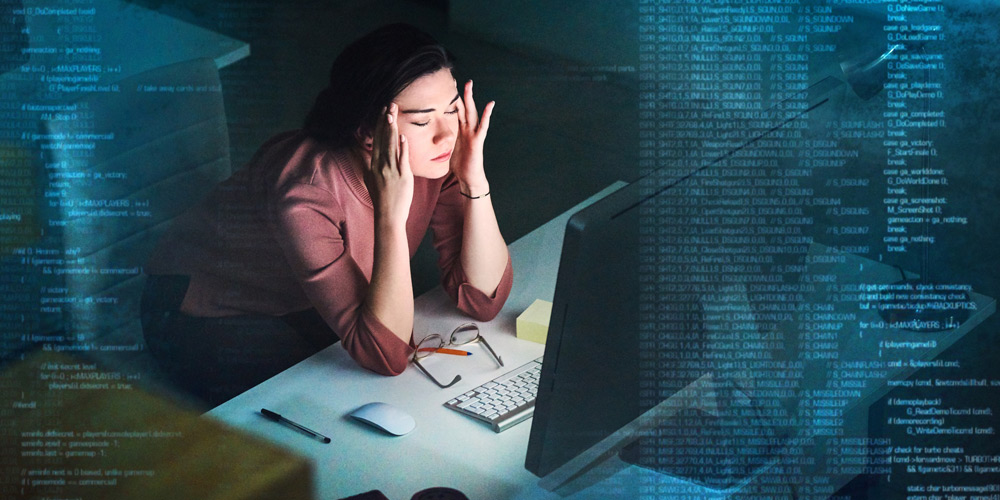
From massive data breaches to five-minute exploits that can drain a bank account, hacking has become one of the defining forces of modern life. And the most shocking part? You don’t need to be a genius coder in a dark room anymore.
Once upon a time, hacking required deep technical knowledge and years of practice. Now, entire hacking toolkits are sold on underground forums like digital fast food. Phishing kits, ransomware-as-a-service, and AI-generated scams have lowered the barrier to entry to almost zero.
A teenager with a laptop can now launch attacks that once required state-level resources. Deepfake voices can impersonate CEOs. Fake emails can bypass security filters. One wrong click can open the door to total system compromise.
Hacking has gone mainstream — and that changes everything.
For years, big companies sold the illusion of security. Firewalls, encryption, compliance certificates — all meant to signal control. Yet some of the largest hacks in history have hit global corporations with billion-dollar budgets.
Why? Because modern systems are complex, interconnected, and fragile. A single overlooked vulnerability in a third-party vendor can expose millions of users. Attackers don’t break down the front door anymore; they slip in through forgotten side entrances.
The result is a constant digital arms race. Companies patch vulnerabilities while hackers hunt for new ones. And in this race, speed matters more than perfection.
Hacks are no longer just criminal acts — they are geopolitical tools.
State-sponsored cyberattacks target power grids, hospitals, election systems, and communication networks. Unlike traditional warfare, cyber warfare is silent, deniable, and relentless. There are no sirens, no borders, and no clear end.
A successful hack can destabilize an economy without firing a single shot. That reality has turned cybersecurity into national security, forcing governments to rethink defense for an invisible battlefield.
Ironically, while cybercrime grows more sophisticated, the public obsession with “life hacks” has exploded. Productivity hacks, finance hacks, biohacks — everyone wants an edge.
But this mindset has a dark twin: social engineering.
Hackers exploit human psychology more than code. Urgency, fear, curiosity, authority — these are the real vulnerabilities. The most advanced systems in the world still depend on people, and people are predictable.
In many cases, the weakest link isn’t software. It’s us.
Artificial intelligence has supercharged hacking on both sides. Defenders use AI to detect anomalies, predict attacks, and automate responses. Hackers use it to generate convincing phishing messages, crack passwords faster, and scan systems at scale.
This isn’t science fiction. It’s happening now.
The shock isn’t that AI can hack — it’s that it makes hacking faster, cheaper, and harder to trace. The line between amateur and professional is blurring, and the attack surface is expanding every day.
So what does survival look like in a world where everything can be hacked?
It starts with awareness. Understanding that security is not a product, but a habit. Strong passwords, multi-factor authentication, software updates, and skepticism toward “too good to be true” messages are no longer optional — they are basic digital hygiene.
For organizations, the mindset must shift from prevention to resilience. Breaches are not a question of “if,” but “when.” The real test is how fast systems recover and how transparently damage is handled.
The biggest shock about hacks isn’t the technology. It’s the power shift.
Hacking has flattened hierarchies. It has given individuals the ability to challenge corporations, disrupt governments, and expose secrets. Sometimes for justice. Sometimes for profit. Sometimes for chaos.
In the age of hacks, control is temporary, security is fragile, and ignorance is expensive. The future won’t belong to those with the strongest walls — but to those who understand the system well enough to adapt when those walls inevitably fall.
Welcome to the hacked world.