Cancer remains one of the leading causes of death worldwide and continues to be a complex challenge for modern medicine. Despite advancements in treatments such as chemotherapy, radiotherapy, and immunotherapy, these methods often come with severe side effects and, in many cases, limited effectiveness.
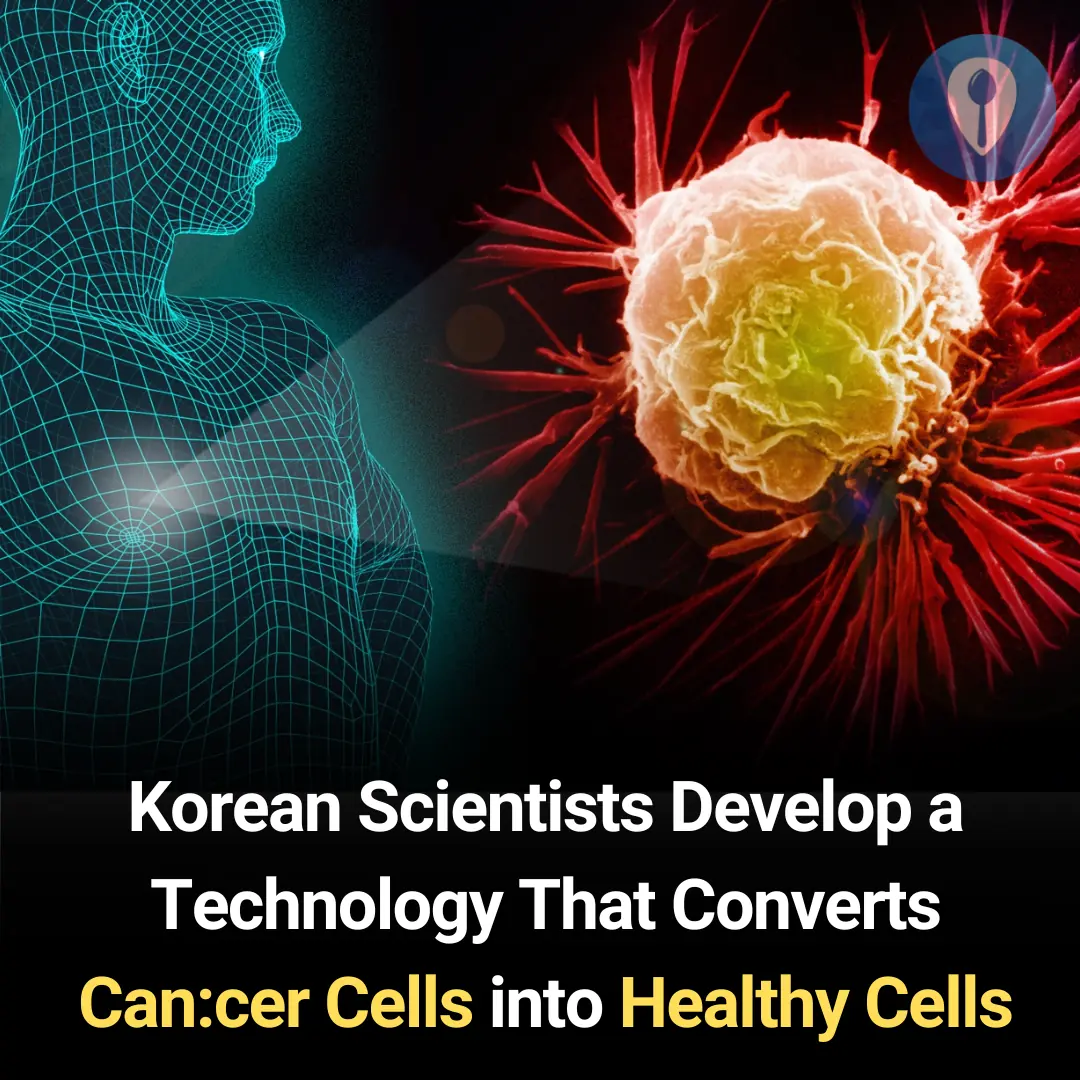
Now, a team of Korean scientists has developed an innovative technology that could change the paradigm of cancer treatment. Based on cellular differentiation regulation, this groundbreaking approach has demonstrated the ability to revert cancer cells into healthy cells, offering a revolutionary therapeutic strategy with fewer side effects than conventional treatments.
A Revolutionary Approach to Cancer Treatment
The study, published in Advanced Science, introduces a computational model called BENEIN (Boolean Network Inference and Control), designed to identify key regulators responsible for cellular differentiation. This approach allows scientists to manipulate cancer cells and guide them back into a non-malignant state.
By applying BENEIN to transcriptome data of human intestinal cells, researchers identified that inhibiting three specific genes (MYB, HDAC2, and FOXA2) induced the differentiation of cancer cells into normal enterocytes.
This discovery was validated through in vitro and in vivo experiments, demonstrating that the combined inhibition of these genes significantly reduces colon cancer proliferation and promotes healthy cell regeneration.
BENEIN: Artificial Intelligence in Biomedical Research
The success of this research lies in the application of artificial intelligence and mathematical modeling to decipher the complex genetic regulatory networks involved in cancer. BENEIN reconstructs gene regulatory networks from single-cell data, identifying expression patterns that can be modified to induce a healthy phenotype.
This model not only identifies key genes in cancer progression but also predicts optimal strategies to reprogram malignant cells into functional, differentiated cells. Its application is not limited to colon cancer but could be used for other cancer types and diseases related to abnormal cellular differentiation.
Transforming Cancer Cells into Normal Cells
The mechanism identified by Korean scientists focuses on regulating genes that block cellular differentiation. MYB, HDAC2, and FOXA2 have been identified as master regulators that prevent cancer cells from completing their differentiation cycle.
🔍 Read More: Symptoms of Kidney Disease That Many People Ignore.
By simultaneously inhibiting these genes, malignant cells lose their ability to proliferate uncontrollably and start behaving like healthy cells. In mouse models with colorectal tumors, researchers observed not only a significant reduction in tumor size but also structural improvement in the affected tissue, suggesting functional regeneration of the intestinal epithelium.
Clinical Implications and Future Applications
This discovery opens new possibilities in personalized oncology. Targeted inhibitors against MYB, HDAC2, and FOXA2 could revolutionize cancer treatment, providing a more effective and less toxic alternative to traditional therapies.
Additionally, the BENEIN methodology could be applied to other cancers and genetic regulation diseases, such as neurodegenerative disorders and autoimmune diseases. Its ability to identify cell differentiation patterns could be a key tool in regenerative medicine and tissue engineering.
The next steps in this research include clinical trials to evaluate the safety and effectiveness of inhibiting MYB, HDAC2, and FOXA2 in human patients. If successful, this could mark the beginning of a new era in cancer treatment, with more targeted and less invasive therapies.
Ethical Considerations and Future Challenges
Despite its potential, cancer cell reprogramming raises ethical and technical challenges. Genetic manipulation must be carefully regulated to prevent unintended adverse effects, such as uncontrolled differentiation or alterations in healthy tissues.
Additionally, developing AI-based therapies requires rigorous validation and extensive studies to ensure their safety and efficacy. The scientific community must address these challenges with a multidisciplinary approach, combining biotechnology, bioinformatics, and medicine to maximize the benefits of this emerging technology.
Conclusion
The study led by Korean scientists represents a significant breakthrough in the fight against cancer. The ability to revert cancer cells into normal cells through cellular differentiation regulation could revolutionize oncology treatment and bring new hope to millions of people worldwide.
The development of BENEIN technology and its application in personalized therapies could change how we approach cancer, paving the way for more effective and less invasive treatments. With further research and clinical trials, this technology could mark the beginning of a new era in oncology. 🚀✨